.png&w=1280&q=75)
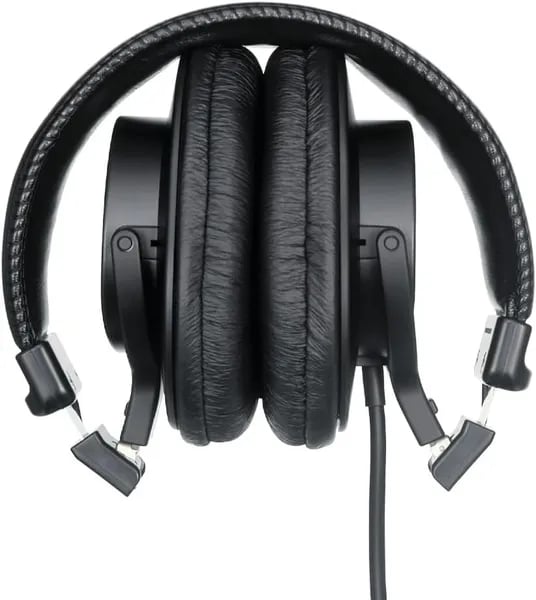
You probably own one pair of headphones that 'just works'—this might be the MDR-7506. I remember when you first strapped on a pair at a friend's home studio and heard details you never noticed before; that tiny surprise is exactly why these Sony cans stayed on my radar since their release on October 2, 2001. This outline steers you through specs, real-life quirks, and buying-smart moves—without the tech-speak overload.
About the Sony MDR-7506 (History & Reputation)
If you want a headphone with real studio roots, the Sony MDR-7506 is hard to ignore. It launched on October 2, 2001 as part of Sony’s trusted 7500 Series, and it quickly became a familiar sight in broadcast booths, recording rooms, and film sets. In many studios, it’s the “known quantity” you grab when you need results fast—because you already know what you’ll hear.
Why it became a studio staple
In a typical Sony MDR-7506 Review, you’ll see the same theme: predictable, honest monitoring. The closed-back design helps you focus in noisy spaces, while the neutral tuning makes it easier to judge vocals, dialog, and mix details without extra hype. That’s why it’s still widely used in radio and recording studios today—and why it keeps showing up in gear lists for beginners and pros alike.
Tom Frampton, Broadcast Engineer: "You can bank on the MDR-7506 for predictable, honest monitoring in noisy environments."
Still easy to buy (and keep running) in 2025
Even after decades of use, the MDR-7506 remains an inexpensive option—around $98 new and as low as $84.97 used/discounted. It’s widely sold on Amazon by Amazon.com (seller ID: ATVPDKIKX0DER). If you buy during the holidays, there’s also a helpful return window: purchases from Nov 1–Dec 31, 2025 can be returned until Jan 31, 2026.
- Release date: October 2, 2001
- New price: starts at $98
- Used/discounted low: $84.97
- Amazon seller ID:
ATVPDKIKX0DER
Another reason you’ll still pick it: replacement parts are easy to find, so your Sony Professional Stereo workhorse can last for years with simple pad swaps.
Features & specs — What you should care about
The raw numbers that actually matter
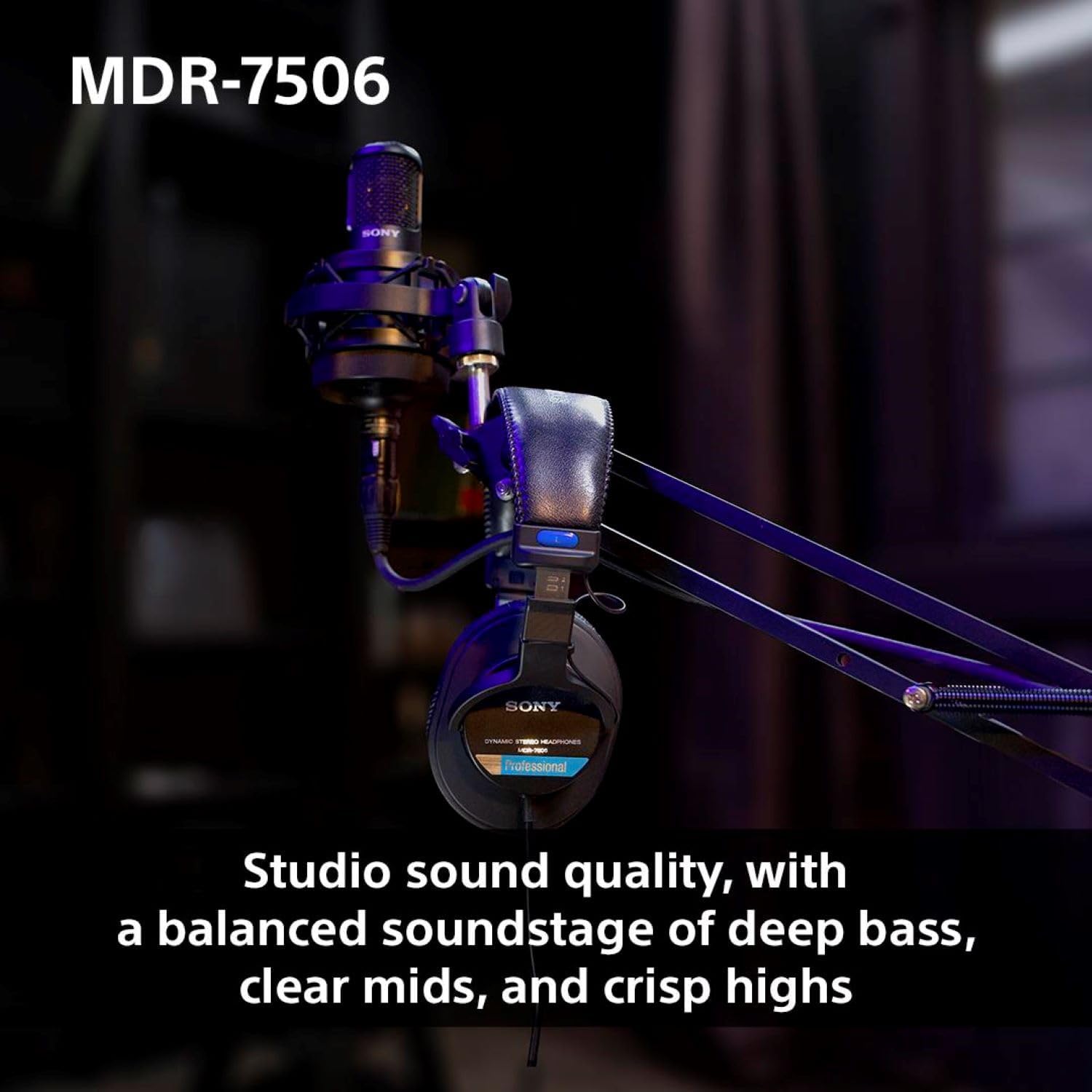
If you’re buying the Sony MDR-7506 today, you’re not paying for hype—you’re paying for proven Features & specs that help you hear what’s really in a track. At the core are 40mm dynamic drivers tuned for accuracy, with a 10 Hz–20 kHz frequency response that keeps bass extended and highs clear without turning everything into “extra bass.”
Power needs are simple: 63Ω impedance and 106 dB/W/m sensitivity make these easy to drive from an audio interface, mixer, keyboard, or even a laptop headphone jack.
Rachel Turner, Mix Engineer: "Those 40mm drivers and a tight 10–20kHz spec give you the honest mids you need for mixes."
Hardware you’ll notice every day
The MDR-7506 is built as over-the-ear, closed-back headphones, so you get passive noise isolation that helps you focus in a home studio, on set, or in a loud room. The closed design also helps reduce bleed when you’re tracking vocals or instruments.
- Cable: 9.8-foot coiled OFC cable (non-removable)
- Plug: gold-plated 3.5mm miniplug + included 1/4" adapter
- Build: foldable, travel-friendly frame
- Included: soft carrying case
That non-detachable coiled cable is both a win and a common gripe: it’s convenient for studio movement and hard to accidentally unplug, but you can’t swap it quickly if you damage it.
Size, weight, and what’s in the box
| Spec | Detail |
|---|---|
| Dimensions | 7" x 7" x 1" |
| Weight | 8–9.6 oz |
| Box contents | Headphones, hard-wired cable, Unimatch plug, 1/4-inch adapter, soft carrying case |
Sound Signature — Neutral, mid-forward, and revealing
Put on the MDR-7506 and you’ll quickly get why its Sound Signature is still a studio staple: it aims for a linear neutral sound that tells you the truth. The bass is tight and controlled (not “club” boosted), the mids sit front and center, and the highs come through with crisp edges. That mix of balance and bite is exactly what helps your edits and mixes translate to speakers, cars, and earbuds.
Mid accuracy you can trust (with a bright tilt)
In the most important band for vocals and instruments—roughly 100 Hz to 2 kHz—the MDR-7506 is widely reported (and often measured) as very accurate. That’s why dialogue, guitar, piano, and snare placement feels easy. Past that, many measurements show an overshoot around 2–8 kHz, which is why you may hear it as slightly mid-forward/bright. The upside: you spot hiss, clicks, harsh consonants, and reverb tails fast. The downside: bad recordings sound… bad.
Mark Hearn, Sound Designer: "For spotting and editing, the MDR-7506’s neutral midrange is like a magnifying glass for your mix."
Closed-back focus, not a wide “concert hall”
Because of the closed-back design, you get a narrow, focused stage with strong center imaging. That’s great for monitoring, voiceover, and podcast editing where you need clear placement—not a big, airy spread. It also helps keep outside noise down while you work.
- Great for: mixing checks, tracking, monitoring, voiceover, podcast cleanup
- You’ll hear: “amazing clarity” and “superb vibrancy” (common user feedback)
- Compared to: MDR-V6 (often a touch warmer) and ATH-M50 (more bass character), the 7506 prioritizes clarity over bass wobble
| Model | Claimed Frequency Response |
|---|---|
| Sony MDR-7506 | 10 Hz–20 kHz |
| Sony MDR-V6 | 5 Hz–30 kHz |
Usability, Comfort & Longevity — Real-life pros and quirks
Usability that just works (and travels well)
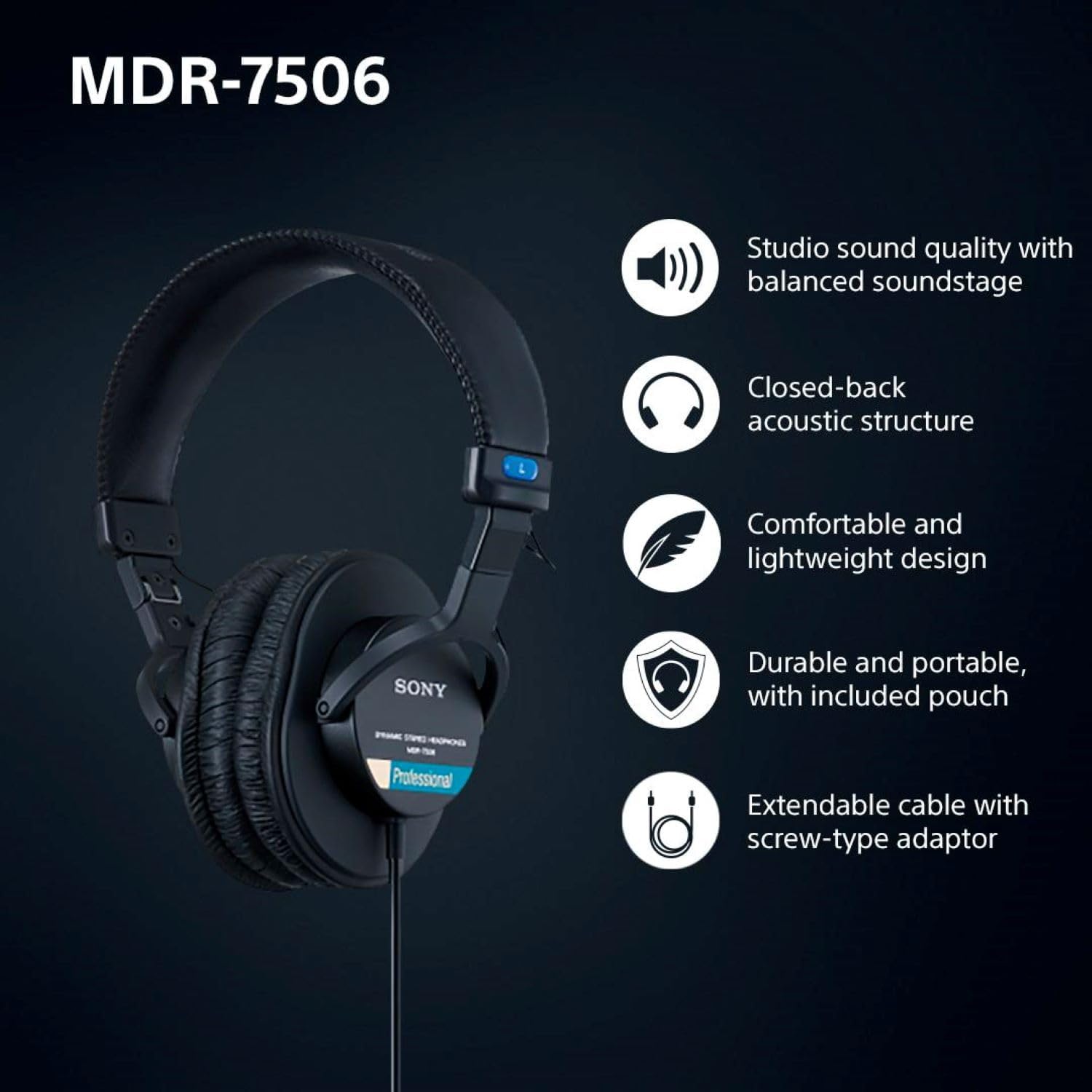
The MDR-7506 is pure plug-and-play: no pairing, no apps, no battery stress. You get a foldable design plus a soft carrying case, so it’s easy to toss in a backpack for field work, radio booths, or a quick edit session at a friend’s studio. That simple, wired setup is a big reason it stays a durable and robust daily tool instead of a “special occasion” headphone.
Comfortable for sessions—mostly, with one common tweak
For long listening days, the padded headband and cushioned earcups help reduce fatigue, so you can stay comfortable for sessions while tracking, mixing, or podcast editing. The real-life quirk: the stock leatherette pads can feel warm, and clamp pressure may feel a bit firm during very long sessions. The fix is easy and popular—swap pads when they wear or if you want a softer feel (many users go velour).
Longevity you can plan on
Longevity is where these shine. Across 27,365+ Amazon reviews, they hold a 4.7-star average, with best-seller ranks around #519 in Electronics and #28 in Over-Ear Headphones—strong signals that people keep buying them because they last. Many owners report 10–20 years of use, with ear pad replacement as the main maintenance.
Anna Morales, Podcast Producer: "I've had a station pair for over a decade—only changed pads once. They just keep working."
Minor complaints (usually fixable)
- Earpad wear/peeling: normal over time; replace pads and keep going.
- Non-detachable cable: the coiled cord can feel heavy; use a clip or route it behind you.
- Occasional channel-balance issues: rare, but worth testing early.
- Warranty varies: often 90-day limited or 1-year parts/labor depending on seller.
Buying Guide, Alternatives & Quick Tips (Wild cards inside)
Product highlights for studio monitoring (and your wallet)
If you want a reliable reference for studio monitoring, start with price-to-performance. The MDR-7506 often lands under $100, yet it still gives you neutral detail, a closed-back seal, and an easy-to-drive load (63Ω, 106 dB sensitivity). That means you can plug into an interface, mixer, keyboard, or laptop without chasing a headphone amp.
Elliot Brooks, Studio Owner: "For budget-conscious studios, the MDR-7506 is a go-to. It's predictable, affordable, and repairable."
Value check: MDR-7506 vs pricier options
| Model | Price | Best for |
|---|---|---|
| Sony MDR-7506 | Under $100 | Reference work, tracking, editing |
| ADAM Audio H200 | $149.99 | Step-up build/tuning options |
| Sony WH-1000XM6 | $398 | Wireless + ANC convenience |
Alternatives if you want a different flavor
- MDR-V6: a touch warmer to many ears, with a 5–30 kHz spec (vs 10–20 kHz on the 7506). Differences are subtle and subjective.
- Audio-Technica ATH-M50: popular for punchier low end; less “flat” than the 7506 for strict reference.
Quick tips: comfort, tone, and replacement parts available
- Swap pads: Beyerdynamic EDT 250 Velour Earcushions (
B0016MF7W2) can boost comfort and slightly change perceived bass/treble balance. - Calibrate: SoundID Reference can smooth the MDR-7506’s mid-forward tendencies and improve low-end linearity—useful when you’re checking mixes.
- Plan for wear: with replacement parts available (pads, adapters), you can keep one pair running for years instead of rebuying.
Wild Card: Two playful thought experiments
1) The train-carriage “tiny control room” test (passive noise isolating)
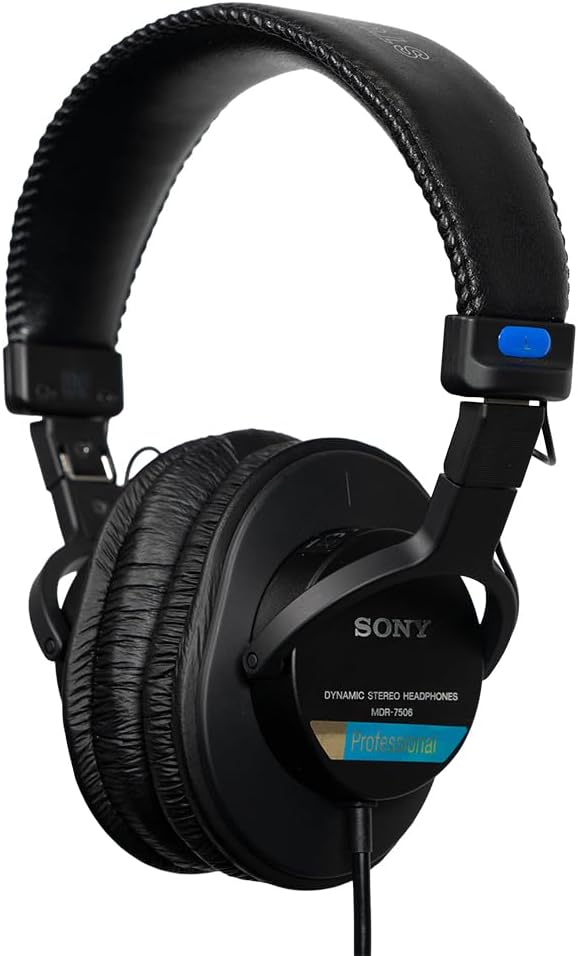
Picture yourself on a busy train, surrounded by chatter, rattling tracks, and station announcements. You plug in the MDR-7506 and hit play on a mix you’re tweaking. Because the closed-back cups are passive noise isolating, you’re not fighting the room—you’re hearing the track. It’s not magic silence, but it’s enough that your EQ moves and vocal levels still make sense when you get home. It feels like strapping a tiny control room to your head, which is exactly why these show up in studio monitoring, broadcast, and DJ monitoring rigs where “good enough isolation” matters more than fancy features.
2) The Swiss Army knife scenario (portable foldable design)
Now imagine a week where your gear has to do everything. Monday: podcasting in a spare office. Tuesday: voiceover in a closet booth. Wednesday: field recording for quick ambience checks. Thursday: Yamaha keyboard practice without waking the house. The MDR-7506’s portable foldable design makes that jump easy—fold, toss in the soft case, and you’re moving. It’s the Swiss Army knife of reference cans: compact, predictable, and weirdly handy in places you didn’t plan for.
I felt this the first time I borrowed a friend’s pair. I expected “studio headphones.” Instead, I caught small details I’d been missing—pick noise on an acoustic guitar, a backing vocal tucked too low, the tail of a reverb that suddenly sounded obvious. That’s the kind of honest, repeatable feedback you end up trusting.
Liam Carter, Live Sound Tech: "They’re not flashy, but when you need honest information fast, these are the ones you reach for."
So yes, you’ll still pick the Sony MDR-7506 today—not because it’s trendy, but because it keeps showing up for you, everywhere you listen and work.