.png&w=1280&q=75)
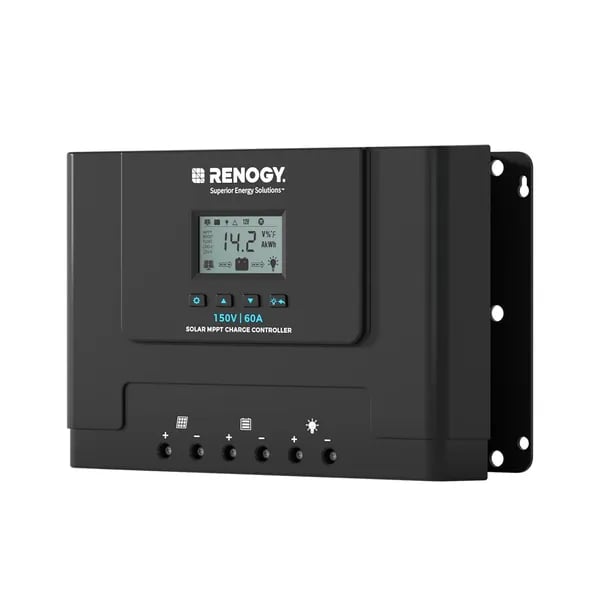
I remember the first time I swapped out a flimsy PWM controller on my travel trailer—wires everywhere, a burned fuse and a weekend lost to trial-and-error. When I picked up the Renogy Rover Lite 60A I wanted something that felt like it would survive real-world use: heavy metal case, clear LCD, and the muscle to handle future expansion. This outline is my small, honest map of what I learned installing the Rover Lite on a travel trailer and a 30-foot boat, including the odd Load E04 hiccup and how fast it actually charges batteries.
Specs & Why They Matter (form over fluff)
Auto-detect 12V 24V 36V (and 48V) systems
The first spec that sold me on the Renogy Rover Lite is how it auto-detects battery bank voltage. I’ve used it on different builds, and not having to “match” a controller to one fixed system voltage makes upgrades simpler. It supports 12V/24V/36V/48V auto systems, so I can start small and scale later without replacing the Solar Charge Controller.
150V solar input = simpler arrays and fewer wire runs
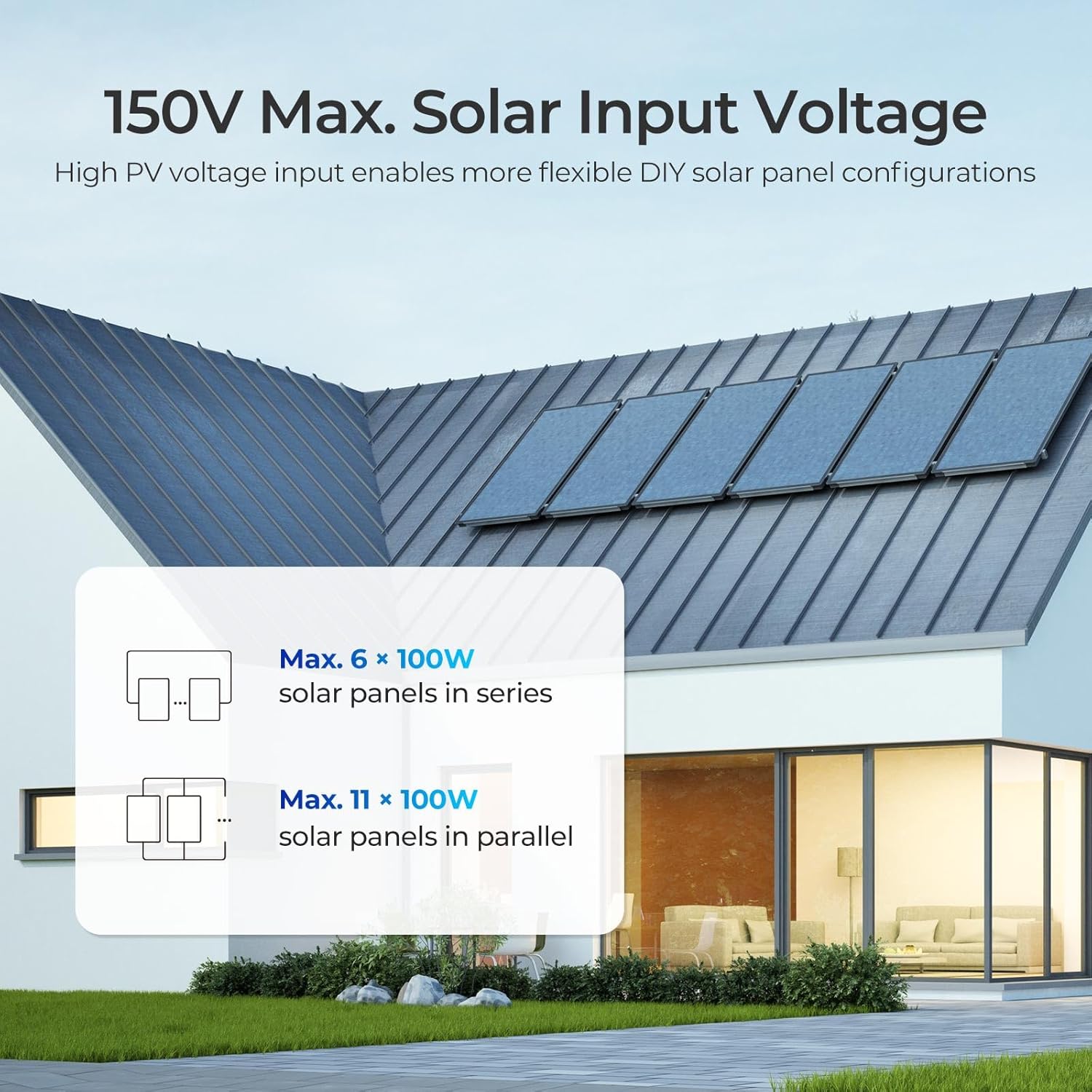
The big headline is the 150V solar input (Max PV Input voltage: 150VDC at 25°C). In real installs, that higher ceiling lets me run more panels in series, which can reduce current on the roof and cut down on thicker cable and extra combiner complexity.
Daniel Reed, Solar Installer: "For system expansion, that 150V ceiling is a game-changer—fewer parallel strings, less wiring headache."
60A MPPT Controller charging + realistic load limits
This is a 60A MPPT Controller, and that current rating is the difference between “it works” and “it keeps up.” It’s also rated for a 20A load, which matters if you plan to power DC loads from the controller’s load terminals. I learned to respect that limit after seeing a Load E04 overload warning when other gear was running.
- Rated charge current: 60A
- Rated load current: 20A
- Self-consumption: 0.18W–1.2W (nice for storage and low-sun days)
Max PV input power by system voltage (sizing without guessing)
“Max PV Input” isn’t just voltage—power limits change with battery voltage. Here’s the sizing I use:
| System Voltage | Max PV Input Power |
|---|---|
| 12V | 800W |
| 24V | 1600W |
| 36V | 2400W |
| 48V | 3200W |
Built for heat, cold, and tight installs
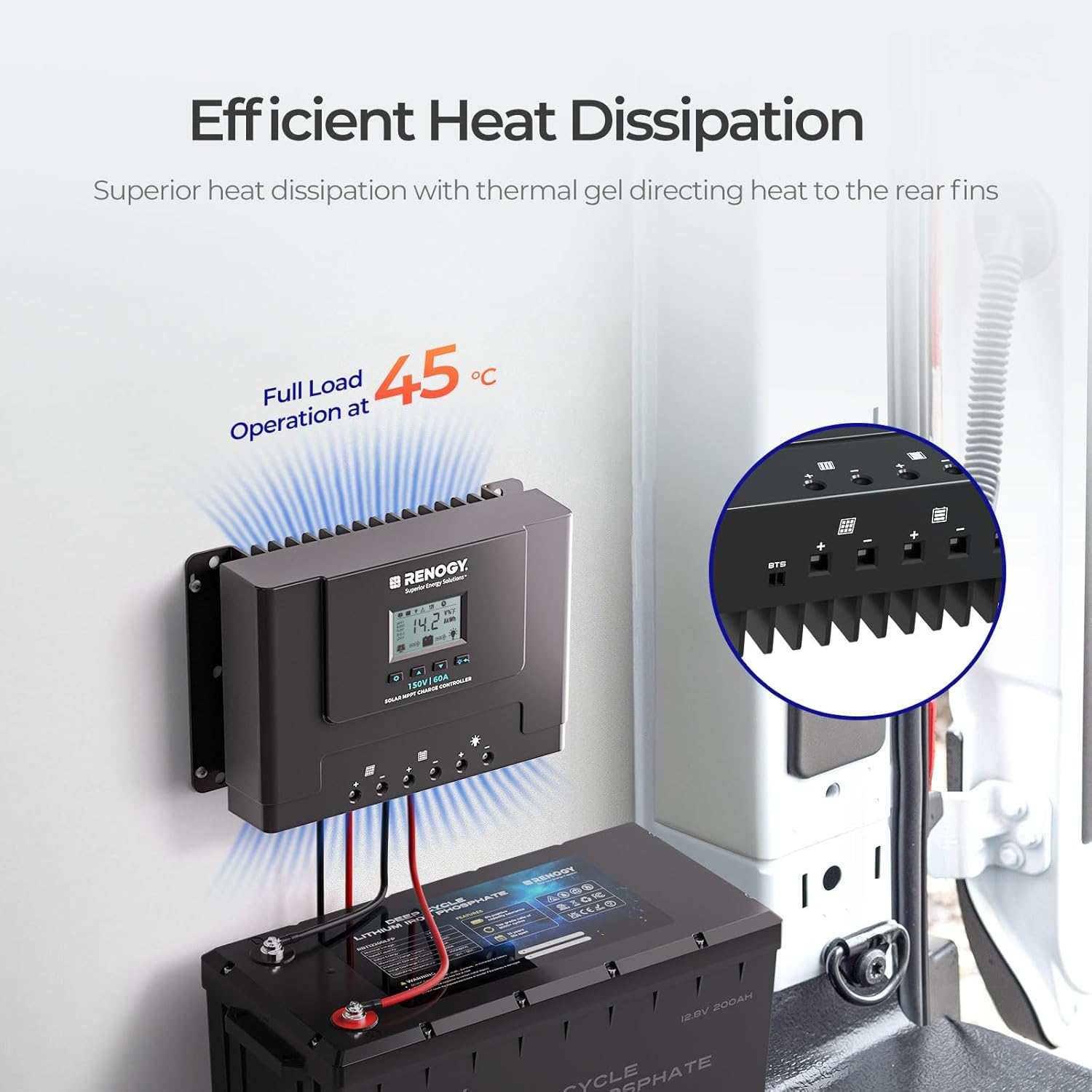
The Rover Lite is physically big and heavy (package: 13.43 x 10.51 x 5.83 in, 8.44 lbs), but the tradeoff is durability: robust metal housing, oversized aluminum heat sink, and self-cooling. It’s rated for -31°F to 113°F (-35°C to 45°C), which fits my trailer and marine use.
Interface, ports, and compliance
I like the built-in LCD + LED indicators, plus RS232/RS485 for integration. Bluetooth is optional (BT-1/BT-2). It also meets FCC, RoHS, CE, is ETL listed to UL1741/CSA C22.2, and uses an IP32 enclosure rating.
Real-World Installs: My Travel Trailer and Boat Stories
Travel Trailer Install: Simple Setup, Tight-Space Planning
I first installed the Renogy Rover Lite on a newer travel trailer, and the “RV-friendly” part was real: the ports were clearly labeled, the LCD menus were easy to follow, and the wiring felt straightforward for a Solar Charge Controller in this size class. The big surprise was physical, not electrical—the Rover Lite 60A is large and heavy (about 8.44 lbs), so I had to plan placement before drilling anything. In tight compartments, that extra depth and the heat sink can crowd other gear, so I measured twice and routed cables to avoid sharp bends.
Boat Install: Durability and Heat Handling in Salty Air
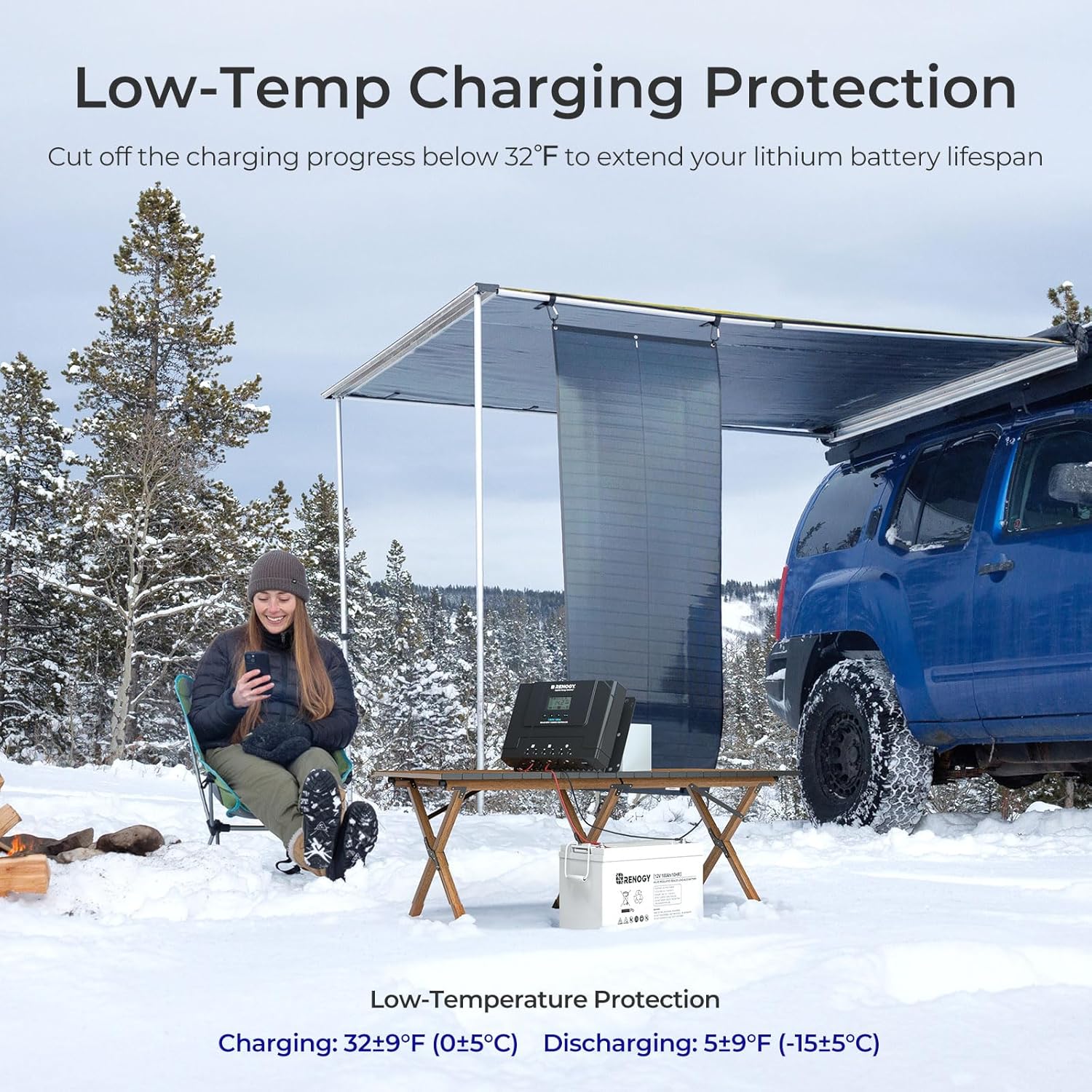
My second install was on a large boat, where vibration, humidity, and salt air quickly expose weak hardware. The Rover Lite’s metal case and oversized aluminum heat sink gave me confidence, and the self-cooling design stayed stable through variable conditions. This is where Battery Compatibility mattered most for me—I wanted one controller that could work cleanly with lithium and still be flexible if I ever switched to AGM. The included battery temperature sensor was a practical win, since it helps protect expensive lithium batteries and can extend their lifespan when temperatures swing.
Maya Chen, Renewable Energy Researcher: "Field installs reveal what datasheets can’t—load behavior, mounting constraints, and corrosion risks matter."
Load Control Lesson: Load E04, Flicker, and the 20A Rule
On the trailer, I did hit a Load E04 error and flickering lights when I connected the controller to a WC Power Center while the converter was running. The manual documents this behavior around overload conditions, and in my case it came down to Load Control and load planning. A restart plus reducing the load brought everything back to normal.
- Tip: treat the load terminals as 20A DC rated—don’t run high-draw inverters through them.
- Bluetooth monitoring is optional; I skipped it and aimed a small WiFi camera at the LCD for basic remote checks.
- As of late 2025, it had 73 reviews, 100+ units sold, and ranked #27 in Renewable Energy Controllers, which matched the steady performance I saw in both installs.
Performance: Charging Speed, Efficiency & Protections
Charging Speed in Real Use (Why It Felt Like an Upgrade)
What sold me on this 60A MPPT Controller wasn’t just the spec sheet—it was the time I got back. With my older controller, a typical recharge cycle often took 10–12 hours. After swapping to the Renogy Rover Lite 60A, I regularly saw recharge times drop to 2–5 hours (depending on sun, panel size, and battery state of charge). On both my travel trailer and my boat, that faster recovery meant less generator time and more usable power earlier in the day.
MPPT Tracking Efficiency & Peak Conversion Efficiency
The Rover Lite’s strong performance lines up with the published efficiency numbers: MPPT Tracking Efficiency is reported up to 99%, and Peak Conversion Efficiency is around 97–98%. In plain terms, it does a better job “finding” the best power point and wasting less energy as heat. That’s the difference between batteries that feel topped off by late morning versus batteries that are still climbing in the afternoon.
Ethan Morales, Off-grid Technician: “When MPPT tracking reaches high 90s%, daily harvest jumps noticeably—your batteries show it in morning voltage.”
Rated Charge Current, Low Draw, and Heat Dissipation
The Rated Charge Current60A gave me breathing room for future expansion without needing an immediate controller upgrade. I also like that self-consumption is low (about 0.18W–1.2W), so it doesn’t nibble away at stored energy overnight.
For Heat Dissipation, the oversized aluminum heat sink and self-cooling design mattered in tight installs. It’s built to run across -35°C to 45°C (-31°F to 113°F), which is a big deal in hot compartments and cold shoulder-season camping.
Protection Features (and a Real Reminder About Loads)
The protection set is comprehensive, including:
- Reverse polarity
- Overcharge and over-discharge
- Overload and short-circuit
- Reverse current
- Low Temperature Protection (especially helpful for lithium)
I did hit a Load E04 error once when I had a converter running and my load conditions weren’t ideal. A restart and better load management fixed it—but it reinforced an important point: the load terminal is 20A rated, so it’s not a substitute for an inverter-sized DC feed.
Buying, Warranty, Alternatives & Practical Advice
Buying the Renogy Rover Lite (Price, Shipping, Returns)
When I bought my Renogy Rover Lite Solar Charge Controller, the biggest push was value. As of October 2024, the Renogy 60A (Rover 60 Amp) dropped to $185.42 from $279.99, which made the 150V input and multi-voltage support feel like a deal instead of a splurge. It’s easy to find on Amazon (ASIN: B0DJY4K25P), often with FREE shipping and fast delivery options.
If you’re buying during the holidays, Amazon’s policy matters: purchases made Nov 1–Dec 31, 2025 qualify for return/replacement coverage through Jan 31, 2026. That extra time is helpful if your install gets delayed.
Amazon stats also gave me confidence: it’s labeled Amazon Choice, ranked #27 in Renewable Energy Controllers, with 73 reviews, a 4.6-star average, and 81% five-star ratings (plus 100+ units sold).
Warranty Information (Why I Bought from the Renogy Store)
I specifically purchased from the Renogy Store on Amazon because it included a two-year warranty and VIP support. In my experience, support was responsive and knew the product well—useful when you’re troubleshooting wiring, load limits, or battery settings.
Laura Patel, Customer Experience Lead at Renogy: “We stand behind our controllers with a solid warranty and responsive support—customers notice the difference when systems go live.”
Alternatives (Pick Based on Amps and Remote Monitoring)
- LiTime MPPT (with Bluetooth): a good fit if app monitoring is a must and you don’t want to add a Bluetooth Module.
- Morningstar Prostar 40A MPPT: solid choice for smaller systems where 40A is enough.
- POWLAND 100A MPPT: for higher current builds, but I’d research support and long-term reliability.
- Renogy 200W ShadowFlux panels: a smart pairing if you’re expanding your array and want better shade handling.
Practical Advice (Remote Viewing and Add-Ons)
If you want remote monitoring, plan for Renogy’s optional BT-1/BT-2 Bluetooth Module. I also used a simple workaround: a small WiFi camera aimed at the LCD so I could check status without opening compartments.
Wild Cards: What-ifs, Quotes & Tiny Tangents
What if I plan for “one more panel” (times six)?
My favorite “what-if” with the Renogy Rover Lite is expansion. With a 150V Solar Input, the Rover Lite 60A gives me room to grow without ripping up a roof or redoing every cable run. In certain series/parallel mixes, you can accommodate up to six Renogy 200W panels while staying under that 150V limit, which can land right in the controller’s sweet spot for larger arrays. For an RV weekend setup, that means I can start modest, then add panels later and keep the wiring clean. For an OffGrid workshop, it’s the difference between “good enough” power and running tools without watching the battery meter every hour.
Micro-scenarios I actually picture
On a saltwater cruiser, I imagine the same thing I wanted on my boat: fewer headaches, fewer hot connections, and a controller that doesn’t feel fragile. In a cabin setup, I picture winter mornings where the system just works, even when the shed is cold and the days are short. And in a MarineSolar install, I picture mounting it high, dry, and accessible—because you will check it, even if you swear you won’t.
Daniel Reed, Solar Installer: "I’ve seen a controller sit happily on a boat for years if you mind corrosion and mount it well."
Maya Chen, Renewable Energy Researcher: "Small design choices—like a heat sink or metal body—pay dividends in longevity."
Tiny tangent: the Polaroid that saved me a second guessing spiral
I once taped a Polaroid of the install to the controller box—totally unnecessary, but it made my wife laugh and it helped me remember the wiring layout later. That’s also why I didn’t stress about built-in remote monitoring. I pointed a cheap WiFi camera at the LCD and called it done. It’s not fancy, but it’s the kind of practical hack that makes DIY solar feel livable.
That’s the real reason I chose the Renogy Rover Lite: it’s flexible enough to grow, tough enough to trust, and simple enough that my future self won’t hate my past self.