.png&w=1280&q=75)
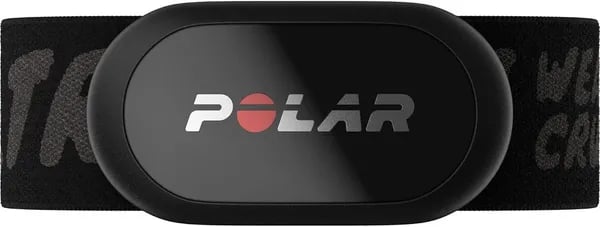
Picture yourself midway through a hard interval set, rain spattering, phone tucked away, and the only thing that matters is whether your heart rate actually reflects the work. You strap on the Polar H10 and, for once, the numbers feel believable. In this short guide you'll get a candid look at why athletes like you turn to the Polar H10 heart rate sensor: where it excels, what it asks of you in return, and a few real-world tricks I picked up after 'testing' it on a cold morning run and a humid spin class.
Why precision matters—and where the Polar H10 shines
When you train with purpose, accurate measurement isn’t a nice-to-have—it’s the difference between smart progress and guesswork. Your heart rate drives pacing, interval targets, calorie estimates, and recovery decisions. If the number is wrong (or delayed), you can push too hard, back off too soon, or miss the real signal your body is sending.
ECG Technology + a true Heart Rate Sensor you can trust
The Polar H10 is Polar’s most accurate Heart Rate Sensor to date, built on decades of research and using ECG technology—the gold-standard approach for chest-strap heart rate accuracy. In practice, that means you get data that stays stable when workouts get messy: sweat, fast arm movement, heavy breathing, and rapid intensity changes.
| Training Type | Accuracy |
|---|---|
| Cycling | 99.3% |
| Overall athletics | 95.6% |
| Weight training | 95.3% |
Those numbers matter when you’re chasing PRs, dialing in zone training, or trying to keep intervals honest.
No more “stale” heart-rate numbers during hard efforts
Many wrist-based monitors can lag or smooth out spikes—especially during sprints, hills, or strength work. The Polar H10 does something simple but huge: it alerts you if it loses contact, so you’re not fooled by a frozen reading that looks “normal” while your effort is anything but. Compared with rivals like the Garmin HRM Dual, the H10 stands out for this kind of signal transparency (and many athletes also prefer its flatter, secure strap feel).
“The Polar H10 represents the gold standard in chest-strap accuracy—perfect for athletes who demand reliable data.” — DCRainmaker
Real-world pacing example (where accuracy pays off)
During a 10K tempo, your heart rate can jump quickly when you surge or hit a rise. With the Polar H10, those sudden jumps showed up clearly—while my wrist watch missed or delayed them. That’s the difference between adjusting pace in the moment and realizing you overcooked the effort after the fact.
Connectivity, memory, and the app ecosystem
Bluetooth Connectivity + Dual Bluetooth (two devices at once)
If you hate re-pairing sensors every time you switch gear, the Polar H10 makes life easy. Its Bluetooth Connectivity supports Dual Bluetooth, so you can connect up to two devices simultaneously—for example, your phone for audio cues and your watch for live training screens. That means fewer dropouts, less fiddling, and smoother sessions when you’re moving fast.
“Dual-Bluetooth and ANT+ make the H10 a hub for your devices—no more juggling connections mid-ride.” — TechRadar
ANT+ Connectivity + GymLink for wide compatibility
On top of Bluetooth, you also get ANT+ Connectivity, which is perfect if you run a bike computer, indoor trainer, or multiple receivers at once. The H10 can broadcast to multiple ANT+ devices at the same time, so your cycling computer and gym setup can both capture the same accurate heart rate stream.
It also supports GymLink (5 kHz), which is especially useful around compatible gym equipment and for underwater transmission. Since the H10 is waterproof to 30 m, it stays reliable for swim sessions where many sensors struggle.
Built-In Memory: train phone-free, sync later
The Built-In Memory is a simple but powerful feature: it stores one training session directly on the sensor. That lets you leave your phone behind for a run, team practice, or martial arts session—then upload the workout afterward. It’s also handy when you want fewer distractions but still want clean data.
When you’re done, you sync that saved session to the Polar Beat App (and Polar Flow if you prefer deeper training logs).
Polar Beat App, integrations, and OTA updates
The Polar Beat App and Polar Flow handle the basics—pairing, battery checks, and workout summaries—but they also keep the H10 current with over-the-air firmware updates through your phone. For deeper recovery and readiness tracking, you can connect to third-party services like Welltory and EliteHRV for advanced HRV analysis.
- Dual Bluetooth: up to 2 connected devices
- ANT+: multiple receivers at once
- Memory: stores 1 session
- Battery: CR2025, up to ~400 hours
Comfort, materials, and practical durability
Soft Textile Strap comfort you notice less over time
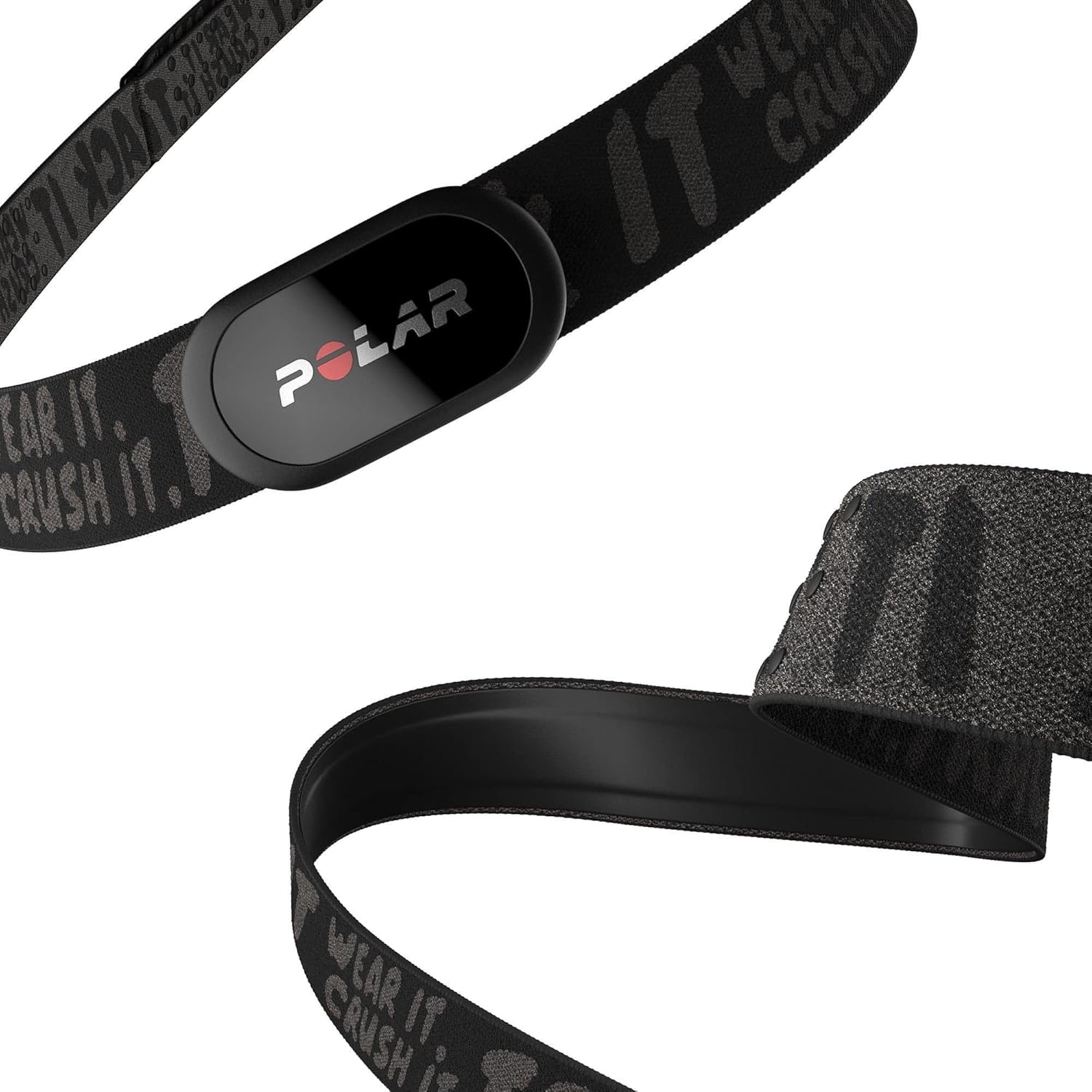
The Polar H10 is the kind of Chest Strap you can stop thinking about mid-workout—and that’s the goal. The Soft Textile Strap blends polyamide, polyurethane, elastane, and polyester, so it feels smooth against your skin while still holding its shape. In practice, you’ll likely “feel it” for the first few minutes, then forget it’s there after about 10–15 minutes as it warms up and settles into place.
“A flatter, firmer strap that stays in place—comfort where it counts.” — Polar
Non-Slip Silicone grip + firm buckle = steady readings
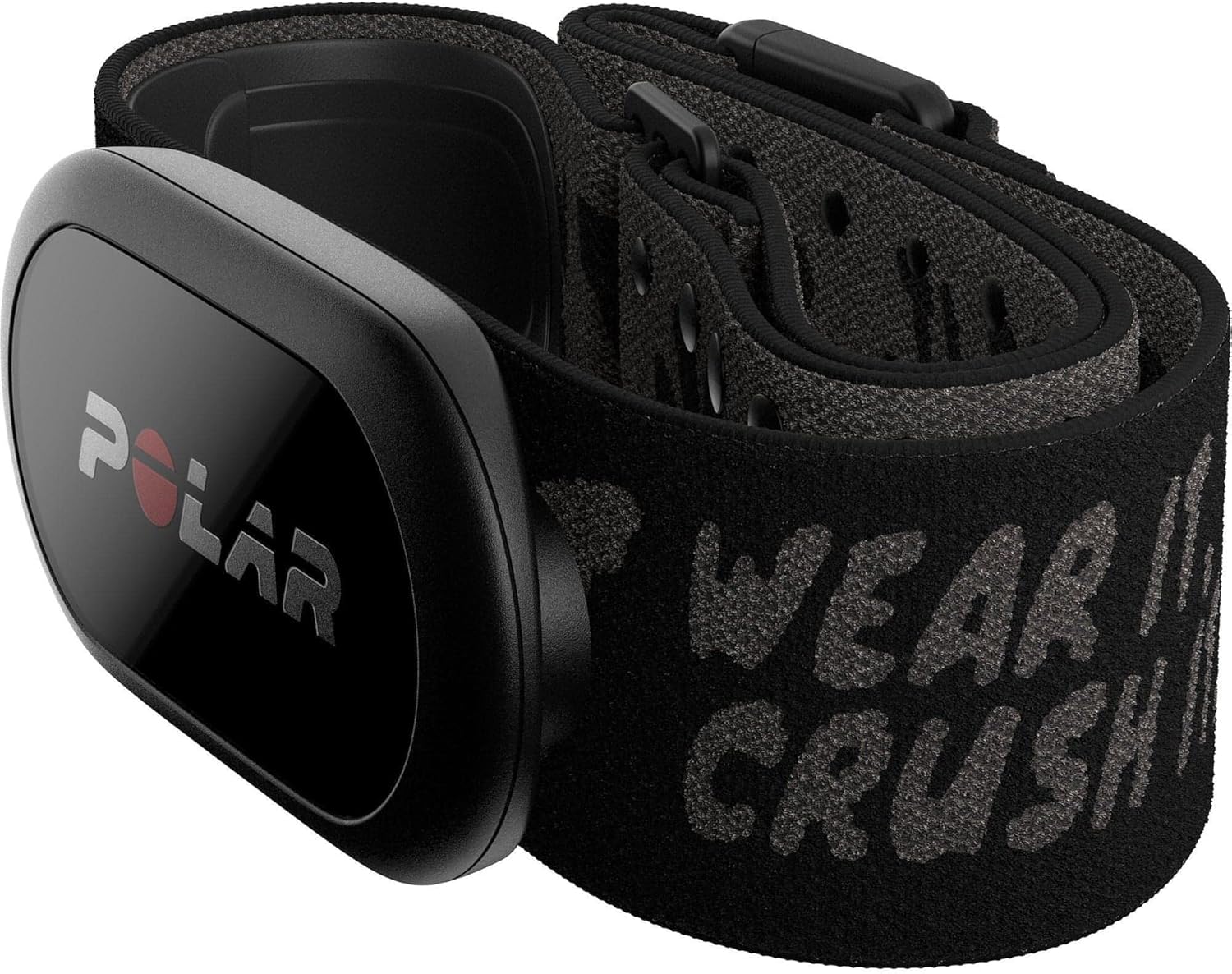
Comfort is only half the story—stability is what keeps your data clean. The strap uses Non-Slip Silicone prints (those rubberized dots) to reduce sliding when you sweat, sprint, or brace hard under a barbell. Pair that with the firm latch/buckle, and the H10 stays planted during intervals, heavy lifts, and long rides, helping the sensor maintain consistent skin contact.
Durability, Water Resistance, and easy cleaning
For real-world Durability, the H10 is built to handle rough training weeks and messy conditions. It’s rated for Water Resistance down to 30 meters, and it also supports 5 kHz underwater transmission, which is useful when you’re swimming or training in water where Bluetooth can struggle. It’s designed to work from -10°C to 50°C, so cold outdoor runs and hot gym sessions are both fair game.
Cleaning is refreshingly simple: the strap is machine washable, and the sensor pod cleans up with soap and water. That means you can actually keep it fresh without babying it—important for comfort and long-term performance.
Fit, sizing, and everyday wearability
- Sizes: XS/S (20–30 in), M/XXL (30–45 in)
- Weight: ~60 g
- Colors: Black, Red, Orange, Gray, Black Crush, Beat Red
At around 60 grams, it’s light enough for daily training, and the size range makes it easier to get a snug fit without over-tightening.
Real-world maintenance, support, and comparisons
Keep your Polar H10 Performance consistent with simple care
In day-to-day training, the Polar H10 is low-maintenance, but it rewards a few habits. If your numbers start to look jumpy after months (or years), don’t assume the Polar H10 Sensor is failing. Many long-time users find the strap is the real wear item—salt, sweat, and stretched fabric can reduce contact quality.
- Rinse the strap after hard sessions and wash with mild soap and water.
- Let it air-dry fully before storing.
- If readings get erratic over time, replace the strap first; it often restores accuracy without buying a new sensor.
The strap is also machine washable (follow Polar’s care guidance), which helps if you train often or sweat heavily.
Battery Life and User Replaceable power
Battery anxiety isn’t a big part of the H10 experience. You get up to 400 hours from a CR2025 coin cell, and it’s User Replaceable via a snap-open hatch—no special tools, no service appointment. That’s a practical win if you travel, race, or train outdoors and don’t want downtime.
Quick Product Description detail you’ll actually care about: keep a spare CR2025 in your gym bag, and you’re covered for months.
Support, warranty, and real user feedback
On Amazon, the H10 sits at $87.95, backed by a 2-year warranty. It’s also widely validated by the crowd: 4.0 stars from 25,000+ reviewers, with rankings up to #248 in Sports & Outdoors and #3 in Heart Rate Monitors (through Nov 2025). Customer support is commonly described as fast and helpful, though some users mention intermittent connectivity or the need for regular strap cleaning to keep signals stable.
Comparisons: Garmin HRM Dual and WHOOP 5.0
Against Garmin HRM Dual, you’ll likely notice better comfort (a flatter, secure strap feel) and more transparent signal behavior—the H10 doesn’t quietly “hold” a stale number when contact drops. Compared to WHOOP 5.0, the H10 is the more open, mix-and-match option, pairing easily across apps and devices.
“For athletes who demand accurate, real-time tracking without fuss, the Polar H10 remains a reliable choice.” — TechRadar
Wild cards: a small thought experiment and a buying checklist
Thought experiment: race day with no phone (Built-In Memory)
Picture a triathlon where you leave your phone in transition on purpose. You dive into the water, fight for space, then sprint to the bike—yet you still want one clean heart-rate story from start to finish. This is where the Polar H10’s Built-In Memory becomes a quiet superpower: it can store one training session on the sensor, so you can record a workout even when your phone isn’t with you, then sync it later in Polar Beat. It’s a small feature that changes how free you feel on race day, especially when you don’t want a phone bouncing in a pocket or strapped to your arm.
Swim wild card: 5 kHz Transmission + Operation Temperature
Now imagine the swim leg again, but with a twist: you actually want heart rate data in the water. The H10 supports 5 kHz Transmission, which is designed for underwater use with compatible gym and swim systems—one of the reasons it’s a real option for swimmers, not just runners. Add the fact it’s waterproof to 30 meters, and you’ve got a strap that doesn’t panic when training gets wet. Also check the listed Operation Temperature for your environment—if you train in cold open water or hot summer roads, you want gear that’s built to behave consistently.
Buying checklist (and one small mistake to avoid)
If you’re about to buy, keep your checklist simple: you want an accurate ECG-style chest sensor, dual Bluetooth so your watch and phone can connect at once, ANT+ for cycling computers, waterproofing to 30m, a User Replaceable battery (it uses a CR2025 rated up to 400 hours), a strap you can wash, and a solid 2-year warranty. Quick personal note: I once swapped the CR2025 and didn’t fully snap the battery hatch closed—don’t do that. Close it tight, then test a connection before you head out.
“Keep it simple: a device that tells the truth about your heart rate is often the one you’ll trust most.” — Polar