.png&w=1280&q=75)
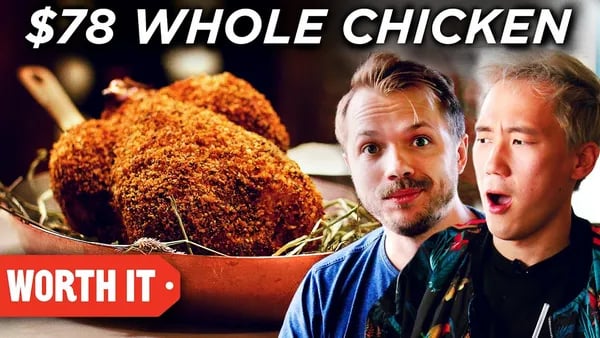
Walking into a barbecue joint on a Saturday afternoon, the aroma of smoked chicken reminds me of my childhood kitchen—and also of an odd fact I read once: Chickens are technically dinosaurs. (That's not just trivia; it's dinner conversation gold.) We tend to see a whole chicken as an everyday meal, but hidden beneath that golden skin is a universe of stories: smoky backyard barbecues, inventive home cooks blending cultures in their rotisserie, chefs reimagining poultry in fine-dining kitchens, and even evolutionary whispers tying dinner back to Jurassic roots. Today, I'm on a mission to decide: Which whole chicken is most worth your time and money, and what can a bird teach us about flavor, culture, and even family?
Smoked, Fried, and Grilled: The California Barbecue Statement
When our journey through California barbecue began, I knew I wanted to start somewhere that truly redefined what a whole chicken could be. That’s how I found myself at Domestic Barbecue in Covina, a place that’s quietly making a bold statement with their smoked, fried, and grilled whole chicken. If you’re looking for a California barbecue chicken experience that stands apart from the usual Texas or Mississippi styles, this is it.
Three Steps, One Spectacular Bird
The process at Domestic Barbecue is nothing short of obsessive. Their whole chicken—served in halves but always ordered as a whole—is a labor of love and technique. It starts with a dry brine, a method that draws out moisture through osmosis and replaces it with the salt and seasonings of their signature dry rub. As the chef explained, “It’s the flavor and balance between the wood and the seasonings that we use that make it unique.”
- Step 1: Dry Brine – The chicken is split through the spine and left to absorb the dry rub, locking in flavor and ensuring juicy meat.
- Step 2: Smoke – The bird spends anywhere from 2 to 2 hours and 45 minutes in the smoker, soaking up a custom blend of woods. This slow process infuses it with layers of flavor and aroma.
- Step 3: Quick Fry & Grill – After smoking, the chicken is briefly deep-fried to crisp the skin, then finished on the grill for those perfect crosshatch marks. Finally, it’s glazed with a house-made barbecue sauce that’s sticky, sweet, and just a little bit tangy.
The result? A chicken that’s juicy and tender, with skin that snaps under your teeth and a flavor profile that’s unmistakably Californian. Even the breast—often the driest part—was dripping with juice, a testament to the chef’s careful attention to every stage.
California Barbecue: A Style All Its Own
Domestic Barbecue doesn’t try to copy the South or Texas. Instead, they blend classic barbecue techniques with their own twists: different wood blends, unique dry rubs, and a focus on balance. As the chef told me, “We take a lot of the regional classic barbecue technique and some of the flavors and then we blend it into our own.” It’s a true California barbecue chicken—smoky, a little sweet, and always juicy.
Whole Chicken Price Comparison: Retail vs. Restaurant
If you’re wondering about the whole chicken price comparison, here’s what I found: in mid-2025, retail chicken prices in the U.S. averaged between $2.05 and $2.08 per pound. Chicken wholesale price can be even lower, but specialty birds like this—smoked, fried, and grilled—command a premium. At Domestic Barbecue, you’re not just paying for the chicken; you’re paying for hours of careful prep and the chef’s expertise.
Sides That Steal the Show
No California barbecue chicken feast is complete without sides. Domestic’s bechamel mac & cheese is a creamy, melty dream, made with real cheddar, mozzarella, and jack cheeses. Their cornbread is another surprise: sweet, fluffy, and studded with whole corn kernels. It’s a far cry from the dry, crumbly versions I grew up with, and it pairs perfectly with the juicy chicken.
The chicken’s getting the full spa treatment, you know? It really is. We’re giving it the respect it deserves.
Every bite at Domestic Barbecue is a reminder that even the simplest ingredients—when treated with care and creativity—can become something spectacular. Their whole chicken isn’t just a menu item; it’s a California barbecue statement.
The Rotisserie Remix: Fusion Flavors and Family Feasts
The first thing you notice when you open a Saucy Chick dinner is the aroma—a swirl of citrus, cumin, caramelized onions, and something deeper, almost like a memory. I still remember the first time I tried their two signature rotisserie chickens: the Yucatecan Pabil and the Indian Jíra. Each bird told a story, not just with flavor but with the way it brought everyone to the table, eager to taste, share, and compare.
From Pandemic Pop-Up to Family Feast
Saucy Chick began as a pandemic project in 2020. Reya and Marcel, both furloughed from their corporate jobs, found themselves with time, a family to support, and a craving for something meaningful. What started as cooking for friends and family for donations quickly grew—word spread, and soon they were feeding friends of friends. Their kitchen became a hub for home-cooked, globally inspired rotisserie dinners, designed for sharing.
Two Chickens, Two Worlds: Pabil and Jíra
Their menu features two distinct whole chickens, each marinated for at least 24 hours, brined for up to eight, and slow-roasted in an oven that can hold up to 21 birds at once. The Pabil chicken draws from Yucatecan traditions—think seeds, citrus, apple cider vinegar, and garlic, a nod to the region’s classic pork but “chicken-bited” for a new twist. The Jíra chicken is pure Indian comfort: caramelized onions, ginger, garlic, and a marinade inspired by Marcel’s dad, layered under the skin for maximum flavor.
“Sometimes it’s a collaboration, other times it’s a collision.”
That’s how Reya and Marcel describe their kitchen. Their roots—Mexican and Indian—collide and collaborate in every bite, and you taste it in the sides too: chorizo-laced pinto beans (a family recipe once reserved for holidays), coconut, cumin, lime, and scratch-made sauces that range from tangy to fiery.
Family-Style, Sauce-Driven, and Joyfully Messy
A Saucy Chick meal is built for sharing. Each order comes with a whole chicken, two sides, eight tortillas, one sauce, and pickled onions. You can add a sauce sampler—five scratch-crafted sauces, each with its own personality. The sides are as inventive as the chickens: Mom’s Beans (pinto beans whipped with chorizo, jalapeño, olives, and cheese), Maya Coba beans, charred cauliflower, and jeera rice.
The joy is in the mixing. I watched as everyone at the table built their perfect bite—layering chicken, beans, rice, cauliflower, and a splash of every sauce onto a tortilla. Some bites were bold, some chaotic, but all were delicious. As Marcel put it, “I want all the sauces and I just create little bites and include everything on it. I’m a burrito guy.” Reya’s favorite? Mixing all the sauces together, a high-speed collision that somehow works.
Chicken Product Categories and Retail Chicken Prices
In 2025, pastured roasting chickens (5-7 lbs) are a premium treat, often priced around $8.50 per pound, especially for organic or corn-free feed options. The whole chicken price comparison shows that while supermarket birds are cheaper, the flavor and texture of a fresh whole chicken—especially one marinated and roasted like Saucy Chick’s—are in a different league. Market volatility and supply chain shifts have nudged retail chicken prices upward, but for a special family meal, the investment feels justified.
Big Dinner Energy: The Rotisserie Table
- Two globally inspired chickens: Yucatecan Pabil and Indian Jíra
- Family-style sides: beans, rice, cauliflower, tortillas
- Customizable sauces for every palate
- Everything designed for sharing and mixing
This isn’t just a meal—it’s a celebration of cross-cultural flavors, family traditions, and the simple joy of passing a platter around the table. Each bite is a new story, and every sauce is an invitation to remix your own feast.
Chickens as Dinosaurs: Flavor and Science Collide
Midway through my journey exploring the world of chickens—across dinner plates, grocery aisles, and backyard coops—I made an unexpected detour that changed the way I look at every rotisserie bird. I found myself at the Natural History Museum of Los Angeles County, standing in front of towering dinosaur skeletons and, surprisingly, thinking about tonight’s dinner. My guide for this prehistoric adventure was Dr. Luis Chiappe, the museum’s Director of the Dinosaur Institute, who greeted me with a fact that would reshape my understanding of chickens forever.
“Not only are they closely related to dinosaurs—they are dinosaurs.”
That’s right. According to Dr. Chiappe, when you’re looking at a chicken, you’re not just seeing a distant cousin of the T-Rex—you’re seeing a living, breathing dinosaur. It’s not just trivia; it’s science. All birds, not just chickens, are direct descendants of the mighty dinosaurs. But chickens, thanks to their popularity and presence in our daily lives, are the most familiar reminder of our planet’s ancient past.
From T-Rex to Table: The Anatomy of Connection
Dr. Chiappe walked me through the fascinating similarities between chickens and their prehistoric ancestors. The first clue is the wishbone, or forcula. This boomerang-shaped bone, which we snap for luck at Thanksgiving, is a direct anatomical link to dinosaurs like T-Rex. Both creatures share this structure, a reminder of their shared evolutionary path.
Next, he pointed out the tridactyle feet—three main toes that leave a distinctive footprint. If you’ve ever seen a chicken’s tracks in the mud, you’re looking at the same basic pattern that a T-Rex would have left in the Cretaceous. And then there are the feathers. While we often imagine dinosaurs as scaly giants, fossil evidence now shows that many relatives of T-Rex were feathered. Picture a “giant chicken” stalking ancient forests—suddenly, the leap from dinosaur to dinner doesn’t seem so far.
Chicken Price Inflation and the Modern Market
As I wandered the museum halls, I couldn’t help but think about the journey from dinosaur to dinner plate in another sense: the chicken market volatility and chicken price inflation that shape our everyday choices. According to the USDA, broiler production is projected to reach 47.5 billion pounds in 2025, up from 2024. This growth is fueled by improved hatchery data and lower feed costs, but it’s also a response to the ever-increasing demand for chicken—our favorite dinosaur protein.
Yet, chicken price inflation is real. Since 1997, prices have nearly doubled, and if you look back to 1935, the cost of fresh whole chicken has increased by more than 800%. Every time you pick up a pack of drumsticks, you’re not just buying dinner—you’re participating in a market shaped by millions of years of evolution and decades of economic shifts.
Field Research and Backyard Grilling: A Paleontologist’s Plate
Curious about how a dinosaur expert enjoys his chicken, I asked Dr. Chiappe about his favorite preparation. He smiled and described how he likes to butterfly a chicken and grill it, both at home and out in the field. There’s something poetic about a paleontologist, surrounded by fossils, grilling up one of the last living dinosaurs. It turns an ordinary meal into a conversation about deep time, evolution, and the wild journey from T-Rex to table.
So next time you carve into a roast chicken, remember: you’re not just eating a bird. You’re sharing a meal with history—a story that began millions of years ago, still unfolding on your plate today.
Fine Dining Evolution: When a Chicken Becomes the ‘Dirty Bird’
There’s a moment in every food lover’s journey when something familiar suddenly feels brand new. For me, that moment happened at Citron, the evolved form of the legendary Melisse, where I sat down to experience their signature dish: the ‘Dirty Bird for Two.’ It’s a large whole pastured chicken, but calling it just “roast chicken” would be missing the point entirely. This is a story of how a humble bird, once a symbol of comfort food, is now a centerpiece of fine dining—and how chicken price inflation and changing tastes have shaped its journey.
From Melisse to Citron: A New Chapter in Chicken
Citron stands on the shoulders of Melisse, a restaurant I’d visited years ago for a deep dive into eggs. This time, I was back, but the star was different. The kitchen was led by Chef Hillary Henderson, a name I remembered from our first steak video at Cut Beverly Hills. Back then, she was mastering beef; now, she’s championing poultry with the same passion and precision. As I sat down, memories flooded back—“So much is happening here…” I thought, realizing how far both the chef and the chicken had come.
The ‘Dirty Bird’: A Chef-Driven Whole Chicken
The ‘Dirty Bird for Two’ is not your average Sunday roast. It’s a large whole pastured chicken, sourced with care and prepared with a level of technique usually reserved for the finest cuts of steak. The bird arrives golden and glistening, its aroma filling the room. There are touches of luxury—herb-infused butter under the skin, a jus made from slow-roasted bones, and sides that elevate the meal from rustic to refined.
- Pastured Chicken: Sourced for flavor and ethical farming, reflecting the growing demand for quality over quantity.
- Expert Technique: Dry-aged, trussed, and roasted to perfection—each step is a nod to classic French methods, but with a modern twist.
- Luxury Touches: Accompaniments like truffle jus or seasonal vegetables, turning a simple meal into a celebration.
Chicken Price Inflation: From Everyday Meal to Culinary Icon
It’s impossible to talk about fine dining chicken without mentioning the numbers. Retail chicken prices have nearly doubled from 1997 to 2025, a nearly 100% increase. This isn’t just about economics—it’s about how we value chicken. Once the cheapest protein at the grocery store, chicken now commands respect in both retail and restaurant settings, especially when it’s a specialty product like Citron’s pastured bird.
| Year | Average Retail Chicken Price (per lb) |
|---|---|
| 1997 | $1.10 |
| 2025 (projected) | $2.20 |
Wholesale and retail chicken prices vary by category, but specialty and fine-dining innovations like the ‘Dirty Bird’ are leading the way in redefining what a chicken dish can be. The price reflects not just the cost of the bird, but the skill, sourcing, and story behind it.
Nostalgia Meets Innovation
There’s something deeply nostalgic about roast chicken—it’s the meal many of us grew up with. But at Citron, nostalgia is just the starting point. Chef Henderson bridges the gap between memory and ambition, turning the everyday into the extraordinary. The ‘Dirty Bird’ is a reminder that sometimes, a chicken is much more than dinner. It’s a story, a celebration, and a marker of how far fine dining has come.
“So much is happening here…”
Citron’s ‘Dirty Bird’ transforms the everyday chicken into a statement of culinary artistry, reflecting changes in taste, ambition, and nostalgia. It’s proof that even in a world of rising retail chicken prices and inflation, the right chef can make a simple bird soar.
Unpredictable Lessons: What a Whole Chicken Says About Price, Value, and Flavor
I never thought a simple whole chicken could teach me so much about the world—about money, memory, and the meaning of “worth it.” But after tasting three birds at three wildly different price points, I realized that whole chicken price comparison is about more than numbers on a sticker. It’s about flavor, yes, but also about the stories we tell ourselves, the hands that prepare our food, and the unpredictable forces that shape what ends up on our plates.
Let’s start with the numbers. In mid-2025, retail chicken prices for a standard whole bird in the U.S. hovered around $2.05 to $2.08 per pound. That’s the average, the baseline for most grocery store shoppers. But step into a specialty butcher or a fine-dining kitchen, and you’ll find pastured roasting chickens selling for $8.50 per pound or more. Meanwhile, frozen wholesale prices can dip as low as $1.35 per pound, and the forecast for wholesale broiler prices in 2025 is even lower, at $1.27 per pound. The range is dizzying, and it’s shaped by everything from feed costs to avian influenza outbreaks to the whims of global supply chains.
That volatility isn’t new. As I dug into the numbers, I learned that “
Chicken price inflation from 1997 to 2025 is nearly 100%.” Go back even further, and the change is even more dramatic: fresh whole chicken prices have soared over 800% since 1935. It’s a reminder that chicken market volatility is nothing new, and that every bird we buy is a snapshot of a much bigger story.
But here’s the thing: when I sat down to taste those three chickens, the numbers faded into the background. What mattered most wasn’t the price per pound, but the experience itself. The first bird, the everyday supermarket chicken, was familiar and comforting. The second, a slightly pricier organic bird, had a richer flavor and juicier texture. And the third, a pastured chicken from a small local farm, was a revelation—deeply savory, with a complexity that lingered long after the last bite.
Yet, as much as I loved that last chicken, I couldn’t help but think about what made it “worth it.” Was it the flavor alone? Or was it the story—the knowledge that it was raised on open pasture, by people who cared about their craft? Was it the nostalgia of Sunday dinners, or the thrill of trying something new? I remembered a quote from the show: “You wouldn’t watch a movie an act at a time; you watch the whole thing.” The same is true for chicken. The value isn’t just in the meat, but in the skin, the fat, the bones, and the memories we make around the table.
In the end, chicken price inflation and retail chicken prices are only part of the story. The real lesson is that what feels “worth it” is deeply personal. Sometimes, it’s about stretching a dollar; other times, it’s about savoring something special. And sometimes, it’s about the unpredictable joy of discovering that the simplest meal—a whole chicken, roasted to perfection—can still surprise you, no matter the price.
So next time you’re standing at the butcher counter, weighing your options, remember: the true value of a whole chicken isn’t just in the price per pound. It’s in the flavor, the story, and the memories you create. And that, to me, is always worth it.