.png&w=1280&q=75)
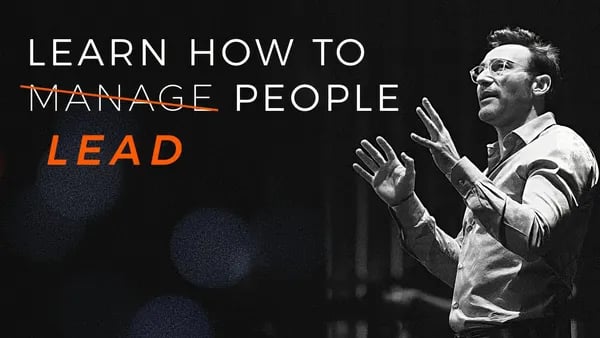
I’ll never forget the moment my first manager handed me a clipboard and said, “Just keep everyone on track.” The expectation seemed simple. But within days, I realized people don’t respond to checklists or orders—they crave vision and connection. Ironically, nobody jumps out of bed hoping to be managed. They want purpose. If that resonates, you're probably wrestling with the same questions I did: How do you lead without stifling creativity? Does climbing the ranks help—or hinder—real leadership? This post is my attempt at honest answers, peppered with mishaps and lessons I wish someone had shared sooner.
Nobody Dreams of Being ‘Managed’: The Realities We Ignore
Let’s face it: nobody wakes up in the morning thinking, “I hope I get managed today.” People don’t crave oversight or control—they crave inspiration, purpose, and the chance to make a difference. This is the core of the leadership vs management differences conversation. It’s a reality we often ignore, but it’s one that shapes the way teams feel, perform, and grow.
People Seek Inspiration, Not Rigid Oversight
I learned this the hard way. Early in my career, I was tasked with motivating a new team. I prepared what I thought was a rousing speech—packed with targets, deadlines, and a detailed breakdown of our processes. I delivered it with all the enthusiasm I could muster, expecting to see eyes light up with excitement. Instead, I was met with blank stares and stifled yawns. It was a classic case of confusing management with leadership. I was managing the process, not leading the people.
This experience taught me that leadership and management roles are not interchangeable. While managers focus on execution and efficiency, leaders inspire and motivate. Leadership is about vision and connecting with people on a human level. As I realized that day, you can’t manage people into engagement—you have to lead them there.
Management Often Misses the Human Element
Too often, organizations treat management as a position or a rank—a box to check on the org chart. The reality is, leadership is a responsibility, not just a title. When we focus solely on processes, projects, and schedules, we risk missing the human element at work. People aren’t spreadsheets or timelines—they’re individuals with hopes, fears, and ambitions.
You can't manage people—you can manage a process, you can manage a project, you can manage a schedule, but you lead people.
This quote sums up the fundamental leadership vs management differences. Management is about coordination and control; leadership is about influence and inspiration. When we treat people like tasks to be managed, we strip away their sense of ownership and motivation. When we lead, we invite them to bring their best selves to the table.
Being in ‘Charge’ Isn’t the Same as Having Influence
One of the most common mistakes I see is equating being in charge with having influence. Just because someone has authority doesn’t mean they inspire loyalty or commitment. Real leadership responsibility is about lifting others up, not just directing their actions. It’s about seeing those around us rise, not just ensuring the work gets done.
Leaders understand that influence comes from trust, empathy, and vision. Managers may have the power to assign tasks, but only leaders can ignite passion and commitment. This is why leadership and management roles must be clearly understood and intentionally developed.
Leadership vs Management: Only One Drives Genuine Engagement
- Management coordinates processes, projects, and schedules.
- Leadership inspires people, creates vision, and fosters engagement.
When we blur these roles, we risk disengaging our teams. People want to be part of something meaningful, not just another cog in the machine. Genuine engagement comes from feeling seen, heard, and valued—not from being managed into compliance.
Wild Card: What If Promotions Came With Improv Classes?
Imagine a world where, instead of a new spreadsheet or a bigger office, a promotion came with improv comedy classes. It sounds wild, but think about it: improv teaches listening, adaptability, empathy, and creativity—all essential leadership responsibility skills. It’s a reminder that leadership is a human function, not just a technical one. If we invested in developing these qualities, rather than just management techniques, how much more engaged and innovative could our teams become?
In the end, the difference between leadership vs management is clear: you manage things, but you lead people. The best leaders I know understand this distinction and embrace leadership as a responsibility—to inspire, to connect, and to help others rise.
The Accidental Leader: Why Promotions Don’t Prepare You
Most of us do the jobs that we're good at. We may have gone to school for engineering, law, or another specialized field. If not, our companies often provide on-the-job training, especially for junior employees. Organizations invest heavily in these technical training programs because they want us to be good at our jobs. They look at our grades, our performance in training, and how well we execute our tasks. If you are good at your job, you will get promoted. And then, eventually, you’ll find yourself in a position where you no longer do the job you were trained to do. You now have to do a new job called leadership. And most of us get little to no training on how to do that job.
Promotions and Leadership Roles: A Disconnect
The path from technical expert to leader is paved with good intentions, but not much guidance. Promotions and leadership roles are often handed out as rewards for technical excellence, not for proven leadership skills. This is a fundamental flaw in how organizations approach talent development. The assumption is that if you can do the work, you can lead others to do it too. But the reality is, the skills required for leadership are very different from those needed for technical success.
- Technical skill gets you noticed and promoted.
- Leadership ability is rarely evaluated until you’re already in the role.
- Leadership development programs are often neglected compared to technical training.
Most companies have sophisticated training programs for technical roles, but when it comes to leadership skills development, the approach is often “sink or swim.”
Thrown Into the Deep End: My First Week as a Team Lead
I’ll never forget my awkward first week as a ‘team lead.’ I had just been promoted after consistently delivering great results as an individual contributor. Suddenly, I was responsible for motivating and guiding a team. There was no manual, no formal training, and no mentor assigned. I found myself desperately Googling “what is leadership?” late at night, hoping for a quick answer. The truth is, there isn’t one. Leadership is a different job entirely, and I was unprepared.
Most of us do the jobs that we're good at...and if you are good at your job you will get promoted and you'll eventually get promoted into a position where you no longer do the job that you were trained to do...called leadership.
Leadership Mindset and Humility: The Real Prerequisites
Transitioning from management to leadership is not just about taking on more responsibility. It’s a shift in focus and mindset. Technical know-how may get you to the top, but it won’t keep you there. What matters most is your ability to inspire, connect, and develop others. Leadership mindset and humility become the real prerequisites for success.
- Mindset Shift: Moving from “doing the work” to “enabling others.”
- Humility: Admitting you don’t have all the answers and being open to learning from your team.
- Empathy: Understanding what motivates each individual and adapting your approach.
These are not skills you pick up overnight. They require intentional practice, feedback, and often, a willingness to unlearn old habits. Yet, most organizations still expect new leaders to figure it out on their own.
Why Leadership Development Programs Matter
There is a cultural expectation that leaders will magically appear after enough technical success. But leadership skills development is a discipline in its own right. Unlike technical roles, where formal education and structured training are the norm, leadership education is often lacking. This leaves new leaders to rely on luck, self-learning, or trial and error—none of which are fair to the leader or their team.
- Organizations need to invest in leadership development programs as seriously as they do technical training.
- Transitioning from management to leadership requires ongoing support, coaching, and real-world practice.
- Balancing management and leadership is rarely mastered through promotion alone.
Without this support, we create accidental leaders—people promoted for their technical skills, but left to navigate the complex world of leadership without a map.
Forever a Student: Humility, Curiosity, and Continuous Learning
If there is one lesson that stands above all others in my journey as a leader, it is this: the best leaders never stop learning. They never see themselves as finished products, or as experts who have nothing left to discover. Instead, they approach leadership as a lifelong pursuit, fueled by humility and curiosity. This mindset—what I call being “forever a student”—is the foundation of continuous learning in leadership and the key to sustained effectiveness.
I’ve seen it time and again: leaders who consistently outperform their peers are not necessarily the ones with the most impressive titles or the longest resumes. Rather, they are the ones who study their craft relentlessly. They read books, devour articles, watch talks, and—perhaps most importantly—seek out conversations with people at every level of the organization. They are fascinated by the art and science of leadership, and they never, ever think of themselves as experts. As I often say, “All the best leaders I've ever met study it...they never ever think of themselves as experts, they always think of themselves as students.”
Formal training has its place, of course. Many organizations offer leadership education resources, and I’ve benefited from structured programs myself. But the truth is, active learning—through books, conversations, articles, and real-world observation—outshines formal training every time. The most valuable insights often come from unexpected places. My favorite leadership lesson didn’t come from a seminar or a bestselling book. It came from a late-night chat with a janitor, who shared his perspective on what makes a boss worth following. His answer was simple: “A boss who listens, asks questions, and admits when they don’t know.” That conversation shaped my leadership mindset more than any formal curriculum ever could.
Continuous learning in leadership is not just about acquiring new skills or knowledge. It’s about cultivating self-awareness and humility. Effective leaders proactively seek growth and feedback, not because they are insecure, but because they understand that leadership is as much about self-reflection as it is about group direction. The willingness to ask, “How can I do better?” or “What am I missing?” creates a culture of openness and trust. When team members see their leader embracing feedback and striving for improvement, they are far more likely to do the same. This feedback culture is the engine of real, lasting growth—for individuals and for teams.
I sometimes wonder: what if every leader had to write an annual “leadership failure” essay before getting a raise? Imagine the humility and self-awareness that would foster. Admitting where we’ve fallen short isn’t a sign of weakness; it’s a mark of strength and maturity. It signals to the team that learning from mistakes is not only acceptable, but expected. This kind of vulnerability is the bedrock of trust, and trust is the currency of effective leadership.
The leadership mindset and humility go hand in hand. Leaders who see themselves as students foster deeper connections with their teams. They invite ideas, encourage honest feedback, and create space for others to grow. They know that leadership is not about having all the answers, but about asking better questions and being open to learning from anyone—regardless of their role or rank.
In the end, developing leadership skills is a journey, not a destination. The leaders I admire most are those who remain curious, humble, and hungry for growth. They never stop studying, never stop questioning, and never stop learning. If we want to stop managing and start truly leading, we must embrace the mindset of being forever a student. That is how we inspire, motivate, and move our teams—and ourselves—forward.