.png&w=1280&q=75)
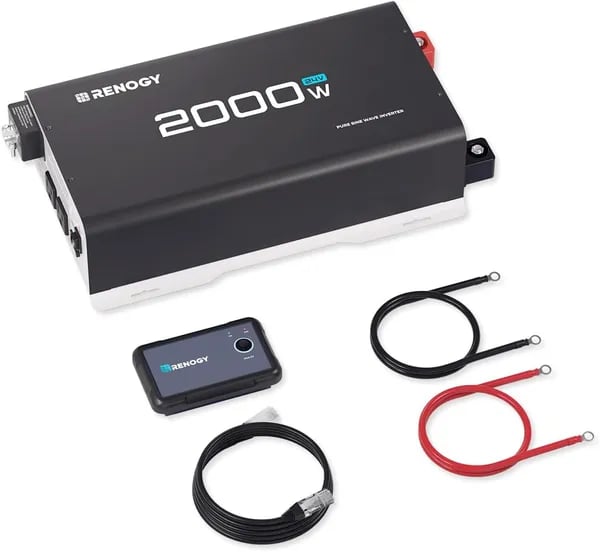
You’ve probably swiped through dozens of inverter listings at 2 a.m., eyes blurry from specs and price tags. I did the same, then took a Renogy 2000W Pure Sine Wave inverter for a week-long test in a friend’s RV. The result? Quiet, dependable power and fewer battery headaches. This outline will walk you through what matters when you’re buying or monitoring this inverter on Amazon—without the fluff.
Quick Specs — What You’ll Actually Get
If you want the fast facts on this Renogy Inverter, here’s what matters in real use: power you can count on, clean output for picky electronics, and a 24V design that keeps your wiring simpler.
Power: 2000W Continuous, 4000W Peak
This 2000W Inverter delivers 2000W continuous power with a 4000W peak for short startup surges. That’s a solid range for many RV and off-grid loads—think small kitchen appliances, tools, TVs, and chargers. Just keep your combined running loads at or below 2000W to avoid overload trips, especially if you’re stacking multiple devices at once.
Output Type: Pure Sine Wave (Cleaner Than MSW)
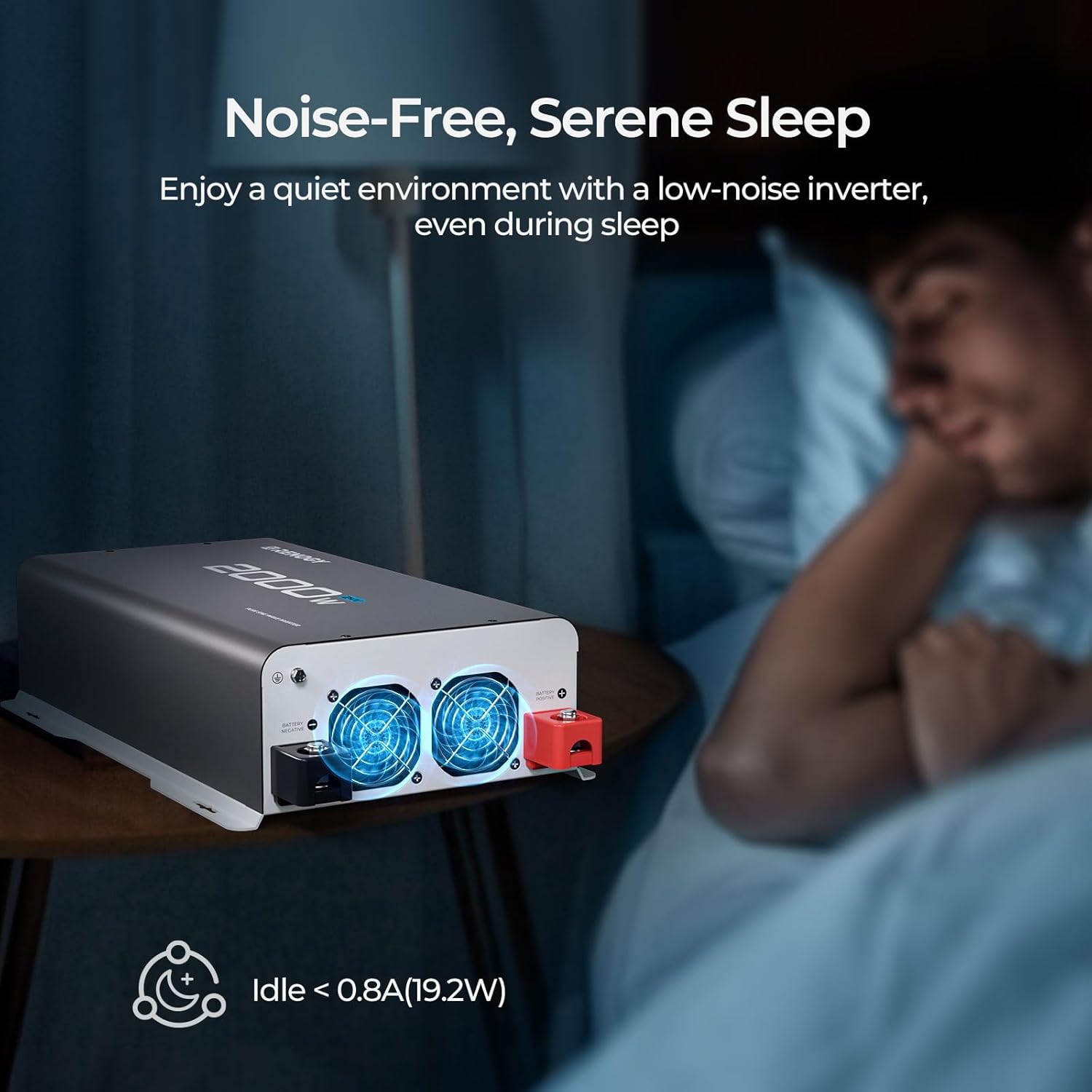
The big win is Pure Sine Wave output. Compared to modified sine wave (MSW), it’s cleaner and typically quieter for sensitive and inductive loads. That means better performance for items like microwaves, compressors, and motor-driven gear (fridges, fans, pumps), with less buzzing and less chance of weird behavior.
Lisa Carr, RV Technician: "This unit runs quietly and reliably in confined spaces—no buzzing, just steady power."
Efficiency + 24V Setup: Less Waste, Simpler Wiring
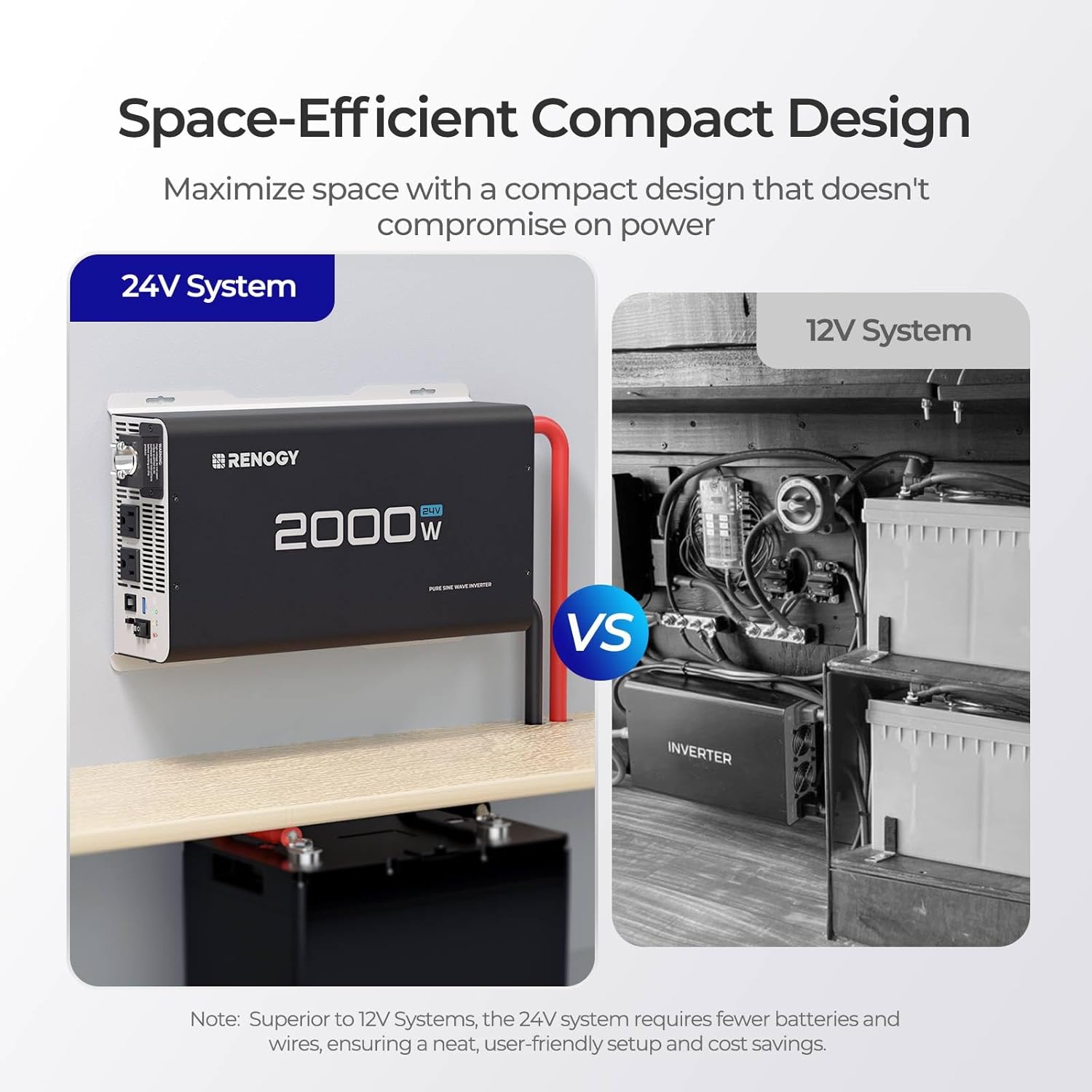
Renogy lists 92% energy efficiency, so you waste less battery power as heat. And because it’s a 24V inverter, you can often use fewer batteries (vs. 12V builds for the same wattage) and run less bulky cabling, which helps keep installs cleaner and can cut wiring cost.
Inverter Specs (Model, Size, Weight)
| Spec | Value |
|---|---|
| Model | RIV2420P2-12S |
| ASIN | B0DJ34D6KQ |
| Continuous / Peak | 2000W / 4000W |
| Efficiency | 92% |
| Dimensions | 16.94 x 8.99 x 3.75 in |
| Weight | 10.14 lbs |
Connections, Remote Control, and Built-In Protection
- Two AC outputs plus a terminal block for flexible setups
- Remote control switch so you can operate/monitor it more conveniently
- Five protection features designed to help safeguard the inverter and your devices
Buying Smart — Amazon Price, Price History & Monitoring
Current Amazon Price (and what you’re really paying)
Right now, the Renogy Pure Sine Wave 2000W Inverter (ASIN: B0DJ34D6KQ) shows an Amazon Price of $247.54, marked as 27% off the $339.99 list price. If you’re open to pre-owned, there’s a Used – Like New option at $225.26, but stock is tight (only 10 units noted). New units are sold by Amazon (ATVPDKIKX0DER), while the like-new offer is from A2L77EE7U53NWQ.
Price History: what the trackers show
This listing has seen frequent Price Changes across 2024–2025, which usually means you can save money if you time it right. According to CamelCamelCamel, the lowest recorded price was $179.07 on Dec 11, 2025. Another data point from PriceHistory.app shows $215.99 on Nov 28, 2025.
- CamelCamelCamel low: $179.07 (Dec 11, 2025)
- PriceHistory.app record: $215.99 (Nov 28, 2025)
- Notable drop: $259.99 → $171.99 on Dec 9, 2024 (33.85% decrease)
- Other observed price: $239.98 (Nov 26, 2024); also seen around $183.60 recently
Mark Hughes, Solar Installer: "Tracking Amazon Price history pays off—timing a purchase can save you hundreds on inverters like this."
Use a Price Tracker before you buy
If you don’t need it today, set alerts with a Price Tracker like CamelCamelCamel or PriceHistory.app. With sale-driven swings, you’re watching for a repeat dip closer to the $215 range—or even the $179 low.
Prime delivery + holiday returns can change your decision
The listing shows In Stock and Prime eligible (example delivery: Tuesday, Dec 30). Also, holiday purchases may include a longer return window—free refund or replacement until Jan 31, 2026 for eligible 2025 holiday orders—useful if you’re buying during promos or gifting.
Real-World Use & Safety — How It Behaves Under Load
Pure Sine Wave performance when your gear actually starts
In real use, the Renogy Inverter stands out because its Pure Sine Wave output stays clean when loads kick on. That matters most with sensitive electronics and motor-driven gear (like fans, pumps, and AC compressors), which often run quieter and with less interference on pure sine power than on modified sine wave units.
Inverter Specs that matter: 2000W continuous vs. 4000W peak
Here’s the key rule: treat 2000W as your everyday ceiling. The inverter can hit 4000W peak, but only for short startup bursts. To avoid nuisance shutdowns, keep each appliance and your combined total at or under 2000W during normal operation—especially if you’re stacking loads like a microwave plus a fridge.
| Spec | What it means under load |
|---|---|
| 2000W continuous | Safe sustained output for daily use |
| 4000W peak | Short surge for startup currents (motors/compressors) |
Why inverters trip (and what to check first)
Renogy’s built-in five protection features are designed to prevent accidental failure and protect your devices, but protections can trigger if something isn’t right. Common causes include:
- Overload from running too many devices at once
- Inductive startup surge (motors/AC units pulling high current at start)
- Appliance short circuit or failing device
- Poor wiring, loose terminals, or undersized cables
If you trip, simplify the load, confirm startup watts, and re-check every connection. The remote switch also helps you operate and monitor more safely without hovering over live wiring.
Marine/RV safety: grounding, GFCI, and proper protection
On boats and many RV setups, wiring discipline is non-negotiable. Ground the inverter correctly to the electrical system, add GFCI protection on the AC side, and use rated fuses/breakers on both DC and AC sides to reduce shock and fire risk.
Real feedback and Inverter Price value
As of Dec 2025, user satisfaction is strong: 5.0/5 stars (32 reviews). One user reports running a Furrion 18k Chill Cube AC for 8 hours without issues—exactly the kind of surge-heavy load that tests an inverter. With the current Inverter Price around $247.54 (often discounted), that reliability is a big part of the value.
Carlos Mendez, Overlander: "I ran the Renogy unit on a LiFePO4 bank and it was steady—no funny noises, just power."
Installation Realities — 24V Advantages and Practical Tips
Why a 24V Inverter setup is usually cleaner
The Renogy P2 is built around a 24V battery system, and that matters the moment you start planning cables and batteries. Compared to many 12V builds, a 24V system can use fewer batteries (to reach the same watt-hours) and typically needs less bulky cabling for the same power level. That means a cleaner install, fewer connection points to troubleshoot, and often lower wiring and battery costs over time.
Important: some price trackers and listings may show a 12V variant. Before you buy, confirm you’re getting the 24V Renogy Inverter model RIV2420P2-12S so it matches your battery bank.
Portability and tight-space mounting (Renogy P2 dimensions)
Real installs happen in cramped van cabinets, RV bays, and small marine lockers. The Inverter P2 helps here because it’s compact and easy to handle: 10.14 lb and 16.94 x 8.99 x 3.75 in. You can mount it without needing a huge backboard, and it’s less awkward to position when you’re working around existing wiring.
Ava Thompson, Boat Electrician: "On boats, a tidy 24V install with proper grounding and GFCI makes all the difference—this unit is compact and forgiving."
Controls & connections you’ll actually use
The included remote control switch is more than a nice extra—you can place the inverter out of the way and still turn it on/off and monitor it without reaching into a hot, crowded compartment. For outputs, you get two AC outlets plus a terminal block, which makes it easier to support mixed needs (plug-in gear plus a more permanent AC run).
Practical wiring tips (avoid the common headaches)
- Follow the manual for 24V battery bank pairing—Renogy’s guidance helps prevent low-voltage trips and weak runtime.
- Keep DC cables short and connections tight to reduce voltage drop and heat.
- Label every cable (battery +/-, chassis ground, AC in/out) before final tightening.
- Use rated fuses/breakers on both DC and AC sides; add GFCI protection on the AC side, especially in marine installs.
Wild Cards — Anecdotes, Analogies & A Few Tangents
Lakeside reality check: when someone else trips the power
Picture this: you’re parked lakeside, finally off the road, and the campsite next to you fires up a microwave. A second later—click—the campground pedestal trips. They’re outside tapping breakers and muttering. Meanwhile, you’re inside and don’t even notice at first because your Renogy Inverter is still feeding clean AC and your fridge keeps humming along. That’s the quiet win of Pure Sine Wave power: it’s not just “electricity,” it’s the kind your gear actually likes.
The analogy: a quiet marathon runner, not a show pony
This inverter reminds me of a marathon runner who doesn’t talk much—steady pace, low drama, and surprisingly efficient. At around 92% efficiency, it’s built to keep going without wasting energy as heat. Reviewers basically say the same thing in plain language: “works good” and “works great.” No fireworks—just dependable power. And the Spanish reviews hit the same note: “Muy bien producto” and “Excelente.”
Jon Baker, Vanlife Blogger: "If you value quiet reliability, this inverter feels like a practical upgrade—not a gadget-showpiece."
Boondocking party thought experiment: don’t stack the big loads
Now imagine you host a boondocking “party”: someone wants coffee, someone wants to reheat burritos, someone plugs in a tool battery charger, and you’re trying to keep the trailer cool. That’s how you hit nuisance trips. A microwave can pull roughly 800–1500W, a fridge may run 100–300W but spike higher at startup, and AC units vary a lot. Add them together and you can blow past the inverter’s 2000W continuous rating fast (even if it can surge to 4000W briefly). The move is simple: plan your overlaps—microwave or AC, not both, and let the fridge cycle naturally.
Quick tangent: double-check 24V vs 12V listings
One last “save yourself later” note: price trackers and old listings sometimes mislabel this model as 12V. Before you buy, confirm you’re getting the 24V Renogy Inverter on the actual Amazon product page—your battery bank will thank you.
And yes, on your next camp coffee run, you’ll probably brag about how quiet the Pure Sine Wave output is—because once your setup stops buzzing and your appliances stop complaining, it’s hard not to.