.png&w=1280&q=75)
Imagine you’re parked at a lakeside campsite or prepping a storm-ready home backup. You want quiet, clean AC for a fridge, laptop, and lights without wrestling with finicky gear. This guide puts the Renogy 3000W Pure Sine Wave inverter in plain terms—what it actually does, how to hook it up, and when to think twice—so you can decide fast and confidently.
Why Pure Sine Wave and 3000W Continuous Matter to You
Pure Sine Wave: cleaner power for the gear you actually care about
A Pure Sine Wave Power Inverter gives you AC power that closely matches what you get from a home wall outlet. That matters because many modern devices don’t like “rough” power. With pure sine output, your sensitive electronics—like laptops, TVs, CPAP/medical devices, chargers, and some audio gear—tend to run cooler, quieter, and with less electrical noise.
"Pure sine technology keeps sensitive gear calm and happy on the road." — Renogy Technical Team
If you’ve ever heard buzzing speakers, seen flickering screens, or dealt with hot power bricks, pure sine can help reduce those issues. It’s a simple upgrade that can protect your devices and help them last longer.
3000W Continuous + 6000W peak: fewer hiccups when motors start
3000W Continuous output means you can run real-world loads without constantly watching the meter. The Renogy Inverter P2 delivers 3000W continuous with a 6000W peak surge, which is important for inductive appliances that need extra power at startup—like a refrigerator compressor, microwave, power tools, or some pumps.
- Continuous power covers steady use (lights, TV, laptop, small kitchen loads).
- Surge power helps handle short startup spikes without tripping the inverter.
Your 12V system’s bridge: from battery bank to 120V AC
This unit works as a dependable DC-AC Converter, turning 12V DC from your battery bank into household-style 120V AC. That’s why it fits so well in RVs, trailers, cabins, and off-grid setups—especially since it supports common battery types like Li, AGM, SLD, GEL, and FLD.
Energy-smart performance when you’re off-grid
When you’re living on battery power, efficiency is freedom. With >90% conversion efficiency, more of your stored energy becomes usable AC power. And with a <2.5A no-load draw, you waste less power when the inverter is on but your loads are light.
| Spec | What it means for you |
|---|---|
| 3000W continuous | Runs larger everyday loads more reliably |
| 6000W peak | Handles startup surges from motors/compressors |
| 12V DC → 120V AC | Easy match for common RV/solar battery banks |
| >90% efficiency | More runtime from the same batteries |
| <2.5A no-load | Less battery drain while idling |
Specs, Certifications, and the Truth About Performance
Technical Specifications (Size, Weight, and Mounting)
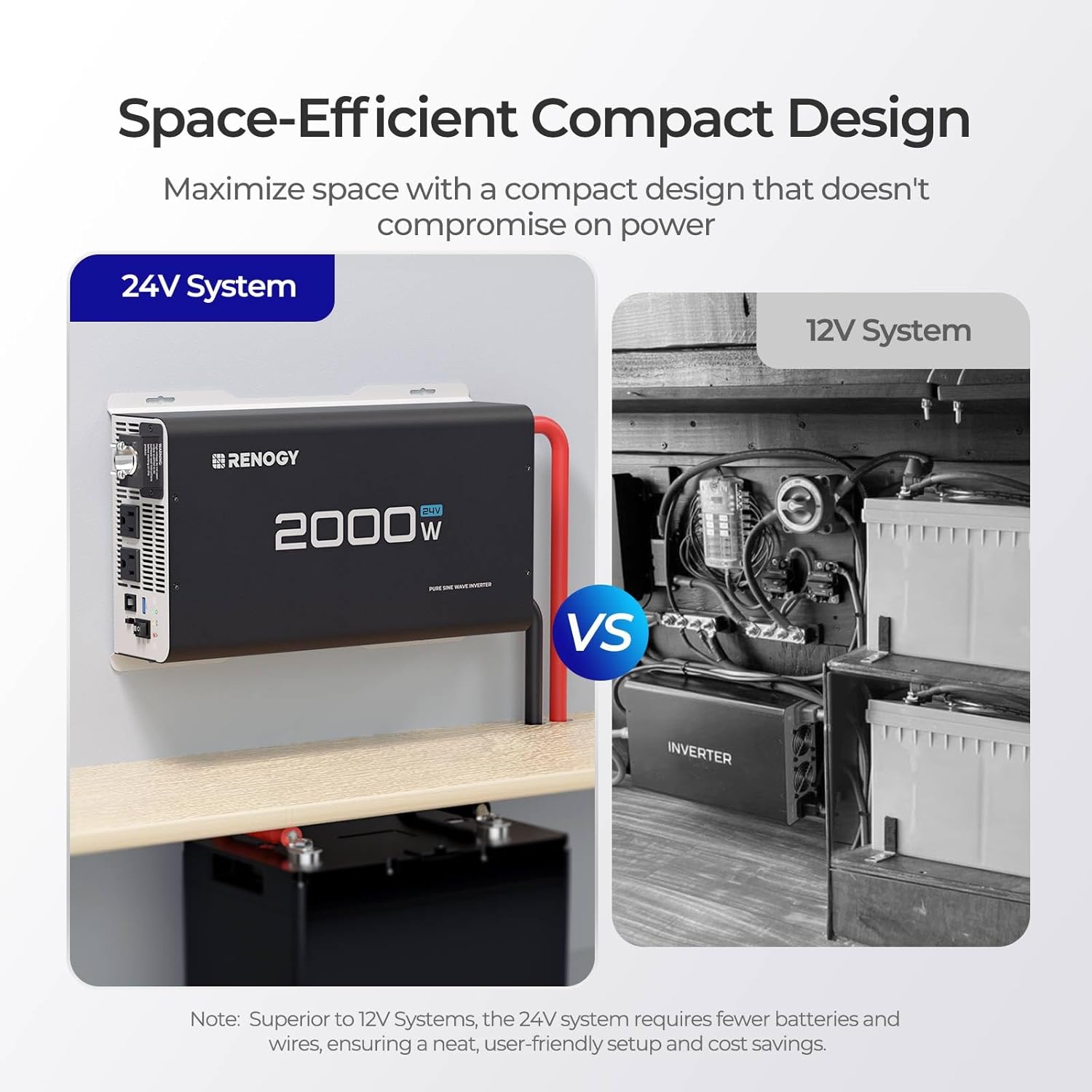
The Renogy Inverter P2 3000W keeps a small, mountable footprint for a high-power unit. It measures 18.9 x 9 x 4 inches and weighs about 12.5 pounds, so you can fit it in RV bays, van builds, cabins, or on a wall panel without fighting for space. That compact shape also helps with clean cable routing and airflow—two details that matter in off-grid installs.
Power Ratings: Continuous Output, Surge Power, Input Voltage, Output Voltage
On paper, you’re getting a Continuous Output of 3000W with Surge Power up to 6000W for motor starts (think fridge compressors). Your Input Voltage is 12V DC from your battery bank, and your Output Voltage is 120V AC pure sine wave—better for sensitive electronics and typically quieter for fans and chargers.
- Conversion efficiency: >90%
- No-load current: <2.5A (important if you leave it on for long periods)
Ports and Built-In Features (Real-World Usability)
You get flexible connection options right out of the box:
- 3 AC outlets for plug-in loads
- 1 AC terminal block for more permanent wiring
- USB port: 5V/2.1A for small devices
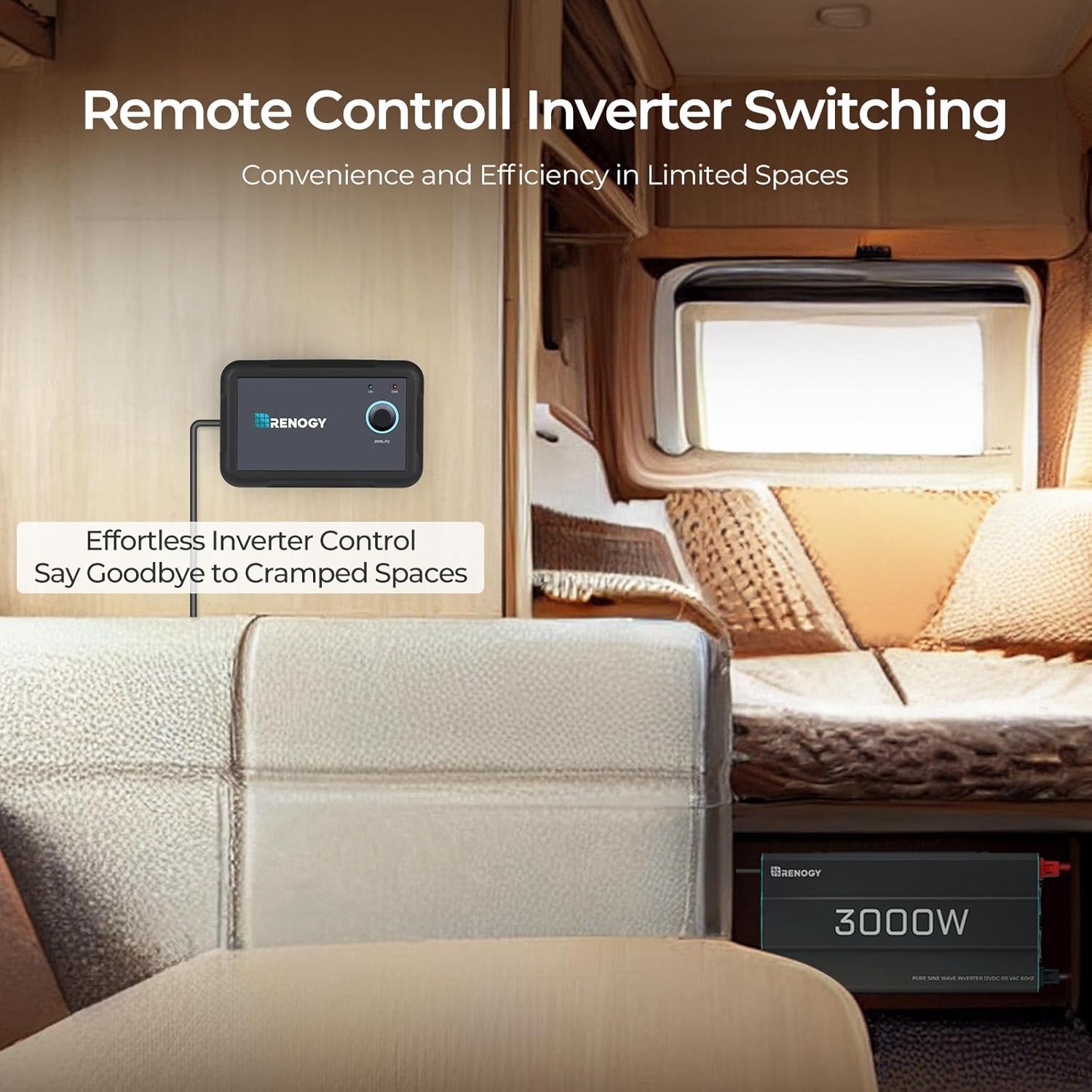
- Wired remote controller: 16.4 ft (Amazon listing) or 19.8 ft (some spec sheets)
That remote-length difference is real—Renogy has model variations, so confirm what’s in your box. Some related “Pro” versions may add features like EcoSleep, which can reduce idle draw.
Certifications, Protections, and What They Mean for Safety
Trust signals matter when you’re pushing thousands of watts. This unit lists UL 458 and CSA C22.2 No. 107.1 certifications, plus multiple protections (over/under-voltage, overheating, overload, short-circuit). These layers reduce fire/failure risk in off-grid installs, especially when paired with correct wire gauge and fusing.
"Certifications like UL 458 mean you’re not guessing about safety—this unit is tested for real-world use." — Renogy Technical Team
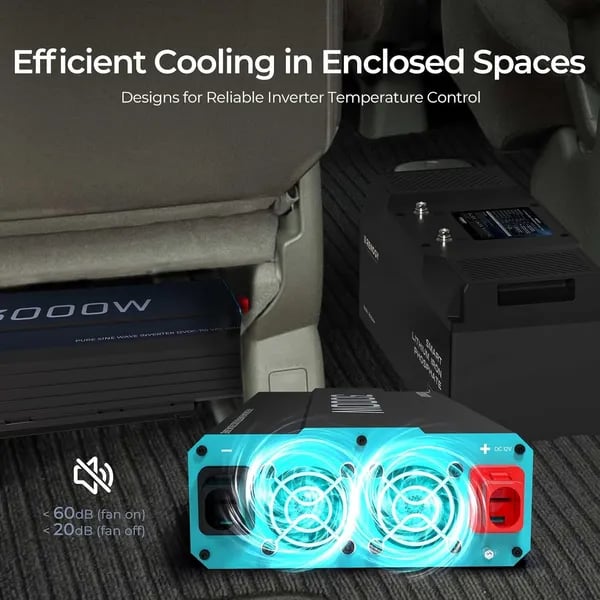
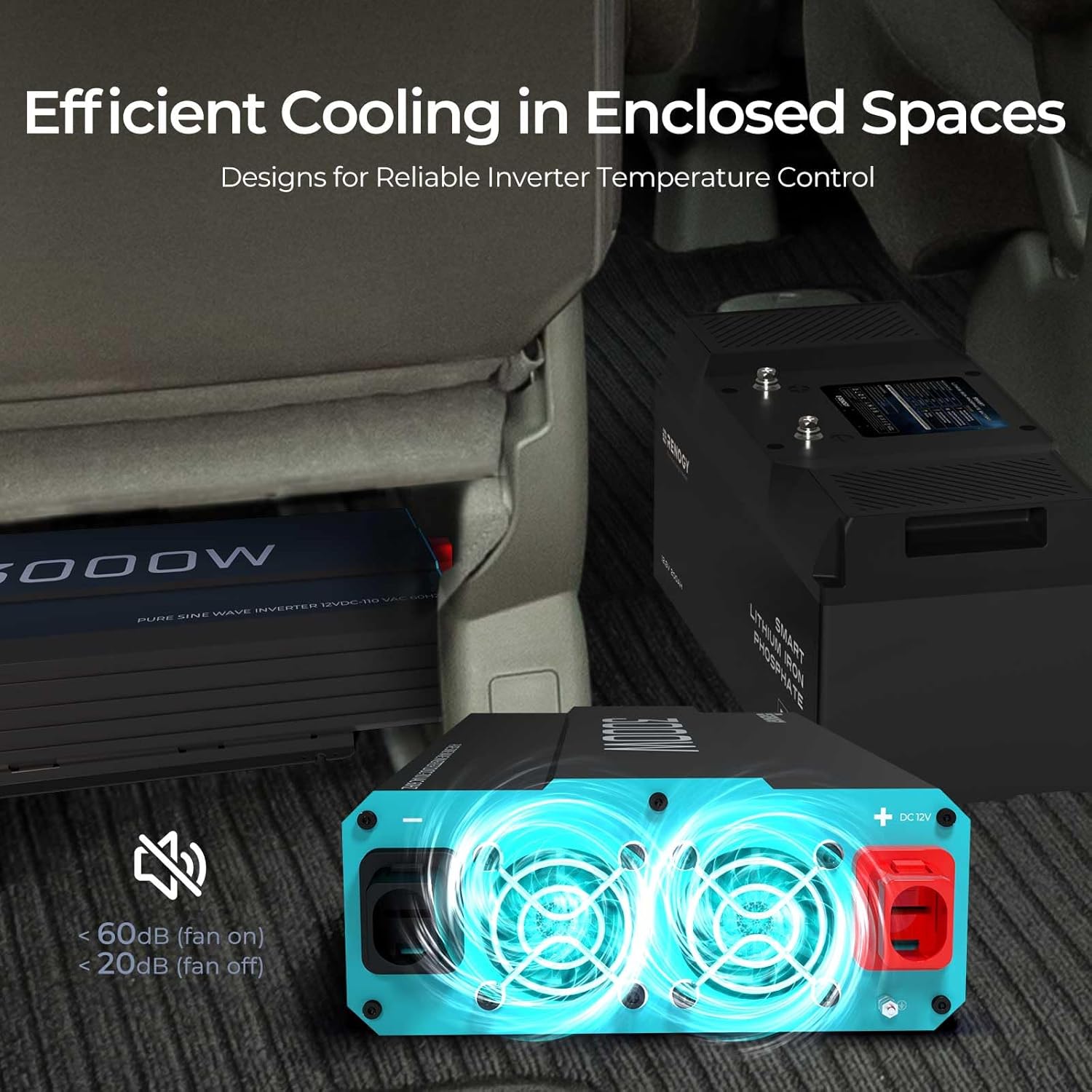
For durability, you also get high-speed cooling fans and a tough metal housing, backed by a 1-year warranty.
Real-World Installs: How People Use It (and How You Should)
Where the Renogy 3000W Fits in Real Life
You’ll see the Renogy Inverter P2 3000W show up in all kinds of builds because it’s a clean, stable way to turn 12V DC into 120V AC for an Off-Grid System. People commonly install it in RVs, cabins, trailers, marine setups, home backup panels, and even mobile command centers—especially when they need pure sine power for laptops, TVs, fridges, and lights.
It also plays well with different battery banks, so you’re not locked into one chemistry. You can run it with Li, AGM, SLD, GEL, or FLD batteries, which is a big reason it’s popular across the United States, Canada, Mexico, and Australia.
Install Like Reviewers Who Had Zero Drama
"Install with appropriately sized wiring and a proper battery cutoff—this prevents 90% of user headaches." — Renogy Technical Team
Most “it works perfectly” installs have three things in common: correct cable size, proper fusing, and realistic load planning. Renogy includes 6AWG cables and solid packaging, which makes the first-time setup easier—but you still need to build the safety chain.
- Use proper wire gauge (the included 6AWG helps for many setups, but long runs or full-load use may require thicker cable).
- Add a 250A fuse close to the battery to protect against shorts.
- Install a cut-off switch so you can safely service the system.
- Size for startup surges: motors (fridges, pumps, tools) can spike well above their running watts.
Also confirm your Input Voltage stays in the safe range for your battery bank, and verify the Output Frequency your gear expects (most North American loads want 60Hz).
Battery Protection + Monitoring Accessories That Actually Help
Good Battery Protection isn’t just built-in alarms—it’s visibility. Two add-ons users mention a lot:
- Renogy 500A Battery Monitor with Shunt: $69.99
- TKDMR 1/0 AWG Battery Lugs: $7.99
And don’t ignore convenience: the included Wired Remote (16.4 ft) lets you switch and check status without crawling into a compartment.
Mini-Tangent: Food Truck or Pop-Up Market Power
If you’re powering a fridge, blender, POS tablet, and lights, check (1) peak startup watts, (2) battery capacity, and (3) cable length/gauge before you ever plug in. Buying on Amazon can help too—many listings offer free delivery and extended 2025 holiday returns, which takes pressure off your build timeline.
Pros, Cons, Alternatives — and the One Time You Shouldn’t Use It
Pros: why the Renogy 3000W works so well for most off-grid setups
- Clean, quiet pure sine output: Your electronics (laptops, TVs, fridges) run smoother and often quieter than with modified sine units.
- Real power headroom: You get 3000W Continuous output with a 6000W Peak surge for startup loads.
- Stable voltage + strong safety: Built-in protections for overload, over-temp, short circuit, and voltage swings, with LED indicators and fast cooling fans.
- Easy install and flexible connections: Three AC outlets, an AC terminal block, USB, and a long 16.4 ft wired remote make it simple to place and control.
- Strong value-to-feature ratio: At $322.99 new (down from $399.99) and used/like-new from $263.11, it’s priced well for a capable Power Inverter with solid Conversion Efficiency for everyday loads.
- Marketplace confidence: Ranked #2 in Solar & Wind Power Inverters (#2,559 in Patio, Lawn & Garden) with 4.3/5 from 4,415 reviews—and 74% are 5-star ratings.
Cons: where users report friction
- Niche interference reports: A small number of users mention unexpected noise/interference in sensitive radio/telecom environments.
- Support can feel mixed in edge cases: Most installs go smoothly, but rare failures in specialized setups sometimes lead to frustrating support experiences.
Alternatives if you want different features or a different budget
If you’re comparing options, Amazon’s “Customers Also Viewed” shows a wide spread (~$99.99–$854.99):
- Renogy 3000W Pro (~$605.89): step-up option if you want a more premium Renogy build.
- REGO 3000W Charger (~$854.99): higher-end choice if you want inverter + charger integration.
- POWLAND 4000W: more wattage on paper for less money, but compare real-world reliability carefully.
- OLTEANP (rated 4.5) and LANDERPOW (rated 4.6): strong-rated competitors with varying displays/controls.
The one time you shouldn’t use it (without extra testing and backups)
If you’re powering a mission-critical VHF/UHF repeater site, emergency comms, or any telecom-grade system, don’t assume this inverter will be “clean enough” out of the box. Test for RF noise, add filtering, and keep a backup power path.
"For most campers and homeowners this unit is a practical, cost-effective solution; for telecom-grade repeaters, consider certified commercial gear." — Renogy Technical Team
Wild Cards: Analogy, Hypothetical, and Quick Quote
Analogy: Your inverter is the “heart” of the system
Think of the Renogy 3000W inverter as the heart of your mobile power setup. Your batteries and solar are the lungs, your cables are the arteries, and your outlets are the hands doing the work. When the heart’s rhythm is steady—meaning Pure Sine Wave output—your whole system feels calmer. Fans don’t scream as much, chargers behave, and sensitive gear like laptops, TVs, and even some fridges tend to run smoother and cooler. That’s the real point of clean AC: it’s not just “power,” it’s usable power you can trust when you’re off-grid.
Hypothetical: A tiny coffee cart on 3000W Continuous + Surge Power
Now picture a fun (and very real) test: you decide to run a small coffee cart from your trailer. Your espresso machine might look like a simple appliance, but inside it can have a pump or motor that hits hard at startup. This is where planning with Surge Power saves you from undersizing.
The Renogy gives you 3000W Continuous output, plus up to 6000W peak for short bursts. That surge “safety margin” can cover quick startup spikes—similar to what you see with a microwave kick-on or an espresso pump starting—as long as your battery bank and wiring can deliver the current. If you map your loads by startup amps (not just running watts), you avoid the classic mistake: everything looks fine on paper, then the first morning latte trips overload protection.
Quick quote (perfect for a pull-quote or social post)
"Pure sine technology keeps sensitive gear calm and happy on the road." — Renogy Technical Team
That’s the vibe to end on: this inverter isn’t only about big numbers—it’s about steady, clean power that makes real-life setups feel simpler. Use the pure sine “heartbeat,” respect the surge math, and you’ll be far more confident building an off-grid system that works when it matters.