.png&w=1280&q=75)
Picture yourself lost in a forest in Japan, mist swirling at your knees, when you stumble upon a towering gray stone. Its message: do not build your home beyond this point—or face nature’s wrath. I’ve never been to Anayoshi myself, but ever since I read about tsunami stones as a kid (weird, I know), I’ve been obsessed with the idea that sometimes our ancestors left us advice—only to be ignored because we’re too clever, or maybe just forgetful. In this post, you’ll join me on a quirky world tour of civilizations who literally carved their warnings in stone, and we’ll ask: does history really repeat, or are we just bad at following instructions?
Stones That Speak: Tsunami Memories and European Hunger
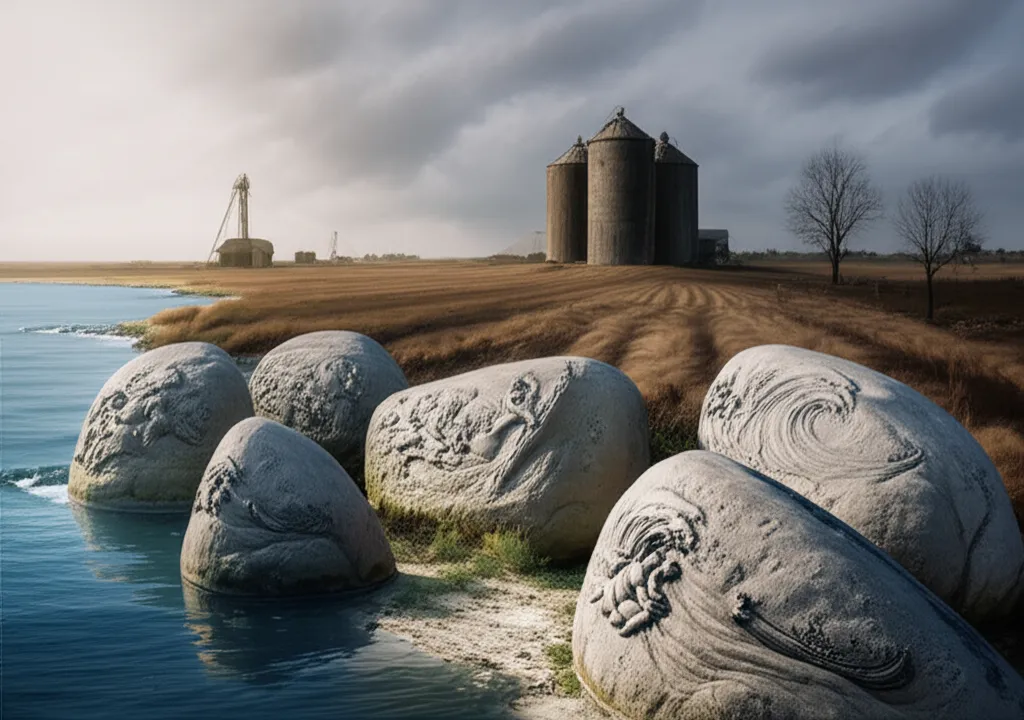
Imagine walking along the rugged coast of Japan. You spot a tall, weathered stone, its face carved with ancient characters. This is a tsunami stone, a message from people who lived centuries before you. Some of these stones have stood for over 600 years, silent witnesses to the power of nature and the wisdom of ancient civilizations. Their warnings are simple, direct, and sometimes hauntingly urgent.
After the devastating 1896 earthquake and tsunami, which killed around 22,000 people, villagers placed even more of these tsunami stones along the coastline. Some stones list death tolls or mark mass graves. Others offer survival advice, carved for future generations. One of the most famous stands in the tiny village of Anayoshi. Its inscription reads:
‘High dwellings are the peace and harmony of our descendants. Remember the calamity of the great tsunamis. Do not build any homes below this point.’
The people of Anayoshi listened. They built their homes above the line marked by the stone. When disaster struck again, their village survived. The stone’s warning, passed down through time, became a lifeline. But not every community was so careful. As generations passed, memories faded. Sometimes, after just three generations, people forgot the lessons carved in stone, and tragedy returned.
Across the world, in Europe, rivers hold their own stone secrets. When drought lowers the water, hunger stones appear—flat rocks carved with dates and desperate messages. These stones are part of Europe’s cultural heritage preservation, reminders of environmental collapse and the climate change impact felt long before our time. One of the most famous hunger stones rests in the Czech Republic. Its message, carved in 1616, is chilling:
“If you see me, weep.”
These stones are covered in dates—1417, 1616, 1707—each marking a year when drought brought hunger. When people saw these stones rise from the riverbed, they knew hard times were coming. The stones were not just warnings; they were records of suffering, carved for anyone who might forget how quickly disaster can return.
You might think these stories belong to the distant past, but they echo in our lives today. My own grandmother, who lived through a great flood, would mark the high water on the cellar door. Each mark was a message to us, her descendants: remember, prepare, and do not forget. Like the tsunami stones and hunger stones, her marks were a bridge between memory and survival.
These stones that speak are more than relics. They are urgent reminders from ancient civilizations about the dangers of environmental collapse and the cost of forgetting. Their messages are clear: pay attention, learn from the past, and protect your future.
The Cryptic Language of the Anasazi and Other Ancient Carvers
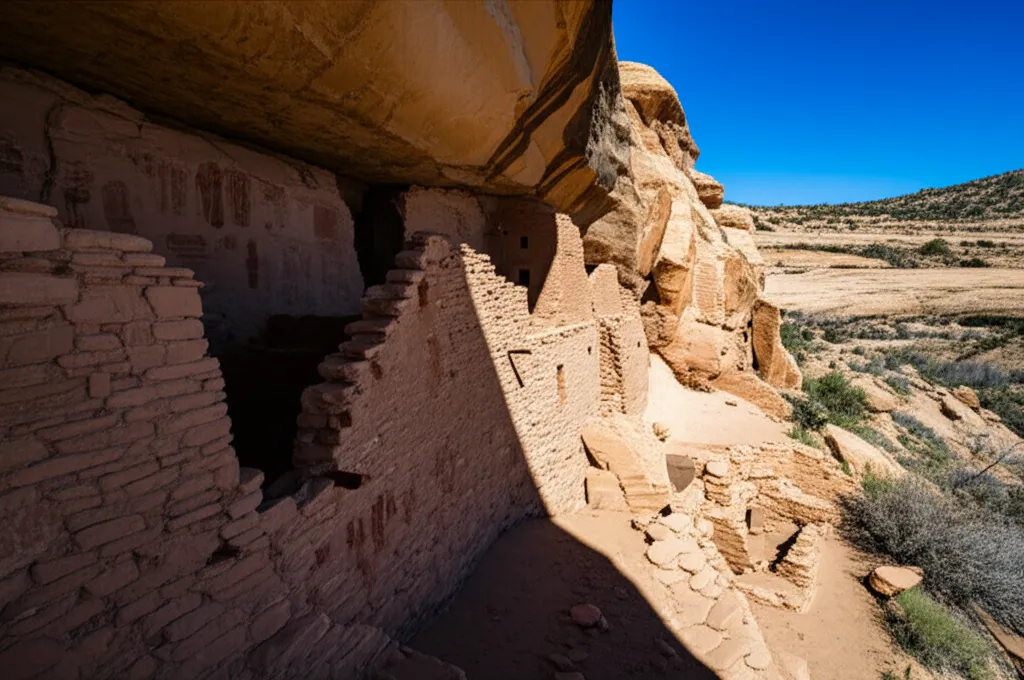
Imagine standing in the blazing sun of the American Southwest, your shadow stretching across a sandstone wall marked by mysterious carvings. These are the Anasazi petroglyphs, left behind by the Ancestral Puebloans more than a thousand years ago. Their messages are everywhere—etched into cliffs, scattered across Arizona, Utah, Colorado, and New Mexico. But what are they trying to say? And why do so many of these archaeological discoveries feel like riddles wrapped in stone?
Let’s start with Chaco Canyon, New Mexico. Here, among the ruins, you find one of the strangest sets of petroglyphs: a blazing star beside a crescent moon. Astronomers believe this could be a record of the supernova that lit up the sky in 1054—a celestial event so bright that Chinese astronomers wrote about it, too. It’s wild to think that the Anasazi, with no telescopes or written language as we know it, might have documented this cosmic explosion in stone.
But the carvings get even weirder once you look closer. Spirals and geometric figures line up perfectly with the solstices and equinoxes, as if the Anasazi were tracking the heavens and leaving behind warnings or guides for future generations. And then there are the truly cryptic images: beings with huge eyes, elongated limbs, and forms that don’t look quite human. Are these ancient metaphors, depictions of shamans, or something else entirely? Sometimes, deciphering petroglyphs feels a bit like reading your own dream journal—are you seeing aliens, symbols, or just a doodle that got out of hand?
The Anasazi weren’t alone in carving warnings and omens into stone. Across the world, ancient civilizations used tablets and monuments to communicate messages that went beyond language barriers. In Babylonia, 4,000-year-old clay tablets—recently translated after centuries in the British Museum—list over 60 different omens tied to lunar eclipses. For the Babylonians, the night sky was a canvas of divine messages. A lunar eclipse wasn’t just an astronomical event; it was a warning. If the eclipse happened at midnight, it meant economic trouble. If it darkened all at once, a king would die. If it lasted until dawn, the whole world was in danger. These omens weren’t just doom and gloom; they gave priests and prophets the chance to recommend rituals to avert disaster.
Sometimes, the warnings were even more direct. In 1923, archaeologists digging in Byblos, Lebanon, uncovered the massive 2.3-meter sarcophagus of King Ahiram. Along the lid’s edge, one of the oldest known Phoenician inscriptions reads like a threat:
If a king among kings...should attack Byblos and uncover this sarcophagus, may his scepter be broken...and may peace flee from Byblos.
It’s the ancient world’s version of “break this seal and die”—a sentiment echoed in Hittite royal seals and even the chilling “If you see me, weep” carved into the Hunger Stone in the Czech Republic.
Despite centuries of study, many of these messages remain ambiguous. Are they warnings, records, or something else? The truth is, our understanding of these ancient intentions is still limited. But each carving, tablet, and inscription is a vital piece of our cultural heritage preservation, reminding us that the past still has secrets to share.
 Arizona Trail" />
Collapse and Cautionary Tales: Maya Droughts, Easter Island, and the Arizona Trail
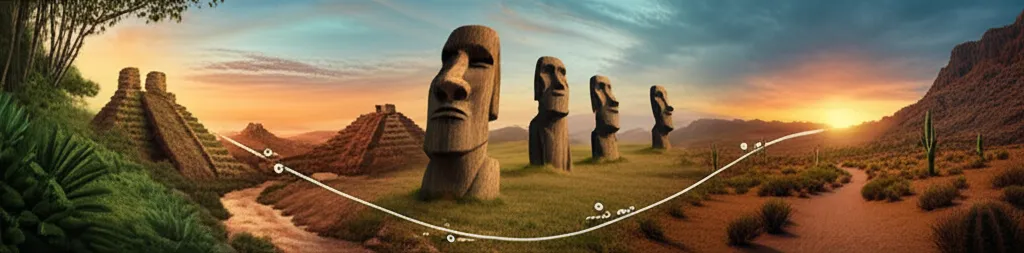
Imagine walking through the ruins of a once-great city, the stones whispering warnings from a thousand years ago. The Maya civilization, one of the largest in ancient America, built massive cities, temples, and farms. But around 900 CE, many Maya cities were suddenly abandoned, leaving behind a puzzle for generations. What happened? Archaeological discoveries and climate research reveal a story of environmental collapse—a story that feels eerily familiar today.
The Maya faced decades of drought, a climate change impact that stressed their entire way of life. But drought alone wasn’t the only villain. As the population grew, the Maya cut down huge sections of rainforest to clear land for farming and building. Without trees, the soil dried out, rainwater ran off too quickly, and erosion destroyed the farmland. Crops failed, food grew scarce, and the social fabric unraveled. Warfare and unrest followed. As one researcher put it:
“The Maya collapse is one of the best examples we have of how deforestation and water mismanagement can help bring down an entire civilization.”
Now, picture yourself on a remote Pacific island—Easter Island, or Rapanui—famous for its giant stone heads, the Moai. But the real warning isn’t in the statues; it’s in the land itself. When the first Polynesians arrived, they brought the Polynesian rat, which chewed through palm seeds before they could sprout. At the same time, people chopped down trees for farming and for moving those massive statues, rolling them on logs. Over centuries, the forest vanished. No trees meant no canoes, so fishing far from shore became impossible. The soil washed away, making farming harder and harder. For years, people blamed this ecological disaster for the island’s decline. But new archaeological discoveries show the population stayed steady until European contact in the 1700s brought disease and slavery, compounding the tragedy.
These ancient stories are not just history—they’re warnings. Today, the Arizona Trail winds through lands once home to the Anasazi civilization, another society shaped by drought and warfare. After devastating wildfires, modern conservation efforts along the trail aim to heal the land and preserve its lessons. The scars are still visible, reminders of what happens when we push an ecosystem too far.
So, what do you do when you encounter a warning carved in stone—a “hunger stone” in a riverbed, or a tsunami marker on the coast? Do you heed the message, or do you scoff, thinking you know better? The Maya, Easter Island, and the Arizona Trail all ask us the same question: Are we listening to the past, or are we repeating it?
- Environmental collapse can happen when drought and deforestation combine.
- Archaeological discoveries reveal how climate change impact shaped ancient societies.
- The Arizona Trail preserves both scars and survival lessons from the Anasazi civilization and beyond.
Stone Sentinels for a Burning Future: From Temples to Guide Stones
Imagine standing at the edge of the ancient Second Temple in Jerusalem. The air is thick with history, and there, carved in stone, is a warning that leaves no room for doubt or debate. The inscription is direct, almost chilling:
‘No stranger is to enter within the balustrade round the temple... Whoever is caught will be himself responsible for his ensuing death.’There’s no fine print, no appeals, no second chances. These stone tablets—one found in 1871 and another in 1936—were the ultimate “keep out” signs, set up as society’s last-resort safeguard. Their message was clear: cross this sacred line, and you alone are responsible for what happens next.
These warnings, preserved in museums from Istanbul to Jerusalem, are more than archaeological discoveries. They are echoes from ancient civilizations, reminders of how seriously people once took boundaries—especially when it came to cultural heritage preservation. The red-painted letters, still faintly visible after centuries, mark a line not just in space, but in the collective memory of humanity.
Fast forward to the Arizona Trail, or all the way across the world to Elbert County, Georgia. Here, in 1980, a new kind of stone sentinel rose: the Georgia Guidestones. Towering 19 feet high and weighing over 237,000 pounds, these granite slabs were meant to outlast disaster. Their creator, using the name Robert C. Christian, claimed to represent a group worried about nuclear war, social collapse, and the fate of future generations. The Guidestones weren’t just a monument—they were a message to survivors, a guide for rebuilding civilization after catastrophe.
The Guidestones’ ten principles, carved in eight languages, urged humanity to live in balance with nature, control reproduction, and protect the environment. They even functioned as a compass, calendar, and clock, tracking the sun and stars. But unlike the temple warnings, these modern inscriptions sparked controversy and conspiracy. Some saw them as rational advice for the future; others whispered about the Illuminati or darker motives. As one observer put it:
‘Some thought they were satanic or that the Illuminati was involved. Others just saw them as a rational guide for future generations.’
In July 2022, a bombing destroyed part of the Guidestones, and the remains were removed for safety. No time capsule was found beneath the monument, just as no single meaning was ever agreed upon. The stones, like their ancient counterparts, became a canvas for our hopes, fears, and disagreements.
From Jerusalem’s blunt death-warnings to the mysterious, now-vanished Georgia Guidestones, stone has always been humanity’s medium for messages that matter most. Both ancient and modern warnings serve as cautionary messages to societies headed for crisis—yet they are often ignored, misunderstood, or endlessly debated. You almost have to admire how direct the ancients were, compared to our endless fine print and user agreements. In the end, whether on the Arizona Trail or in the heart of a vanished temple, these stone sentinels remind us that the warnings of the past are only as strong as our willingness to heed them. Cultural heritage preservation isn’t just about saving stones—it’s about listening to what they’re still trying to tell us.