.png&w=1280&q=75)
Picture this: It’s 2008, sweat is trickling down your back because your apartment doesn’t believe in air conditioning, and you’re eleven with nothing but a glitchy computer and pure optimism. No algorithm gently curating your tastes, just you, a virtual sunset, and a sense that anything might happen. Sometimes the best tales aren’t about where you end up, but the brave, absurd places you begin.
Welcome to the Wild West: Early Internet Joy (and Jitters)
Let me tell you a story. It’s the summer of 2008 in northwest Sydney. The sun is relentless, the air is thick, and the temperature outside is a blistering 42°C. There’s no air conditioning in your apartment, so you do what any eleven-year-old would do: you melt into your chair and escape into the glowing world of the family computer. This is where your journey into early internet joy begins—a time of virtual reality nostalgia and the kind of nostalgic memories 2008 can only offer.
Surviving the Heatwave: Enter Exit Reality
Your dad, always on the lookout for something new, finds a website called Exit Reality. He says it’s a “cool new virtual reality experience.” You trust him—after all, you’re eleven, and the internet still feels like a magical, endless frontier. Exit Reality is like a stripped-down version of Second Life. You get to create your own avatar, but the graphics are so basic, they look like they’ve been built out of digital clay. Still, it’s your ticket out of the heat and into a world of infinite possibility.
You log in, and the screen opens onto a vast, empty landscape. The sky is locked in a permanent sunset, casting everything in a surreal orange glow. You wander through pig-slate deserts and abandoned streets, your avatar’s blocky feet echoing in the digital silence. Every time you press a button, the whole world glitches and stutters. It’s awkward, unpredictable, and sometimes enough to make your heart race with anxiety. But you keep going, because this is the Wild West of the early internet—everything feels infinite, awkward, and brimming with potential.
The Glitchy Thrill of Digital Discovery
There’s a special kind of thrill in those first steps through a virtual world. You’re alone, but not lonely. The emptiness is full of promise. You mash your way through the lag and the bugs, hoping to find someone—anyone—on the other side of the code. This is what early internet joy is all about: the sense that anything could happen, that every click might lead to a new adventure.
- Virtual anonymity: Nobody knows who you are. You can be anyone, anywhere.
- Random discovery: Every encounter is unexpected, every friendship a surprise.
- Formative connections: Even the shortest conversations can feel deeply personal.
Meeting a Stranger with a Mohawk
Then, in the corner of your screen, something changes. Another avatar appears—leather jacket, mohawk, standing out against the endless sunset. You walk up and type, “Hey. Nice mohawk.” You’re eleven, so please, withhold your judgment. The stranger’s name is Tommy. He asks, “ASL?”—the classic early internet question: age, sex, location.
You don’t hesitate. “Seventeen, male, Canada,” you reply, even though you’re really an eleven-year-old in Sydney. The beauty of the early internet is that you can reinvent yourself with every login. Tommy accepts your answer without question, and soon you’re adding each other on MSN Messenger. The hours melt away as you chat about music, life, and everything in between. Tommy says his favorite band is Death Cab for Cutie. You nod along, even though your iPod only has Coldplay.
One day we were talking for hours and the next we just weren’t. My first real heartbreak. Though certainly not my last online boyfriend.
Why Everything Felt Infinite (and a Little Bit Awkward)
The early internet was a landscape of pure possibility. Every interaction was a leap into the unknown. You could be anyone, meet anyone, and say anything. The awkwardness was part of the magic—the lag, the glitches, the uncertainty. It was a place where you could cross digital deserts alone, then stumble upon a stranger who changed your summer. These nostalgic memories 2008 aren’t just about the technology—they’re about the feeling of being on the edge of something new, with your heart wide open and your fingers poised above the keyboard.
This was the Wild West of the web, where early internet joy and heartbreak lived side by side, and every sunset was yours to explore.
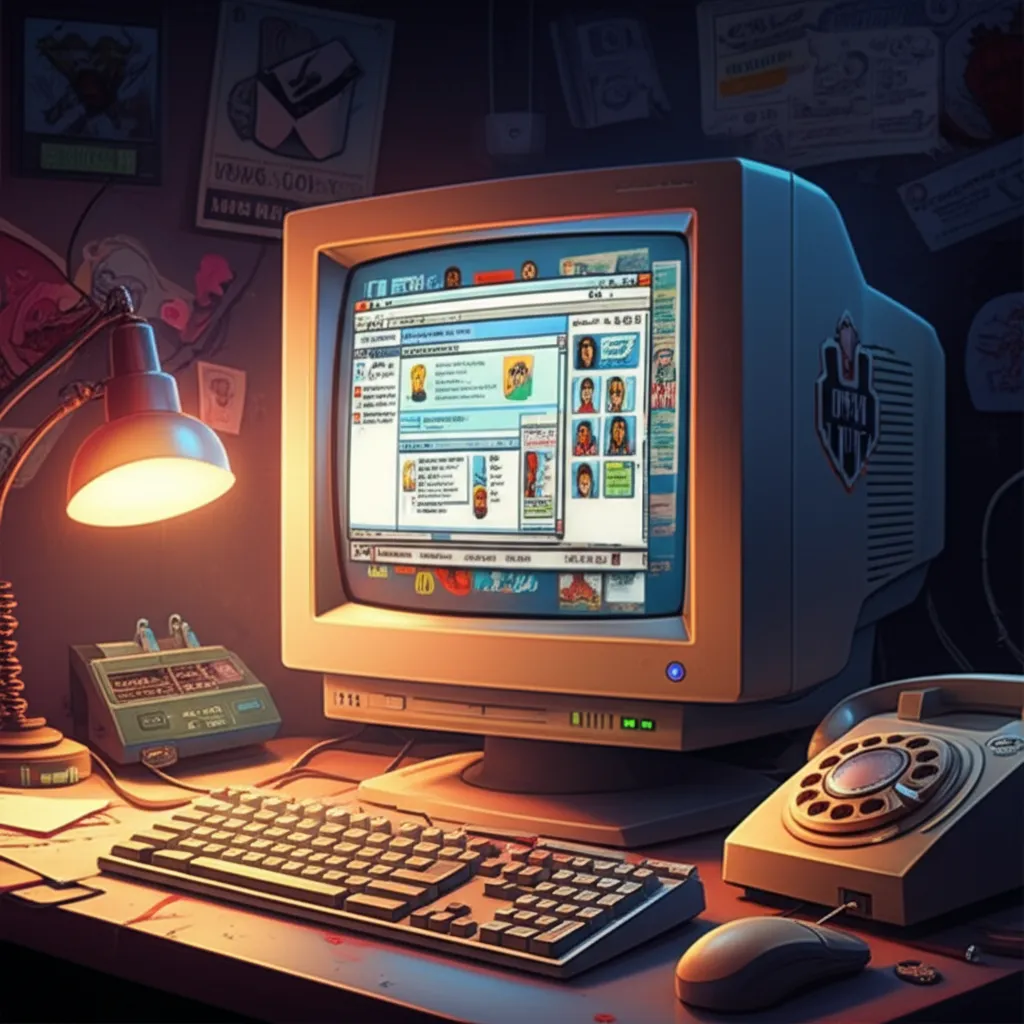
Heartbreak, Algorithms, and the Lost Art of Stumbling Into Things—Nostalgic Internet Experiences
If you’ve spent any time online lately, you’ve probably felt it: the internet is faster, shinier, and more tightly controlled than ever before. Viral content trends come and go in the blink of an eye. Social media evolution has turned what was once a digital playground into something more like a casino—every swipe, every scroll, carefully engineered to keep you locked in, not wandering free. The heartbreak? We’ve lost the magic of stumbling into things, the serendipity that defined early internet experiences.
The Algorithm’s Grip: From Playground to Casino
Think back to the early days of the web. You might have found yourself on a random blog at 2 a.m., reading about someone’s pet ferret or discovering a band that changed your life. There was no algorithm guiding your hand—just curiosity and a little luck. Today, everything you see is filtered, sorted, and served by invisible code. The randomness is gone, replaced by personalization so precise it sometimes feels suffocating.
As a culture writer, my screen time is off the charts—twelve hours a day, if I’m honest. But even if you use the internet like a normal person, you’ve probably noticed how different things feel now compared to five, ten, or fifteen years ago. The internet is both faster and harder than ever. Micro-trends on TikTok, Instagram, or Twitter—what some call the “internet nostalgia iceberg”—pop up at the speed of light, then disappear before you can even figure out what they mean.
Micro-Trends: Here Today, Gone Tomorrow
Let’s look at a few viral content trends from just the past year. Here’s a list of things that were blowing up on TikTok only a month ago:
- Mod capacitors sauce
- Flavored water and unicorn syrup
- Being a “la la la girl” vs. an “okay okay okay girl”
- The return of tweet pasta chips
- Coastal grandma aesthetic
- Whim Golf
- Duck academia
- Barbiecore
- F English woman
None of these phrases would have made sense even a year ago. And if you try to look them up now, many are already old news. As one meme puts it,
“We are cycling through content at such a velocity that things become old news the second they hit the feed.”Trends on TikTok can last less than a week. Blink and you’ll miss them.
The Lost Art of Stumbling Into Things
What’s missing in today’s social media evolution is the joy of discovery—the happy accidents that used to define early internet experiences. Back then, you could fall down a rabbit hole and end up somewhere completely unexpected. You might have started searching for a recipe and ended up reading about the history of disco. The internet was a place to wander, not just consume.
Now, algorithmic feeds decide what you see. They’re designed to keep you scrolling, not exploring. The randomness is gone, replaced by a feed that knows you almost too well. The heartbreak is real: we’ve lost the ability to stumble into things, to be surprised, to find something we didn’t even know we were looking for.
Why Nostalgia Hits So Hard
Nostalgia for the early internet isn’t just about old websites or retro graphics. It’s about the kinetic, unrepeatable moments—the feeling that anything could happen. You could make a friend in a chatroom, discover a weird meme, or fall in love with a song you found on someone’s MySpace. There was a sense of identity, of ownership, of being part of something bigger and weirder than yourself.
Today’s digital world is faster and more polished, but it’s also more predictable. The heartbreak is in knowing that the lost art of stumbling into things may never return. But maybe, just maybe, remembering those early internet experiences can inspire you to seek out a little more randomness, a little more wonder, even in a world ruled by algorithms.

How to Reclaim the Spark: Rebuilding Spontaneous Online Interactions
If you’ve ever found yourself longing for the unpredictable, unfiltered joy of the early internet, you’re not alone. Recapturing internet joy isn’t about time travel—it’s about rediscovering the magic of spontaneous online interactions and rebuilding the kind of online community building that once made the web feel like a wild, welcoming frontier. The good news? The spark is still out there, flickering in unexpected corners, waiting for you to find it.
The first step is simple: repurpose the platforms you already use. Remember the message boards and niche forums of the 2000s, where you could lose hours discussing emo bands, obscure video games, or the finer points of public transit? That spirit hasn’t vanished—it’s just evolved. Today, niche Facebook groups have become the new subforums, offering a patchwork of communities where participation is a choice, anonymity is a blessing, and chaos reigns supreme. Whether you’re obsessed with architecture, love sharing photos of questionable food, or want to join the two million members of Subtle Asian Traits, there’s a group for every micro-passion. These spaces are the modern equivalents of those old-school forums, and they’re thriving precisely because they’re shielded from the demanding, performative nature of most social media. Here, you can post or lurk, engage or ignore, and—best of all—be as weird or as earnest as you like. No one’s chasing clout; everyone’s just chasing connection.
What makes these groups so special is their unpredictability. The people who remain are the most committed, the most curious, the most gloriously unfiltered. They’re not there to be seen—they’re there to share, to joke, to find their tribe. In these digital chaos corners, meme lords and micro-cultures still thrive on pure randomness. It’s a reminder that online community building is still possible, and that the spontaneous online interactions we miss are alive and well, if you’re willing to seek them out.
But you don’t have to stop at joining a group. If you want to inject a little more randomness into your digital life, try this: open your phone, pick any app, and show the first thing on your feed to a friend—or even a stranger. It sounds simple, maybe even silly, but it’s a powerful way to break through the algorithmic bubble. As you swap feeds, you’ll realize just how much your own curated algorithm leaves out. Your friend might be deep into a side of TikTok you never knew existed, or obsessed with a band you’ve never heard of. Your parents might be watching videos that seem like they’re from another planet. As one observer put it,
“Looking at your phone and looking at someone else’s feed can help us bring back the randomness of the early internet.”It’s a strangely vulnerable, often hilarious experience—and it’s exactly the kind of surprise that made the early web so addictive.
Recapturing internet joy isn’t about nostalgia for nostalgia’s sake. It’s about remembering that the best parts of the web were always the ones we couldn’t predict: the weird forums, the late-night chats, the unexpected friendships. Today’s online spaces can still offer those unpredictable joys—if you seek them out or build them yourself. So be bold. Go and discover a corner of the internet previously hidden from you. Join a group that makes no sense. Share a meme with someone you barely know. Ask your friends what they’re listening to, what they’re watching, what strange rabbit holes they’ve fallen into lately.
We don’t have to accept a web that’s only algorithms and influencers. We can reclaim the spark by choosing chaos, curiosity, and connection. The ghosts in the code are still out there, waiting for you to say hello. All you have to do is look.