.png&w=1280&q=75)
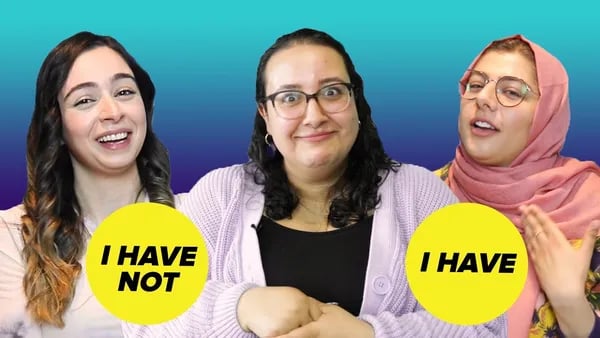
My earliest memory of being the ‘responsible one’? Hiding in our backyard at midnight, heart pounding like a cartoon drum, convinced the neighbor’s cat was an undercover spy. Growing up as the eldest daughter in a South Asian-Arab immigrant family wasn’t just about curfews and good grades – it was a blend of emotional drama and cultural expectations, always under an anxious spotlight. You think you’re ready for adulthood until you’re negotiating late-night escapes or fielding existential questions from your five-year-old brother while your own hands are shaking. Let’s crack open what this role really feels like, confessions and all.
Spotlight Syndrome: The Performance of Perfection
Oh, this is going to incriminate me. My name is Dana, and I am the eldest daughter. If you know, you know—especially if you grew up in a South Asian or Arab family. The expectations are not just high; they’re sky-high. Sometimes it feels like every move I make is being watched, not just by my parents, but by my siblings, my neighbors, and even that nosy cat next door. The pressure to be perfect is real, and it starts early.
From the moment I could walk and talk, I was told, “Your siblings are going to be watching you; you have to set a good example.” It’s always nerve-wracking to make a mistake—everything was just like, your siblings are going to be watching you. I felt like I was living under a microscope, every action magnified and analyzed. If I messed up, it wasn’t just my own little secret; it was breaking news in the family grapevine. One wrong move, and suddenly everyone knew. The embarrassment wasn’t just personal—it was communal.
Family Pressure and the Eldest Daughter Standard
There’s an unspoken rulebook for eldest daughters. We set the rules, and we’re expected to break none—except maybe quietly, in the backyard, where no one can see. The standard is clear: be the role model, be the responsible one, and never let your guard down. Cultural expectations make this even more intense. In many families like mine, eldest daughters are the unofficial deputies of the household. We’re the first to try everything, and the first to be judged for it.
My curfew was 9 p.m. sharp. If I was out at 9:01, I would get a barrage of question-mark texts from my dad. “???”—that was his way of saying, “Where are you? Why are you late? Don’t you know your siblings are watching?” It didn’t matter if I was just around the corner or stuck in traffic. The rules were the rules, and I was expected to follow them to the letter.
Sibling Surveillance: The Unofficial Family Watchdogs
Sibling surveillance is a thing. It’s not just about parents keeping tabs—it’s your younger brothers and sisters, too. They watch, they learn, and sometimes, they report. If I slipped up, I knew it would get back to my parents, one way or another. The family dynamics meant that my mistakes carried extra weight, both self-imposed and culturally reinforced. I was the test case, the example, the one who had to get it right so the others could follow.
- Every move is watched: Siblings, parents, neighbors, even pets seem to notice.
- Messing up feels huge: One mistake and it’s all anyone talks about.
- The oldest daughter standard: Set the rules, break none (or at least, don’t get caught).
- Comparison Olympics: “Why can’t you be like your sister?” is a never-ending refrain.
The Comparison Olympics
The “Comparison Olympics” never ends. No matter what I did, there was always a measuring stick. If my grades slipped, if I didn’t help enough around the house, if I wasn’t polite enough—someone would always ask, “Why can’t you be more like your sister?” Sometimes, I was the gold standard. Other times, I was the cautionary tale. The pressure to be perfect seeped into everything, from schoolwork to friendships to the way I dressed.
The Long-Term Impact
Research shows that high family pressure is linked to anxiety and self-esteem issues among eldest daughters. I can feel that in my own life. The constant scrutiny made me self-critical and anxious about making mistakes. The weight of cultural expectations, family pressure, and sibling surveillance shaped not just my childhood, but the way I see myself even now. The performance of perfection is exhausting, but it’s a role I learned to play well—sometimes too well.
Confessions & Mini-Rebellions: Secret Lives of the Oldest
There’s a secret world behind the calm, responsible face of the eldest daughter. Sure, we’re the ones who remember the dentist appointments, who know everyone’s allergies, and who can recite the WiFi password by heart. But beneath that surface, there’s a whole collection of small, secret rebellions—tiny acts of resistance that help us survive the weight of parenting responsibilities and emotional labor that come with being the eldest daughter.
‘Never Have I Ever’ – Except I Probably Have
Let’s be honest: every eldest daughter has played “Never Have I Ever” and quietly lowered a finger for something that sounds rebellious—but only just. I remember the first time I “snuck out.” The plan was daring in my mind, but in reality, it was more like a tiptoe into the backyard. As I stood in the shadows, heart pounding, I realized:
“It was always so scary, so I would only go to the backyard…”That was my wild side—making sure I was still close enough to hear if my parents called my name.
Backyard Escapes & IHOP Detours
My version of rebellion was never about breaking rules for the thrill of it. It was about carving out a little space for myself. Sometimes, it was a late-night backyard escape when friends came over, or a quick detour after a big test. The closest I came to “wild” was after the SATs, when my friends and I went to IHOP. There were guys there, so I didn’t tell my parents. It felt like a covert operation, even though we were just eating pancakes.
“My friends and I all went out to get IHOP… there were guys there so I didn’t tell my parents.”
These little adventures were never about malice. They were about protecting my parents from worry—editing the truth, not to deceive, but to cushion everyone from unnecessary stress. That’s the quiet emotional labor of the eldest daughter: we carry the weight of everyone’s peace of mind, even when we’re out chasing a sliver of our own freedom.
Tiny White Lies for Parental Peace of Mind
Sometimes, my “lies” were as small as telling my parents I was going to bed when I was actually getting ready to go out with friends. Or saying I was at a friend’s house when we were really just at the mall. The guilt always followed, but so did the giggles—because these mini-rebellions were never about hurting anyone. They were about keeping things calm at home, about not giving my parents one more thing to worry about.
Taking the Fall (or Covering Up) for Siblings: Real-Life Spy Mission Vibes
Then there’s the secret service work: covering for siblings. I’ve never been the type to take the fall for something wild, but I have played accomplice in some pretty big cover-ups. Like the time my sister took a semester off school and my dad never knew. She was just working, not getting into trouble, but she didn’t want to break his heart. So I helped her keep the secret, making sure he thought everything was normal. That’s the kind of emotional labor that doesn’t get talked about—the unsung, risky work of keeping the family’s peace intact.
- Snuck out – only as far as the backyard, if at all.
- Closest thing to wild: post-SAT IHOP trip unreported to parents.
- Mini-rebellions are survival tactics, not full-blown rebellion.
- Lies are often motivated by wanting to avoid unnecessary parental worry.
- Covering for siblings is an unsung (and risky) emotional labor.
Every eldest daughter has her own collection of confessions—backyard escapes, IHOP detours, tiny white lies, and secret missions for siblings. Each one is soaked in guilt, pressure, and a little bit of laughter. These aren’t just stories; they’re survival tactics, woven into the secret lives of the oldest.
Parenting Siblings While Still a Kid (And Other Impossible Feats)
There’s a special kind of exhaustion that comes from being the eldest daughter in a family where parenting responsibilities sneak up on you before you’re even old enough to drive. Sometimes, you’re thrust into the role of “third parent” not because anyone asked, but because someone had to. In my case, it started early—so early that my first memories of emotional labor are tangled up with learning to dial a phone.
Suddenly Mom (or Dad) by Default
I never set out to parent my siblings. But life doesn’t always wait for you to be ready. When my mom passed away five years ago, I found myself stepping into her shoes in ways I never imagined. As I once said,
"My mom passed away five years ago and I have taken on that role…"It wasn’t a conscious decision, more like a silent agreement between me and the universe: someone had to keep things together.
But even before that, I was already the unofficial backup parent. When my dad was working late or just needed a break from the chaos, I was the one making sure homework was done, fights were settled, and everyone got to bed on time. It’s a strange thing to be the responsible adult while still quietly coping with your own confusion and growing pains.
Translator, Tutor, Counselor, Referee—All Before Puberty
For many eldest daughters in immigrant families, the family dynamics come with extra layers. I have very vivid memories at seven or eight—maybe even younger—on the phone with my parents, talking to credit card companies or utility providers.
"I have very vivid memories at seven or eight… on the phone with my parents… credit card companies."My parents didn’t speak much English when we first moved here, so I became their translator by default. It’s a common story: the oldest child bridging the gap between two worlds, carrying the weight of adult conversations on tiny shoulders.
I know I was lucky in some ways. My mom learned English by watching Barney, and my dad had been in the States for years before we arrived. But those early calls—navigating bills, appointments, and paperwork—were my first taste of emotional labor. It’s a responsibility that shapes you, sometimes in ways you don’t realize until much later.
The Thankless Gig: Tired, Resentful, Fiercely Loyal
Being the eldest daughter means you’re always on call. You’re the tutor when grades slip, the counselor when hearts break, the referee when tempers flare. You do it all while juggling your own schoolwork, friendships, and the quiet ache of growing up too fast. It’s a thankless gig—chronically tired, slightly resentful, but fiercely loyal.
- Helping siblings with homework while wishing someone would help you.
- Breaking up arguments, then crying alone because you wish someone would notice your pain.
- Translating not just words, but feelings and fears between generations.
Sometimes, I think my parents owe me for all of it—and they know that. But the truth is, this role was never about gratitude. It’s about survival, about love, about holding the family together when everything else feels like it’s falling apart.
Invisible Impacts: The Lifelong Consequences
Research shows that early and sustained parenting responsibilities can leave lasting marks on mental health. The pressure to be the family glue, especially after a crisis like losing a parent, can be isolating. It shapes your identity in ways that are hard to untangle. You become the caretaker, the fixer, the one everyone leans on—even when you’re still learning how to stand on your own.
For many eldest daughters, these impossible feats are just part of the job. We do them not because we choose to, but because we must.
Crossing Cultural Tightropes: Identity, Islam, and Invisible Boundaries
Growing up as the eldest daughter in a South Asian Muslim family, especially in a small, conservative town, meant living on a tightrope. I was always balancing between the expectations of my Arab and South Asian roots and the Western world around me. There was no legal rule in Islam that said the eldest daughter had to be the “culture-keeper,” but the moral undertow was real—and heavy. I felt it every day, in every decision, and especially in the invisible boundaries I had to draw for myself.
Hijab, ‘Finsta,’ and Digital Privacy
One of the most complicated parts of my identity struggle was managing my online presence. Like many girls my age, I had a “finsta”—a private Instagram account. But for me, it wasn’t just about sharing silly memes or inside jokes. It was about carving out a space where I could be myself, away from the gaze of my community and even my family. As I once told a friend,
“I’m a hijabi, I’m going to be posting photos without my hijab…”That meant my ‘finsta’ was sacred. Only the closest friends could follow. I’d get dozens of follow requests, but I’d just leave them sitting there. I didn’t know why people thought we were close enough for me to share that part of myself. I was careful, because even in digital spaces, the boundaries of modesty and privacy felt as real as ever.
Cultural Expectations and Islamic Obligations
There’s no official rule in Islam about eldest daughters, but in South Asian families, the pressure is undeniable. I was the translator, the mediator, the one who explained why we did things differently. I had to defend our traditions at school and interpret Western customs at home. The expectations weren’t written down, but they were everywhere—in the way I dressed, the way I spoke, and the way I protected my siblings.
The hijab was a big part of this. It wasn’t just a scarf; it was a statement. In my town, being the only Arab family meant we stood out. People stared. Sometimes, they said things that stung. I remember kids on the playground calling my mom “towel head” or “terrorist” because of her hijab. It was always me who had to step in, to fight back—sometimes with words, sometimes with actions. I still remember the day in fifth grade when I saw a kid trying to take my little brother’s lollipop. I pushed him to the ground. You don’t mess with my family. Loyalty is key.
Fighting for Cultural Dignity
Standing up for my family and our dignity became second nature. I was always ready to defend my siblings, my parents, and our way of life. The microaggressions weren’t just at school—they followed us everywhere. Sometimes it was a teacher mispronouncing my name, sometimes a neighbor making a joke about our food. Each time, I had to decide: do I let it go, or do I stand up and explain, again, who we are and why we matter?
Negotiating Identity: What Stays Sacred?
Being the eldest daughter meant figuring out what parts of myself were negotiable, and what had to stay sacred. Could I laugh at a joke about my culture, or did I have to correct it? Was it okay to take off my hijab in a photo if only my closest friends could see? Every day was a new negotiation between cultural identity, Islamic obligations, and the gender roles expected of me. I learned that some boundaries are invisible but unbreakable. Others, I could stretch—just a little—if it meant holding onto my sense of self.
These are the invisible boundaries I walk every day, balancing the weight of tradition, the wildness of youth, and the wisdom that comes from standing in two worlds at once.
Learning to Drop the Guilt (and Why It’s Not All Tragedy)
For so long, guilt was my constant companion. As the eldest daughter, I felt the family pressure settle on my shoulders before I even understood what it meant. Every mistake, every moment of wanting something for myself, came with a side of anxiety and a heaping dose of guilt. I thought I was letting everyone down if I didn’t get it all right. There were days where I literally thought my parents hated me, and now I look back and I'm like, they never hated me… It was just the weight of their own fears and hopes pressing down on all of us.
It’s easy to believe, in the thick of it, that the mental health impact of being the eldest daughter is just part of the job description. You’re the one who’s supposed to know better, do better, and be better. The invisible scoreboard in my mind kept track of every time I failed to live up to those expectations. And yet, as I grew older, something surprising happened: the pressure didn’t last forever. Independence crept in, quietly at first, then all at once. I started to set boundaries, to say no, to carve out space for my own needs. The guilt didn’t vanish overnight, but it faded as I realized I could be loyal to my family and loyal to myself.
With time and distance, my perspective shifted. I saw my parents not as judges, but as people—flawed, loving, and scared in their own ways. The pressure they put on me wasn’t personal; it was the only way they knew how to prepare me for a world that scared them. When I was younger, I couldn’t see past my own hurt. Now, I understand that their high expectations were rooted in love, even if it didn’t always feel that way. The anxiety that once seemed like a permanent part of me softened into understanding, and eventually, into wisdom.
One of the most unexpected gifts of growing up as the eldest daughter has been the chance to build healthier relationships—with myself, and with my family. Distance and maturity gave me the tools to have honest conversations, to explain how the pressure made me feel, and to listen to their side of the story. We learned, together, that family loyalty doesn’t mean sacrificing your mental health. It means showing up for each other, even when it’s hard, and making room for everyone’s needs—including your own.
Of course, it wasn’t all heavy. My siblings and I invented our own secret survival tools. We joked about the “Sibling Olympics”—an imaginary contest where the eldest daughter always won the gold for Surviving the Most Family Drama. Humor became our way of coping, a reminder that we were in this together. Those moments of wild laughter, of rolling our eyes at the latest family crisis, were just as real as the tough ones. They were proof that even under pressure, there was space for joy and connection.
If you’re in the thick of it now, feeling the weight of being the eldest daughter, know this: it’s not all tragedy. The guilt and anxiety are real, but they aren’t forever. With time, you’ll find your own independence and set new boundaries. You’ll see your parents in a new light, and maybe even become closer than you ever thought possible. And along the way, you’ll collect your own medals—not just for surviving, but for growing, healing, and loving fiercely, both yourself and your family.