.png&w=1280&q=75)
The first time I heard someone speak Kalapuya, my heart honestly did that dumb fluttery thing it does right before you realize you’re going to cry in public. But it made sense: my family’s stories swirl with Willamette Valley mud, my bones kind of wake up here. But honestly, I used to think reviving a language was for academic types with too much time and way too many sharp pencils – until it landed smack in the middle of my living room. Here’s how my family learned to stumble through bringing Kalapuya back, and why it changed how I see myself, my roots, and even my dog.
Finding Home in the Unexpected: Why Yoncalla Still Matters
I love Yoncalla because it feels like home. I feel a connection here with my childhood and with my family and with my people for sure. That’s not just a nice thing to say—it’s something I feel in my bones every time I walk outside and see the hills, or hear the wind in the trees, or even just drive down the main street where everyone waves, whether they know you or not. This place, Yoncalla, is more than a dot on the map in Oregon. For me, it’s the heart of my story, and the story of my people—the Kalapuya people of the Willamette Valley.
Rooted in the Land: Yoncalla and the Willamette Valley
Yoncalla sits at the southern edge of the Willamette Valley, which is the ancestral territory of the Kalapuya people. My family comes from here—specifically, I am Honus Kus and Coma Kalapuya. The Kus side is from Kus Bay, Oregon, and the Kalapuya side is from right here in Yoncalla. This land has always anchored us. The Kalapuya people were skilled environmental stewards, caring for the valley with a deep spiritual connection. They knew every bend in the river, every season’s change, and how to live in balance with the land. That sense of stewardship and belonging is something I carry with me, even when life gets messy or confusing.
The Odd Comfort of Small Towns
There’s something oddly comforting about small towns like Yoncalla. Here, everybody knows your grandma—and probably her chili recipe, too. You can’t go to the grocery store without running into someone who remembers you as a kid, or who has a story about your family. Sometimes, I’ll admit, I wish for a Target or a movie theater nearby. But the trade-off is that I get to live in a place where my roots go deep, where every street and field holds a memory. The land itself feels like an old friend, steady and familiar.
Why Ancestral Homelands Carry Emotional Weight
It’s not always easy to explain why Yoncalla matters so much, especially to people who don’t have a place that pulls them home. But for me, this land is more than just where I grew up—it’s where my ancestors lived, loved, and survived. The Willamette Valley is full of stories, many told and many still waiting to be remembered. The Kalapuya people had rich oral traditions, passing down knowledge and wisdom through generations. When I walk these hills or sit by the river, I feel that history all around me. It’s a grounding force, especially when the world feels overwhelming.
I love Yoncalla because it feels like home. I feel a connection here with my childhood and with my family and with my people for sure.
Identity and the Messy Magic of Belonging
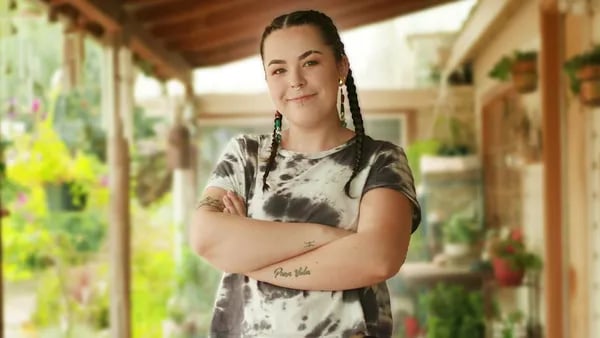
A big part of my identity is my Native culture. It’s really important to me to have that in my life and to be able to fall back on that in my daily life and to have that as a part of me. My name is Aiyana Brown, and this is my dog Rosie. We walk these streets and trails, knowing that every step is connected to something bigger than ourselves. Being Honus Kus and Coma Kalapuya isn’t just about heritage—it’s about feeling at home in the world, even when things are uncertain.
Yoncalla is the homeland for the southernmost Kalapuya, the Coma Kalapuya. That history, and the ongoing presence of family and community, gives me a sense of belonging that I can’t find anywhere else. Even when I wish for more modern conveniences, I know that nothing can replace the feeling of being truly home.
Language Isn’t Dead Until We Stop Speaking: Reviving the Kalapuya Words
“We are reviving the Kalapuya language, which was thought to be a dead native language in Oregon, and me and my family are the only speakers in the entire world.” When I say that, it still feels surreal. The Kalapuya language was considered extinct for decades—gone from classrooms, books, and daily life. But for us, language isn’t dead until we stop speaking it. That’s why my family and I are pouring our hearts into this journey of Kalapuya language revitalization.
Only Living Speakers: Family, Hope, and a Few Dictionaries
Right now, it’s just us—my family and me—speaking Kalapuya. There are no fluent speakers outside our home, no elders to call for pronunciation help, and no community classes to attend. It’s a strange feeling, being the only living speakers of a language. Sometimes it feels like we’re talking to ghosts, reaching back through time with every word we learn.
Our journey started with scattered words in old notebooks and a few precious recordings. My grandmother remembered a handful of words, and I clung to those like treasures. Then, by some miracle, we met Paul—a linguist in Oregon who had been collecting Kalapuya words for years. He told us it was the most beautiful language he’d ever heard. When he asked if we wanted our language back, we said yes, even though we’d been told it was impossible.
The Bumpy Road from Scattered Words to Sentences
Learning Kalapuya wasn’t like taking a Spanish class in high school. There were no textbooks, no flashcards, and no teachers. We had to become our own teachers, piecing together grammar from old notes and guessing at pronunciation. At first, it was just a few words—tayo tatsun (good morning), umu (yes). But slowly, with stubbornness and a lot of laughter, we started stringing words into sentences.
I remember the first time I looked at a page of Kalapuya and actually understood it. It felt like magic. “Starting from just a few scattered words that I knew within my family to actually being able to look at a sentence or at a bunch of words in a book and and know what those words mean—that has been just incredible for me.”
Why We Fundraise: The Price of Language Preservation
It’s going to cost a little bit to get these dictionaries printed. That’s the reality of indigenous language projects—resources don’t just appear. We’ve had to get creative, from bake sales to online fundraisers. Recently, Zell and BuzzFeed helped us raise $3,000, which will go toward printing the first Kalapuya dictionaries. Our dream is to give these to universities, tribal families, and anyone interested in Oregon language revival.
Every dollar we raise helps us print more books, create more resources, and reach more people. We’re not just preserving words—we’re building a future where Kalapuya can be spoken again, not just remembered.
Surprises and the Messy Magic of Reviving an “Extinct” Language
When we started, we had almost nothing except willpower and some stubborn relatives. I had almost given up hope of ever hearing Kalapuya spoken. But now, I get to pass on what I know to my grandchildren, just as my elders did for me. There are very few storytellers left, and it’s almost a lost art. But every time we share a story, sing a song, or just say “good morning” in Kalapuya, we’re proving that language isn’t dead until we stop speaking.
History is important so that you know who you are and where you came from. That’s why the storytelling is important because the stories bring that history to the present.
Reviving extinct languages in Oregon isn’t easy, but it’s worth every late-night study session and every dollar raised. We’re still here. Our language is still here. And as long as we keep speaking, Kalapuya lives.
More Than Words: Why Storytelling and Drumming Matter (Even When You’re Offbeat)
When I was a child, my grandma would sit me down in the evenings and tell me stories. Sometimes she’d pause, look me in the eye, and say, “Listen close. This is how you remember who you are.” Back then, I didn’t realize how rare that was becoming. There are very few storytellers anymore. It’s kind of almost a lost art. But in our Kalapuya culture, storytelling is more than just words—it’s how we keep our cultural identity alive.
Handed Down, Heart to Heart: The Power of Storytelling Culture
I see now that one of my jobs—my duty, really—is to pass along what I know to the younger generation. Just as my grandma, my elders, and my aunties did with me. They trusted me with these stories, these pieces of our history. Over the past few years, I’ve tried to do the same with my grandchildren. Sometimes I stumble over the words, or forget a detail, but I remind myself: it’s not about perfect grammar. It’s about keeping the story alive.
History is important so that you know who you are and where you came from.
That’s why storytelling is so important in Kalapuya culture. The stories bring our history to the present. They teach us about our ancestors, our land, and our beliefs. Even when the language is broken or the rhythm is off, the heart of the story carries through. This is the foundation of cultural education—learning not just words, but values, humor, and resilience.
Drumming: The Feel-Good, Healing Rhythm of Community
There’s another tradition that runs deep in our family: drumming. When we drum, it’s a feel-good thing for us. It’s not about being perfectly on beat. Sometimes the little ones get excited and rush ahead, or someone drops a stick and we all laugh. But that’s part of the magic. Drumming is a time for us to get together and have some really deep thoughts and feelings. It’s a safe place to do that.
Ceremonial drumming, like storytelling, is a way we practice our old beliefs. It’s a way to connect with each other and with our ancestors. The sound of the drum reminds us that we are still here, still living our history. Even when life feels messy or uncertain, the rhythm brings us back to ourselves. It’s unexpectedly therapeutic—sometimes more healing than words alone.
Why Passing Stories Matters More Than Perfect Language
I used to worry about getting every word right, about speaking the old language perfectly. But I’ve learned that it’s sometimes more important to pass along stories than correct grammar. The younger ones might mix English and Kalapuya, or forget a phrase, but they remember the laughter, the lessons, and the love. That’s what matters most for cultural identity.
And that's why the storytelling is important because the stories bring that history to the present.
Loss, Hope, and the Keeper’s Burden
Being the next-generation keeper of stories isn’t always easy. Sometimes I feel the weight of what’s been lost—the words that have faded, the songs we don’t remember. But there’s hope, too. Every time I see my grandchildren’s eyes light up at a story or hear them join in the drumming, I know the magic isn’t gone. It’s just changing, finding new ways to live.
In the end, storytelling and drumming are more than traditions. They are how we teach, heal, and remember. They are the messy, beautiful ways we keep the spirit of the Kalapuya people alive, even when we’re a little offbeat.
Messiness, Miracles, and Money: The Strange Realities of Language Revival Projects
Language revitalization is never as tidy as it looks on a grant application. If you’ve ever tried to explain to a neighbor why you’re crowdfunding for a dictionary (“Wait, what’s Zell?”), you know what I mean. The journey to bring Kalapuya back is full of awkward conversations, emotional highs and lows, and the kind of miracles that only happen when a whole community gets involved. This is the messy, magical reality of Indigenous language projects—and it’s a story worth telling.
Crowdfunding Highs and Curious Neighbors
Printing dictionaries isn’t cheap. When we realized it was going to cost more than we had, we started fundraising. At first, I felt a little awkward asking friends, family, and even strangers for help. Some people didn’t understand why we needed money for “just a book.” Others wanted to know what Zell was, or how online donations worked. But slowly, the support started coming in. Every dollar felt like a vote for our language, our family, and our future.
We set our sights on getting the first Kalapuya dictionaries printed. The dream was to share them with universities, language students, and—most importantly—our own tribal families. Every time someone donated, it felt like the circle of people who cared about Kalapuya grew a little wider. It wasn’t just about money; it was about building a community around language preservation and storytelling culture.
The Emotional Rollercoaster of Old Words and New Hope
There were days when I almost gave up. Sometimes, the old words felt too far away, the task too big. Seeing my grandparents get older made me realize how urgent this work is. I wanted to cherish these traditions, to be able to pass them on to my kids someday. But the pressure was real, and the fear of letting everyone down was always there.
Then, out of nowhere, a miracle happened. Curly from BuzzFeed showed up with a surprise: “So Zell is sending you $3,000 to help you on your journey and to help you reach your goals.” I was stunned. Suddenly, the impossible felt possible. With that money, we could print more dictionaries, create more resources, and get our books into more hands. I felt a wave of gratitude—not just for the donation, but for everyone who believed in our project.
It's so great that people are getting behind this project.
Culture as a Group Project (With a Little Help from Strangers)
One thing I’ve learned is that language revitalization is never a solo act. It takes every cousin, every auntie, and sometimes, a few people you’ve never even met. The University of Oregon’s Language Revitalization Lab has been a huge support, offering advice and encouragement. But the real magic happens at home—around kitchen tables, in text threads, and at family gatherings where someone suddenly remembers a word from childhood.
There’s a lot of laughter, a few tears, and plenty of “papai” (goodbyes) as we stumble through pronunciation and meaning. Sometimes, I worry that our work won’t last—that our dictionary will get lost in the shuffle of TikTok trends and digital distractions. But every time someone says, “Good job, girly,” or “Love you,” I remember why we do this. We’re not just preserving a language; we’re keeping our storytelling culture alive, one word at a time.
Hoping a Dictionary Outlives TikTok Trends
Thanks to the $3,000 donation from Zell and BuzzFeed, we’re closer than ever to printing our first run of dictionaries. It’s a small miracle, and a big step for our community. I hope these books outlive every social media trend, and that someday, my kids will flip through the pages and find themselves in the words of their ancestors. For now, we keep fundraising, keep laughing, and keep believing in the messy magic of Indigenous language projects.
What We Pass Down: Learning to Be an Imperfect Torchbearer
Watching my grandparents age cracked something wide open in me. There’s a certain ache that comes from seeing the people who carried your family’s stories, language, and laughter begin to slow down. It’s kind of sad, but seeing my grandparents get older, it’s definitely awakened me to realize this is really important and this is something that I want to cherish and I need to cherish so that eventually one day I can show my kids and pass on all of these traditions. That realization didn’t arrive all at once. It crept in during quiet moments—listening to my grandmother’s voice as she repeated Kalapuya words, or watching my grandfather’s hands as he showed me how to prepare a traditional meal. Suddenly, the urgency to keep going, to not let these things slip away, became impossible to ignore.
Language revitalization is not a perfect process. Sometimes, I stumble over words. Sometimes, I get frustrated or even bored, wishing I could just watch TV instead of practicing Kalapuya phrases. But I’ve learned that being clumsy, stubborn, or even occasionally bored is still part of belonging. It means I’m showing up. It means I care enough to try, even when it feels awkward or overwhelming. The Kalapuya people, like so many Indigenous communities, have survived by holding onto their cultural identity through generations of change. That survival isn’t neat or easy. It’s messy, personal, and powerful.
Taking on the responsibility of language preservation feels both heavy and beautiful. When my family gathered to celebrate the support we received for our project—thanks to Zell and BuzzFeed, who sent us $3,000 to help us on our journey—I felt a mix of pride and trepidation. “You’re now officially in charge,” someone said, half-joking, half-serious. The words landed hard. There’s no manual for being the next torchbearer. Sometimes, I worry I’ll let something slip through the cracks. But then I remember: every generation has to figure it out in their own way. Aiyanna Brown, who works tirelessly for Kalapuya language revitalization in the Yoncalla area, reminds me that the most important thing is to keep moving forward, even if it’s imperfect.
Choosing to learn and to teach—even when you want to quit—is part of honoring family history. There are days when I want to walk away, when the weight of responsibility feels too much. But then I think about my grandparents, and about the generations before them who had to fight just to keep a few words alive. I think about how every time I say a Kalapuya phrase, I’m reaching across time to connect with them. That’s what cultural identity is: a living, breathing thing that needs us to keep speaking, keep sharing, keep trying.
Sometimes I wonder what it will be like if I have kids of my own. Will they roll their eyes at my stories? Will they groan when I ask them to practice Kalapuya with me? Maybe. But maybe that’s the best sign of all—that the language has really made it home. If my future children can take these traditions for granted, if they can be bored or stubborn or silly in Kalapuya, then we’ve done something right. The messy magic of language revitalization is that it’s not about perfection—it’s about persistence, love, and the willingness to keep going, even when it’s hard.
As I step forward, officially in charge but always learning, I hold onto the hope that what we pass down will take root in ways I can’t even imagine. The next generation’s engagement is crucial for the survival of our language and customs. Family, legacy, and culture are all tied together in this ongoing effort. We honor our elders not by being perfect, but by daring to carry the torch, however imperfectly, into the future.