.png&w=1280&q=75)

One morning in rural Kenya, I watched a group of teenagers, phones in hand, sit together under a tree – not scrolling or texting, but swapping stories and laughter. Coming from a place where students seem glued to their screens, I was curious. Why, with Wi-Fi everywhere, weren’t these teens lost in TikTok and Instagram? I got a glimpse into a school model that flips assumptions on their head, blending community wisdom with student agency and relentless drive. What unfolded made me rethink almost everything I thought I knew about motivation, technology, and what makes an education truly empowering.
From Student to Learner: How Words and Roles Change Everything
In many Kenyan community schools, a quiet but powerful revolution is underway—a shift in language that is changing the very culture of education. Here, the terms ‘students’ and ‘teachers’ have been replaced with ‘learners’ and ‘education facilitators’. This change is not just about words; it is about rethinking power, purpose, and partnership in the classroom.
When our team first began working with communities in Kenya over 25 years ago, we noticed that traditional schools often operated on strict hierarchies. Teachers were seen as authority figures—sometimes even feared. As one community member shared,
"In our schools, teachers are feared... we want a school where it’s a community, we don’t fear each other, we facilitate."
This feedback led to deep conversations with parents, elders, and local leaders. Together, we realized that the language we use shapes the roles we play. Calling children ‘learners’ instead of ‘students’ signals that education is a journey for everyone, not just the young. Likewise, ‘facilitator’ comes from the Latin facil, meaning ‘to make easy’. The role of education facilitators is to make learning accessible, to nurture curiosity, and to support—not control—the learning process.
This shift in roles is especially important in community schools in Kenya, where local wisdom is highly valued. School governance involves parents, elders, and community members, who are recognized as experts in their own challenges and needs. Instead of outsiders imposing solutions, the community leads the way in building schools, choosing resources, and shaping the curriculum. Over the years, this approach has transformed mud huts into purpose-built schools with modern amenities, all designed with local input.
- Learners vs students: ‘Learner’ emphasizes growth and shared responsibility.
- Role facilitators education: Facilitators guide and support, rather than command.
- Community engagement Kenya: Parents and elders are active in school decisions.
- Community schools Kenya: Schools reflect local values and expertise.
By changing the language from ‘teacher’ and ‘student’ to ‘facilitator’ and ‘learner’, these schools are moving away from fear and hierarchy toward respect and shared purpose. In this environment, everyone—adults and children alike—is recognized as a lifelong learner.

The Real Motivation: Grit, Gratitude, and Girls Defying the Odds
One of the most powerful lessons from our community school in Kenya is the depth of intrinsic motivation among our students. For many, attending high school is a rare privilege—most are the first in their families to do so. Their parents, often subsistence farmers, never had such opportunities. The girls’ education and empowerment journey is not just about personal achievement; it is about uplifting entire families and communities.
Our school operates on a unique boarding schedule: students spend three months at school, then return home for three to four weeks to help with farming and family responsibilities. This cycle reflects the deep connection between community engagement in Kenya and education. Despite the demanding routine, it is the girls themselves who drive the structure. When we asked them to help design their daily schedule, they requested to wake up as early as 3:30 a.m. to maximize their learning. After negotiation, we agreed on a 4:30 a.m. wake-up and a 10:00 p.m. bedtime. Even then, many are up before dawn, eager to learn.
This self-discipline is not imposed. Rather, it comes from a sense of ownership and pride. As one student put it,
“I want to be the light of my family.”For these girls, education is not just a requirement—it is a calling. They see themselves as future change-makers, determined to break cycles of poverty and early marriage. Their intrinsic motivation as students far outweighs any external reward or pressure.
Sharon’s story is a testament to this spirit. She arrived at our school two weeks after the term began, exhausted and hungry, having started her journey before sunrise. Her mother, a single parent, could not afford to send her earlier. When I explained that the school was full, Sharon pleaded,
“You have to give me this chance – I want to change my family.”Moved by her determination, we found her a place. Sharon went on to excel academically, lead as school president, and shine in drama and music. She is now set to graduate from college, aiming to become an entrepreneur and create jobs in her community.
Stories like Sharon’s are not unique. Each year, we receive hundreds of applications for limited spots. Over 600 girls have graduated in our first decade, each carrying the torch of girls’ education empowerment and proving that when students own their journey, their potential is limitless.

Tiktok, Wi-Fi, and the Power of Community: Why Tech Isn't Everything
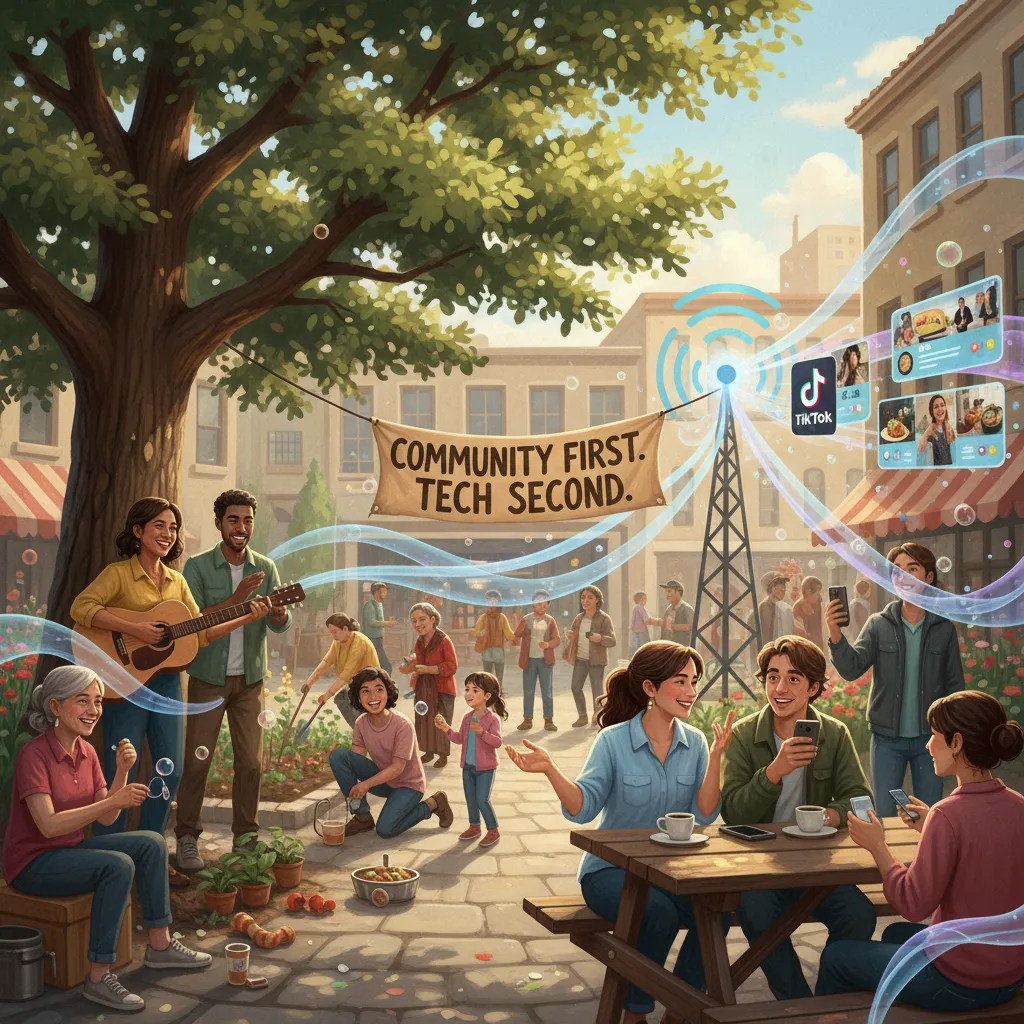
When we think about technology use among teenagers, it’s easy to assume that access to smartphones and 24-hour Wi-Fi leads to constant scrolling and digital distraction. Yet, in a Kenyan community school I visited, I saw something different. These students have access to TikTok, Instagram, and reliable internet—just like teens in the West. But during breaks, instead of isolating themselves with headphones and screens, they gather in circles around the school compound, sharing stories, laughing, and connecting face-to-face.
This difference highlights the unique cultural values among Kenyan youth. Despite having the same digital tools, their community engagement in Kenya is striking. The students come from humble backgrounds and often have few material possessions. Still, their happiness is evident. I watched them play with simple objects—a stick and a tire—yet their laughter filled the air. As one visitor remarked,
“We feel sorry for these people who have less... but they’re laughing the whole time.”
Research from the U.S. supports what I observed: children with fewer toys and less imposed structure tend to develop stronger imaginations. In Kenya, this is clear. With limited distractions, kids invent games, collaborate, and use their creativity to entertain themselves. Their fulfillment doesn’t come from wealth or gadgets, but from shared experiences and strong relationships.
In contrast, Western students—often surrounded by abundance and devices—report higher rates of loneliness and less satisfaction. The difference isn’t just about resources; it’s about the power of community support and cultural values. In this Kenyan school, social connection and gratitude act as shields against technology overuse and addiction. Students are present with each other, valuing real-life interaction over virtual engagement.
- Despite digital access, students choose storytelling and peer bonding over scrolling.
- Strong community ties help prevent tech addiction and foster fulfillment.
- Imagination thrives with fewer distractions—kids create their own games and joy.
- Western material wealth does not always translate to happiness or meaningful connection.
This balance between technology and community engagement in Kenya offers a powerful lesson: fulfillment and creativity often flourish not from what we have, but from how we connect and support one another.
When the School Gate Opens Both Ways: Service Learning and Giving Back
One of the most transformative aspects of our community school in rural Kenya is the way service learning is woven into the fabric of daily education. Here, the school gate truly opens both ways—students do not just come to learn; they go out to serve. Service learning in Kenya is not an optional extra; it is a core part of our curriculum and our identity. As one of our guiding principles states, “Every learner identifies a challenge in their community and goes to help sort it out.”
Each student is encouraged to look closely at the world around them and pinpoint a local challenge. For example, in the early days of Karoni, only one girl graduated from grade eight. She saw a pressing issue: early marriage was keeping girls from completing their education. For her service learning project, she decided to address this head-on. She organized respectful conversations with young girls, their mothers, and—importantly—their fathers, explaining the value of educating girls. In our culture, respect for elders is paramount, so she worked through baraza (community meetings), ensuring her message was heard and considered.
This approach to community engagement in Kenya blurs the line between classroom and real life. Students become problem-solvers, not just for themselves but for their entire village. The impact is measurable: by the class of 2022, more girls than boys graduated from our feeder schools, a direct result of alumni-led outreach and advocacy. Service learning empowers students to take ownership of community problem-solving in rural areas, creating a ripple effect that lasts for generations.
Graduates do not simply leave; many return as nurses, teachers, and local leaders. They become role models, showing the next wave of learners what is possible. With over 600 graduates, our alumni are now a driving force for change, inspiring others to follow in their footsteps. The cycle of giving back is continuous, and the school remains deeply embedded in the community’s progress.
- Students identify and address local problems as part of their education.
- Service learning integrates the school with the community, fostering civic engagement and lasting ties.
- Alumni return as community leaders, amplifying the impact of their education.
- Baraza and respect for elders are central to effective community problem-solving.
Wild Card: If We Swapped Schools—A Hypothetical
Imagine, for a moment, a true exchange: Western students spending a semester at a Kenyan community school, while Kenyan learners immerse themselves in a typical Western classroom. What might unfold from this cross-cultural experiment? My experiences in Kenya, observing the deep-rooted community engagement and the intrinsic motivation of learners, lead me to believe that the results would be transformative for both groups—and offer profound lessons for education reform worldwide.
For Western students, the Kenyan community education model would be a revelation. Accustomed to individualism, abundant resources, and constant digital stimulation, they might initially struggle with the early mornings, shared responsibilities, and the absence of rigid hierarchies. Yet, as they became part of a school culture where every voice matters and community values are lived daily, I suspect many would discover a new sense of purpose. The focus on service learning, peer mentorship, and gratitude could help them become less distracted and more intrinsically motivated. Instead of seeking fulfillment through material possessions or online validation, they might find it in real relationships, shared goals, and the pride of contributing to something larger than themselves.
Conversely, Kenyan learners transplanted into Western schools—surrounded by unlimited technology, fewer communal obligations, and more free time—might at first be dazzled by the abundance. However, given their strong foundation in self-management and community values, I believe many would use these resources purposefully. Their drive to “be the light of their family” and their experience balancing home responsibilities with academic ambition would likely set them apart. Yet, without the daily reinforcement of communal bonds and shared purpose, some might feel the absence of belonging and the emptiness that can accompany individualism and materialism.
This thought experiment highlights a key insight: fulfillment isn’t a supply chain issue. It does not flow from more technology, more choices, or more comfort. Instead, it is built from purpose, connection, and a sense of belonging—qualities that the Kenyan education system cultivates with intention. The comparison between Western and Kenyan education models reveals that community engagement and cultural values are not just “nice to have”—they are essential for well-being and motivation. As we look to the future of education, perhaps the most important lesson is that happiness and fulfillment are less about what we have, and more about how we connect, serve, and grow together.