.png&w=1280&q=75)
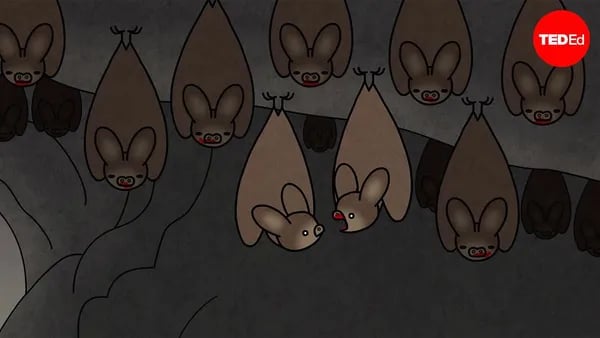
Let me take you to a humid dawn deep in the Amazon. Picture this: two bats, wings furled, huddled together in a tree hollow. Suddenly, one regurgitates fresh blood into the other's mouth—dinner for two in the strangest sense. I used to imagine vampire bats as Gothic villains from old movies, but the reality is a patchwork of resilience, empathy, and wild ingenuity. In a world changing faster than a bat’s wingbeat, their story might just surprise you.
Blood Bonds: The Real Vampires of the Amazon
When you think of vampire bats, you might picture a lone, shadowy figure gliding silently through the night. But the truth is far more inspiring. Vampire bats are not solitary hunters; they are masters of social networking—no smartphones required. In the heart of the Amazon, these tiny mammals have built some of the most intricate wildlife communities on Earth, all centered around the art of survival and the power of connection.
Bat Colonies: More Than Just Family
Step inside a vampire bat colony and you’ll find a bustling society that can range from just 20 individuals to as many as 5,000. These colonies aren’t just groups of relatives sticking together. Instead, they are complex webs of trust, reciprocity, and cooperation. Every night, bats set out on risky blood-feeding missions, and not every hunt ends in success. For young bats, especially those under two years old, missing a meal is common—they can fail to feed as often as once every three nights as they learn the ropes of hunting.
But here’s the catch: vampire bats can only survive about two nights without food before starvation becomes a real threat. In such a high-stakes world, the difference between life and death often comes down to the strength of your social bonds.
Sharing Blood: A Lifeline in the Night
Imagine a young bat returning to the roost after a failed hunt. She’s hungry, weak, and at risk. But she’s not alone. One of her companions, perhaps not even a relative, offers her a lifeline—regurgitated blood, the hard-won result of her own successful feeding. This isn’t just a random act of kindness. It’s a carefully balanced system of give-and-take that keeps the entire colony healthy.
Food sharing among vampire bats is nothing short of remarkable. It’s not limited to family members; even unrelated bats will step in to help one another. This ritual of regurgitating blood and feeding a hungry companion is a cornerstone of bat colony life. Without it, mortality rates would skyrocket. As one researcher put it:
“Vampire bat colonies are networks of intimate, grooming and food sharing bonds that go beyond blood, so to speak.”
Reciprocity: The Heart of the Wildlife Community
What makes these bat colonies so resilient is their commitment to reciprocity. Bats remember who has helped them in the past and are more likely to return the favor. This isn’t just about survival; it’s about building trust and maintaining strong social ties. Grooming, sharing food, and even comforting one another are daily rituals that strengthen the colony’s fabric.
- Grooming: Bats spend hours cleaning each other, which helps prevent disease and reinforces bonds.
- Food Sharing: Regurgitated blood is shared with those in need, especially young or unsuccessful hunters.
- Trust: Bats keep track of who reciprocates, ensuring fairness and cooperation within the group.
Beyond Blood: Lessons from the Amazon
Vampire bats teach us that survival isn’t just about strength or skill—it’s about community. Their colonies thrive not because every bat is a perfect hunter, but because every bat is part of a network that values cooperation over competition. These real vampires of the Amazon show us that the bonds we build, the trust we nurture, and the help we offer can mean the difference between life and death.
So, the next time you think of vampire bats, remember: their greatest strength isn’t in their fangs or their wings, but in their ability to care for one another. In the wild heart of the Amazon, blood bonds run deeper than family—they are the lifeblood of an entire community.
Nighttime Rogues: Masters of Adaptation
Step into the moonlit world of the common vampire bat (Desmodus rotundus), and you’ll discover a creature whose survival depends on daring, intelligence, and an astonishing set of adaptations. Each night, these bats slip out from their roosts, embarking solo into the darkness. Their journey is a lesson in resilience and resourcefulness, showing us what it means to thrive against the odds.
Solo Hunters in the Dark
Imagine yourself as a vampire bat, leaving the safety of your colony just as the world goes black. You don’t rely on sight. Instead, you map the landscape with ultrasonic sound waves—a natural sonar that lets you “see” with your ears. Every echo tells you where trees, fences, and animals are. But you have another secret weapon: heat-sensing receptors on your nose, so sensitive they can detect the warmth of blood flowing just beneath the skin of your prey. This combination of echolocation and heat detection rivals the best spy technology humans have ever invented.
Adventurous Palates and Opportunistic Feasts
You’re not picky. As a common vampire bat, you’ll feed on whatever you can find—pigs, cows, wild mammals, birds, even sea lions along the coast. Sometimes, when livestock is scarce, you might even take a risk and feed on humans. Your diet is as adventurous as it is opportunistic, shaped by the changing world around you.
With the expansion of agricultural land, you and your kin increasingly target livestock. This shift isn’t just about convenience; it’s about survival. As forests give way to farms, domestic animals become the most reliable source of food. But this adaptation comes with a cost: the risk of spreading the rabies virus to livestock and, in rare cases, to people. It’s a reminder that every adaptation has its consequences, and survival often means walking a fine line between opportunity and danger.
Masters of Movement: The Unique Gait of Desmodus rotundus
Unlike other bats, you’re not limited to flight. Your long, powerful forelimbs and thumbs let you stand, jump, and even run on all fours. This unique gait is unlike anything else in the animal kingdom. It gives you the agility to land softly beside a sleeping pig, hop around to assess the risk, and quickly escape if danger appears. Your movements are silent and precise, a testament to your evolutionary ingenuity.
Precision Feeding: Nature’s Sharpest Tools
Once you find the perfect spot—usually somewhere you’re less likely to be noticed—you put your specialized senses to work. Using your razor-sharp incisors, you make a tiny, delicate incision. These teeth are among the sharpest in the animal kingdom, kept honed by the friction between your upper incisors and lower canines. Your saliva, secreted from six glands in your neck, contains a cocktail of proteins that keeps the blood flowing smoothly from your prey. It’s a marvel of biological engineering, allowing you to feed quickly and efficiently without waking your host.
Metabolic Sprints: The Race Against Starvation
Your metabolism is a constant sprint. Unlike other mammals that can go days without food, you live on the edge:
“A common vampire bat will perish without food for more than two nights.”This means every night is a race against time. If you fail to feed, you risk starvation. Yet, despite this pressure, you and your colony thrive, adapting to new challenges and changing landscapes.
Survival, Community, and Change
- Solo nighttime hunts demand agility and courage.
- Ultrasound and heat-sensing guide you to prey, even in total darkness.
- Livestock production expansion means new opportunities—and new risks, like rabies virus transmission.
- Your unique gait and sharp teeth make you a master of blood feeding.
- Every adaptation is a lesson in survival, community, and change.
As you glide beneath the moon, you’re not just surviving—you’re adapting, teaching us all what it means to face change with courage and creativity.
The Bite That Binds: Rabies, Risk, and Human Response
When you think of a vampire bat, you might picture a creature of the night, gliding through moonlit skies. But beneath that shadowy image lies a story of survival, adaptation, and the invisible threads that connect bats, livestock, and people. Feeding on livestock isn’t just a dietary choice for the vampire bat—it’s a public health wildcard, one that brings the rabies virus into the heart of rural communities.
As the bat swoops down, guided by heat-sensing receptors that detect the warm blood flowing beneath an animal’s skin, she’s not just hunting for a meal. She’s navigating a world of risk. Every bite is a delicate calculation: where to land, how to avoid detection, and how to feed without being caught. Her razor-sharp incisors, sharper than almost any in the animal kingdom, pierce the skin with surgical precision. Her saliva, a complex mix of proteins from six specialized glands, keeps the blood flowing. But hidden in that bite is the potential for something far more dangerous—the rabies virus.
Vampire bats are prime carriers of the rabies virus, a pathogen that can spread rapidly from bat to livestock, and sometimes, from livestock to people. Rabies outbreaks flare where bat ranges and cattle density overlap, and as climate change shifts the boundaries of suitable habitat, the risk is moving northward. Today, high-risk areas include Mexico, Central America, Paraguay, and Brazil, but tomorrow, the Southern US could be next. As one expert notes,
“Areas with high cattle density and suitable bat habitat—such as Mexico, Central America, Paraguay, and Brazil—are at greatest risk for cattle rabies outbreaks.”
You might wonder, what can be done? The answer is both simple and profound: community resilience. Rabies prevention isn’t just about avoiding bites. It’s about building bat-proof sleeping shelters, vaccinating livestock and people, and staying alert through surveillance and education. Imagine a rancher reinforcing barn walls, or children lining up for vaccines at a rural clinic. These are the quiet acts of courage and care that keep rabies at bay.
But the challenge is growing. As climate change alters temperature and rainfall patterns, new areas become suitable for vampire bats. Their range is expanding, bringing the risk of rabies outbreaks to places that have never faced them before. Temperature seasonality may still limit how far north bats can go, but with each passing year, the line moves a little higher. Where bats and livestock meet, the risk of rabies spread rises, and communities must adapt quickly.
Rabies is a disease that binds us all—humans, livestock, and bats—in a web of risk and response. It reminds us that survival is not just about strength, but about connection and foresight. The lessons of the vampire bat are clear: to thrive in a changing world, we must watch, learn, and act together. Rabies prevention hinges on community planning, on the willingness to build shelters, give vaccines, and share knowledge. It’s about resilience in the face of uncertainty, and hope in the face of fear.
As you look up at the moon and think of the vampire bat, remember that her bite is more than a mark of hunger. It’s a symbol of the challenges we all face in a changing world. The bite that binds is also the spark that drives us to protect, to adapt, and to survive—together.