.png&w=1280&q=75)
You probably remember the first time you soldered a header pin or uploaded a sketch that actually blinked an LED — that tiny triumph hooks you. I do. I found myself wandering Amazon late one evening, hunting for a tiny board that could run Wi‑Fi and not the whole kitchen sink. What started as a $10 impulse purchase (a Seeed XIAO‑style micro) turned into a weekend of prototyping and, eventually, a checklist of go‑to dev boards for projects that range from garden sensors to tiny neural networks. This short guide cuts through the carousel of listings, ASINs, and hype so you can pick the right board without the late‑night rabbit hole.
1) The Amazon Playground: What’s out there and why it matters
If you’re shopping for development boards in 2025, Amazon can feel like a full hardware lab in one search bar. You’ll see everything from ultra-cheap add-ons to serious AI boxes—so you can prototype fast, then move to new platforms with more compute without switching stores.
A wild price range (and what it signals)
One of the first things you’ll notice is a carousel of “Video Widget Card” listings. Prices swing from $1.99 all the way to $1,049.99, often with multiple options tied to different ASINs: B09WGRQP4B, B0BZJTQ5YP, B0C5LWKZ2S, B0B77HWGS3, B0DXVKG6Z4. Many are Prime-eligible, but several show no reviews or star ratings.
Why you should care before you click “Buy”
That variety is powerful, but it also means you need to shop like an Amazon developer, not a casual browser. Amazon listings vary widely in review presence, and similar-looking items can hide big spec differences.
- Cross-check specs (chip, RAM, wireless, ports) against your project needs.
- Verify the ASIN so you’re comparing the exact configuration.
- Use reviews when available, but don’t assume Prime equals proven quality.
From cheap prototypes to edge AI
This mix matters because modern development boards are trending toward higher compute and built-in AI. You can start with low-cost modules for quick IoT tests, then scale up to advanced kits for robotics, vision, or on-device models—still within Amazon’s ecosystem.
William A. Smith: "Great hardware muscle, but expect some software quirks and a learning curve for re-imaging."
2) Budget & Beginner Picks: ESP32s, ELEGOO, and tiny MCUs
If you’re building your first IoT projects or learning electronics fast, Amazon’s best value is in Arduino compatible starter kits and ESP32 modules. These boards are top sellers for hobby and education because you can prototype quickly, follow tutorials, and reuse parts across dozens of builds.
Start strong with an Arduino-compatible kit (best for learning)
The ELEGOO Mega R3 Ultimate Starter Kit (ASIN B01EWNUUUA) is a safe first buy at $65.99, with 4.7★ from 47 reviews. You get a big parts bundle plus guided lessons, so you spend less time guessing and more time wiring, coding, and testing.
ESP32 modules: the sweet spot for cheap wireless builds
When you want Wi‑Fi + Bluetooth without paying “AI kit” prices, ESP32 boards win. They’re ideal for sensors, dashboards, smart switches, and classroom labs.
- hiBCTR 6 Pieces ESP32 Development Board Learning Kit (ASIN B0DSZBH9N9) — $28.26, 4.4★ (44 reviews). Great if you want spares for multiple prototypes.
- YEJMKJ 5pcs ESP32‑S3 Development Board (ASIN B0D93FL5NR) — $39.99, 5.0★ (50 reviews). S3 variants add handy USB Type‑C and improved wireless connectivity, which makes modern builds and flashing firmware easier.
Tiny MCU option when space (and power) matters
Need something small for wearables or tight enclosures? The Seeed Studio XIAO ESP32C3 (ASIN B0B94JZ2YF) is just $9.90, but still brings Wi‑Fi and Bluetooth for compact controllers.
For extra validation, display add-ons like the ESP32 2.8" TFT touchscreen module show strong buyer confidence too (4.6★), which is reassuring when you’re learning by trial and error.
3) Displays & Peripherals: Screens, shields, and real‑world I/O
If your prototype still lives on a serial monitor, adding a screen and a few add-ons is the fastest way to make it feel “real.” The good news: display peripherals are affordable on Amazon, and they instantly boost project polish—especially for dashboards, menus, and simple touch controls.
2.8" ESP32 Touchscreen (ILI9341): a cheap UI upgrade
A standout pick is the ESP32 Touchscreen 2.8inch TFT LCD module (ASIN B0CXHPP7DM). For $19.98, you get a 240×320 ILI9341 display with resistive touch, plus broad Arduino/ESP32 compatibility. It’s also well-reviewed at 4.6★ (46 reviews), which matters when you’re betting your build on driver stability.
| Item | Key specs | Amazon data |
|---|---|---|
| 2.8" ESP32 TFT Touch | ILI9341, 240×320, resistive touch | ASIN B0CXHPP7DM, $19.98, 4.6★ |
Sensor shields, WiFi modules, and fast peripheral access
Once you add sensors and actuators, peripheral access becomes the make-or-break detail. Look for sensor shields and breakouts that expand I2C, SPI, UART, ADC, and extra GPIO so you can wire parts cleanly and debug faster. Pairing WiFi modules (or ESP32 boards with built-in Wi‑Fi/BLE) with I2C sensor combos is a common shortcut for IoT prototypes.
- I2C: perfect for chaining sensors (temp, IMU, light) with fewer wires.
- SPI: great for fast displays and storage (TFTs, microSD).
- UART: handy for GPS, LTE, and serial peripherals.
Before you buy, verify compatibility: check the board pinout and confirm there’s an Arduino/ESP32 library for your display or sensor.
If battery life matters, choose low-power sensors and plan for sleep modes—real-time control is easier when your peripherals match your power budget.
4) The Big Guns: NVIDIA Jetson AGX Orin 64GB (edge AI powerhouse)
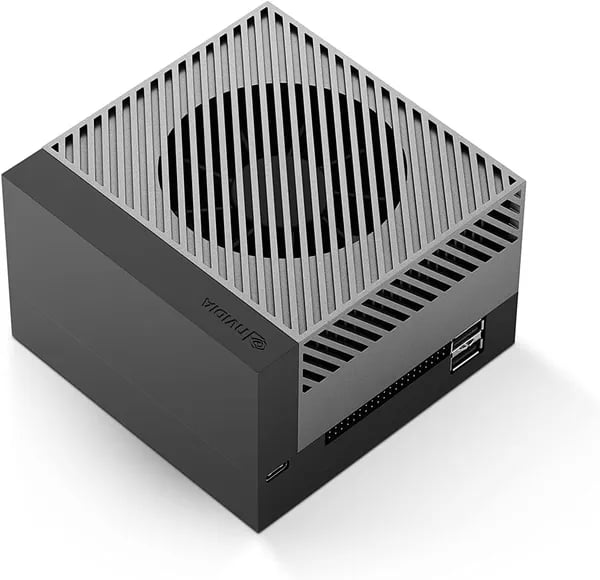
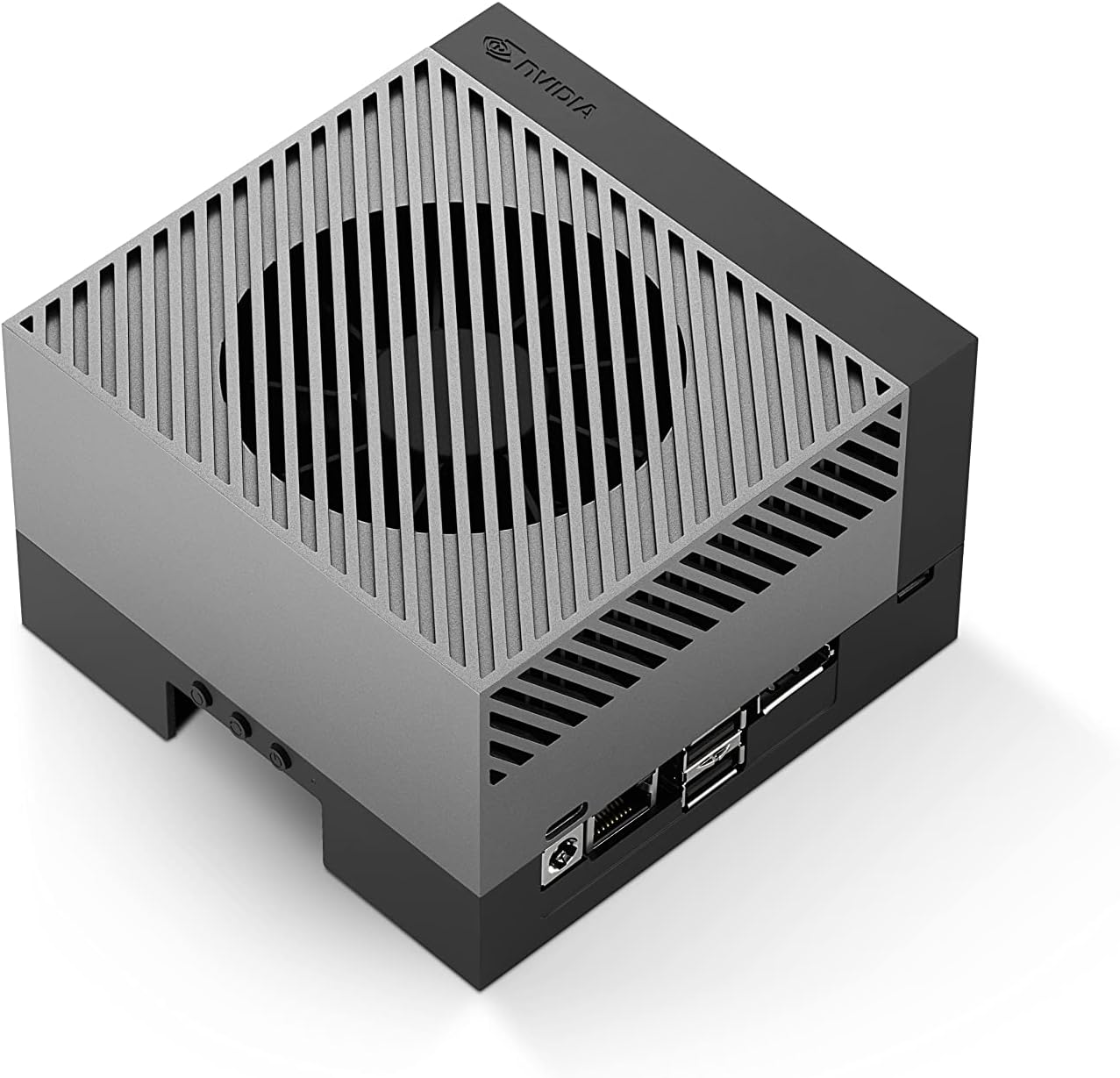
If your goal is serious edge AI—robotics, vision pipelines, or fast local inference—the NVIDIA Jetson AGX Orin 64GB Developer Kit is the board you buy when you’re done “testing ideas” and ready to ship AI applications. On Amazon it’s listed at $1,435 (ASIN B0BYGB3WV4) and carries Amazon’s Choice for heavy AI workloads.
Why Nvidia Jetson Orin hits so hard
- NVIDIA Ampere GPU architecture
- Up to 275 TOPS for real-time AI
- 12-core ARMv7 CPU + 64GB LPDDR4X memory
- Physical size: 9.84 x 9.84 x 7.48 in; weight: 5.4 lbs
Software stack that speeds up edge AI development
You’re not just buying hardware—you’re buying NVIDIA’s workflow. You get Ubuntu on-device, and most people prefer Ubuntu 20.04 for setup. With NVIDIA SDK Manager, you can flash and install the full stack quickly, then build faster with:
- Isaac for robotics
- DeepStream for vision AI pipelines
- Riva for conversational AI
- Omniverse Replicator for synthetic data
- TAO Toolkit for fine-tuning
Real-world notes (ratings + setup reality)
Feedback is solid: 4.1★ average from 57 reviews, with 65% five-star ratings. People love the speed for image processing, IoT, and even LLM experiments—but expect a learning curve. Many users recommend adding NVMe or a high-capacity SSD for advanced features, and using a second Ubuntu machine for flashing.
William A. Smith: "The Orin's speed is astounding for image processing — but plan for extra storage and a secondary Ubuntu machine for flashing."
Larry Brooks: "Great for on‑prem AI; small teams can iterate faster with local inference."
If you want a cheaper companion board, Amazon also shows a bundle option: Jetson Orin Nano Super Developer Kit (ASIN B0BZJTQ5YP) for $249.
5) Buying Guide & Quick Setup Tips (so you don’t regret checkout)
Start like a smart B2C selling shopper: ASIN, reviews, Prime
Amazon’s dev-board aisle is huge, but don’t let a $1.99 listing trick you. Many “Video Widget Card” options (ASINs like B09WGRQP4B, B0BZJTQ5YP, B0C5LWKZ2S, B0B77HWGS3, B0DXVKG6Z4) show no star ratings yet. Before checkout, verify the ASIN, check review count, and confirm Prime eligibility so returns and shipping are painless.
Match the board to your job: low-power sensing vs. edge AI
- IoT sensors + battery projects: pick ESP32-class boards (Wi‑Fi/BLE) and keep power needs low.
- Vision + LLM + robotics: step up to Jetson-class edge AI kits.
- General-purpose SBC needs: consider Raspberry Pi alternatives if you want broad community support and simple Linux workflows.
Intermediate development checklist: key specs that matter
For intermediate development, prioritize GPIO, I2C, SPI, and a real debugging path. Many MCU families land in the 84–133 MHz range, which is plenty for sensors, displays, and control loops—just don’t expect desktop-like multitasking.
Quick setup tips: ESP32/Arduino kits
- Confirm Arduino IDE compatibility (great for kits like ELEGOO Mega R3).
- If you need multitasking, check for FreeRTOS support (common on ESP32).
- Validate the pinout before buying sensor shields or TFT modules.
Quick setup tips: Jetson AGX Orin (host requirements first)
Jetson AGX Orin is powerful, but verify your host setup: you’ll typically need an Ubuntu 20.04 machine for initial flashing via NVIDIA tools. Expect a CLI-centric workflow, and budget for NVMe/SSD upgrades if you’ll install heavier AI stacks. Reviews average 4.1★ (57 reviews), with 65% five-star—strong, but it rewards Linux comfort.
6) Wild Cards: Small stories, weird uses, and an analogy
A tiny story that proves IoT projects don’t need big hardware
I once used a Seeed Studio XIAO ESP32C3 to do rapid prototyping for a plant moisture logger. The whole build came in under $20 including a cheap soil sensor, a few jumper wires, and a basic enclosure. The best part: the “algorithm” was simple—read moisture, smooth the signal, and log a timestamp—and it ran in under 32KB of RAM. That’s the research insight in real life: small boards can solve real problems when your goal is sensing, logging, and sending a tiny packet over Wi‑Fi or Bluetooth.
A weird (but believable) Jetson idea
Now zoom out. If you strapped a Jetson Orin to a lawnmower and added a camera, you’d get a surprisingly capable edge-vision mower. It could spot obstacles, avoid pets, and map your yard without shipping video to the cloud. Yes, someone will build that. This is where the other insight kicks in: big boards unlock new AI workflows—local vision, on-prem privacy, and faster iteration when you’re testing models at the edge instead of waiting on a server.
The analogy that keeps you from overbuying
Think of development boards like kitchen appliances. An ESP32 sensor setup is a single-purpose blender: fast, cheap, and perfect when you know what you’re making. A Jetson AGX Orin is a full restaurant kitchen: powerful, flexible, and built for complex “menus” like robotics, vision AI, and LLM experiments. When you shop Amazon’s dev board aisle—from tiny XIAO boards to full AI kits—pick the appliance that matches the meal. You’ll finish more projects, spend less, and scale up only when your idea truly needs it.