.png&w=1280&q=75)
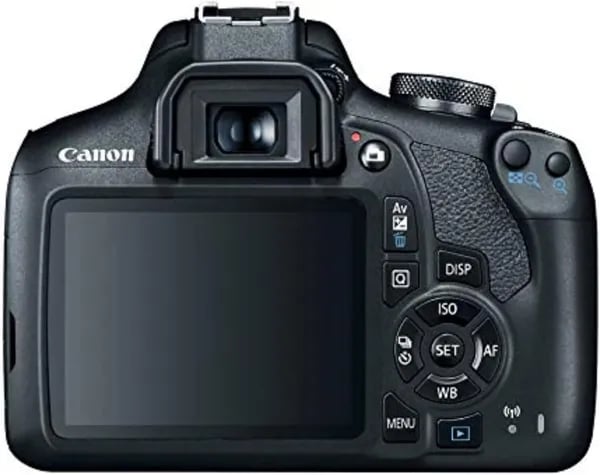
You know that moment when your phone snaps a good photo but something feels...off? You want richer detail, better skin tones, and the thrill of controlling the shot. I remember lugging a chunky camera around a city market and discovering how freeing a real DSLR can be. The Canon EOS Rebel T7 (ASIN: B07C2Z21X5) is the kind of camera that hands you that freedom without a steep learning curve—24.1MP, DIGIC 4+, beginner-friendly menus, and wireless sharing that actually works. This post walks you through why the T7 might be the right move for your next creative leap (and a few honest quibbles).
1) Why the T7 clicks for beginners (and the curious)
Hands-on simplicity with a beginner friendly interface
The Canon EOS Rebel T7 feels welcoming the moment you pick it up. You get a beginner friendly interface with clear menus, helpful scene modes, and just enough manual control to learn at your own pace. If you’re new to DSLR cameras, you can start in Auto or a scene mode, then move into Av/Tv/Manual when you’re ready—without feeling overwhelmed.
That learning curve is also supported by practical performance: a 9-point AF system with AI Servo AF helps you lock focus quickly, even when your subject won’t sit still. And with a wide ISO range (100–6400, expandable to H:12800), you can keep shooting in bright sun or dim indoor light without your photos falling apart.
Emily Carter, Freelance Photographer: "For a beginner, the T7 balances simplicity with image quality—it's forgiving yet teaches you how light works."
Trusted Canon color science that makes photos look “right”
One reason beginners stick with Canon is the look. Canon color science is known for warm, pleasing tones—especially flattering for portraits and everyday people shots. Pair that with the T7’s 24.1MP APS-C sensor and DIGIC 4+ processor, and you’ll often get vibrant, detailed images straight out of camera, with less editing needed.
Real-world reliability you’ll actually notice
This camera is easy to live with. It’s lightweight at 1.04 pounds, has a comfortable grip, and feels sturdy enough for daily use and travel. Reviews consistently mention strong battery life—around ~500 shots per charge when using the viewfinder—plus dependable performance over time.
- Wireless sharing: Built-in Wi‑Fi and NFC make quick transfers simple.
- Solid social proof: 4.6 out of 5 stars from 8,310+ ratings, with happy beginners in the U.S., Brazil, Mexico, and Canada.
- Kit flexibility: The 18–55mm lens covers portraits to landscapes, and some bundles add a 75–300mm for more reach.
Quick honesty: you don’t get 4K video or a flip-out screen, but for learning photography with reliable results, the T7 keeps things simple and satisfying.
2) Specs & real-world performance (what the numbers mean)
Imaging heart: 24.1 megapixel sensor + APS-C CMOS sensor + Specifications DIGIC processor
The Canon EOS Rebel T7 is built around a 24.1 megapixel sensor in an APS-C CMOS sensor size, paired with a DIGIC 4+ processor. In real life, that combo is why your photos look crisp and “Canon colorful” in good light—think clean detail in skies, sharp edges on buildings, and pleasing skin tones straight out of camera.
You also get Full HD 1080p video (no 4K). For family clips, travel videos, and simple YouTube content, 1080p looks sharp and is easy to edit. The DIGIC processing helps keep JPEGs vibrant without you needing to learn heavy editing on day one.
Low light and speed: ISO 100-6400 range, 3 fps, and Autofocus system performance
The ISO 100–6400 range (expandable to H:12800) is your brightness control for darker scenes. Practically, you’ll feel confident up to about ISO 1600–3200 for indoor photos; above that, noise becomes more obvious and fine detail starts to soften.
- Street scenes: try ISO 800 at dusk for a balanced look without heavy grain.
- Portraits with the kit lens: at f/5.6, step into window light or shade for smoother skin and cleaner backgrounds.
Speed-wise, continuous shooting is 3 fps. That’s fine for kids, pets, and casual action, but it can feel limiting for sports or wildlife where you want long bursts. The 9-point autofocus system with AI Servo AF is reliable for portraits and everyday moments, yet it’s not the best match for fast, unpredictable subjects.
Jonathan Price, Camera Reviewer: "The T7’s 24.1MP sensor and DIGIC 4+ keep images punchy—especially in daylight—while the modest burst and AF limits are fair trade-offs at this price."
Connectivity and webcam use: Wi‑Fi, NFC, and EOS Utility Webcam Beta
Built-in Wi‑Fi and NFC make it easy to move photos to your phone for quick sharing. You can also use the T7 as a webcam with EOS Utility Webcam Beta on Mac/Windows—great for streaming or video calls in clean 1080p. Add strong battery life (around ~500 shots) and the T7 stays convenient for everyday use.
3) Lenses, bundles, and how to grow with the system
Start simple: the kit lens is a strong Travel camera option
The Rebel T7 kit comes with the Canon 18–55mm lens (3x optical zoom, max aperture f/5.6). That range is perfect when you’re learning because you can shoot wide landscapes, everyday street scenes, and simple portraits without swapping lenses. Pair that with the T7’s lightweight body (about 1.04 lb), and you’ve got a comfortable Travel camera option that won’t feel like a chore to carry all day.
Sara Lin, Lens Specialist: "Starting with the 18-55mm keeps your kit light and versatile; once you know your style, the EF/EF-S ecosystem offers near-endless choices."
Lens compatibility options: EF and EF-S open real upgrade paths
One of the best reasons to start with the T7 is the wide Canon DSLR lens ecosystem. You can grow gradually with Lens compatibility options across Canon EF and EF-S lenses—so you can upgrade your look without replacing the camera body.
- Travel + everyday: stick with 18–55mm for flexibility and light weight.
- Portraits: add a simple 50mm prime later for cleaner background blur and sharper faces.
- Wildlife/sports practice: consider a telephoto like the 75–300mm for extra reach.
Camera bundle kits: when the 75–300mm makes sense
Many Camera bundle kits on Amazon add the Canon EF 75–300mm lens. It’s a fun next step if you want to try wildlife, kids’ outdoor games, or distant details you can’t reach with the kit lens. Just keep expectations realistic: the T7’s 9-point AF and burst performance are solid for everyday action, but very fast subjects can still be challenging—so practice timing and tracking.
Other Amazon options if your needs change
Bundle pricing varies, and sometimes mirrorless or older DSLRs trade features for cost. If you lean into vlogging or want a newer system, Amazon also lists:
| Camera | Example price | Best for |
|---|---|---|
| Canon EOS R100 kit | $499 | Entry mirrorless, simple upgrades |
| Canon EOS R50 | $799 | Creators who want more modern features |
| Canon EOS Rebel SL3 | $757.50 | DSLR fans wanting a different feature mix |
| Kodak PIXPRO AZ405-BK | $199.95 | Budget travel-lite setup |
| Fansbe Smart Camera | $49.99 | Ultra-low-cost casual shooting |
4) Buying smart: price, used vs renewed, and must-have add-ons
Affordable DSLR price: what you’ll likely see on Amazon
The Canon EOS Rebel T7 (ASIN: B07C2Z21X5) stays popular because it’s a good buy affordability pick for first-time DSLR owners. Historically, you could often find it new for under $400, but prices move with sales, bundles, and stock—so always check the current listing before you buy.
| Condition | Historical price pointer | Best for |
|---|---|---|
| New | Often under $400 (varies) | Maximum peace of mind, full retail packaging |
| Used | From $472 (varies) | Deal hunters who can inspect seller ratings carefully |
| Renewed | $387.49 (varies) | Lower cost with a more “checked” purchase path |
Used vs renewed: save money without surprises
Amazon’s multiple buying conditions let you balance price and warranty. Used can be fine, but you may see more wear (scuffs, dusty lens, weaker battery). Renewed is often the sweet spot if you want savings with fewer headaches—just confirm what’s included (battery, charger, lens caps) and read the seller’s grading notes.
Mark Rivera, Camera Retailer: "Buying renewed can be a great way to get Canon quality for less—just verify the seller and return policy."
Whichever route you choose, prioritize seller reputation, clear return terms, and bundle details—especially if the kit includes extra lenses.
Must-have add-ons that protect your investment
Affordable accessories extend usability and help you get more from the T7 right away:
- Protective camera case (about $26.39): prevents bumps and makes travel easier.
- SanDisk 128GB Extreme PRO SDXC UHS-I (about $29.99): fast, reliable storage for photos and Full HD video.
- Spare battery: improves Battery life shots coverage for trips, events, and cold days.
- Basic tripod: sharper low-light photos, steadier video, and easier self-portraits.
Amazon perks to use to your advantage
Look for free shipping and the 30-day return policy, then compare new/used/renewed options directly on the official Amazon listing for B07C2Z21X5 to confirm today’s price and remaining stock.
5) Wild cards: creative uses, candid caveats, and a tiny experiment
Webcam hack: turn your Canon EOS Rebel T7 into a “studio”
Your Canon EOS Rebel T7 has a surprise talent: it can double as a solid webcam using EOS Utility Webcam Beta on Mac or Windows. Plug it in, select it in Zoom/Meet/OBS, and your remote class, live workshop, or chill “study with me” stream instantly looks cleaner than a laptop camera. Nora Diaz, Vlogger & Content Creator, puts it simply:
"I used a T-series DSLR as my backup webcam for two tours—it was reliable and made my streams look more polished."
It’s a fun reminder that the T7 isn’t just for weekends—it can show up on weekdays, too.
Candid caveats: great basics, not a vlogging-first rig
Here’s the honest part. Rebel T7 DSLR video tops out at Full HD 1080p—there’s no 4K. You also don’t get a flip-out screen, and the rear display is fixed with no touchscreen. That doesn’t ruin the camera, but it does change who it’s for. If your main goal is handheld vlogging where you need to see yourself, you’ll be working around the camera instead of with it. If you’re okay with simple 1080p clips, tripod shots, and learning strong framing, you’ll be fine.
A tiny experiment (and a late-night market story)
Try this: pack the T7 for a day trip and shoot 10 portraits, 10 street frames, and 10 landscapes. Keep the same lens (the 18–55mm kit lens is perfect) and notice what feels easy and what feels hard. That’s how you learn fast with the T7’s Beginner friendly interface—you’re not guessing, you’re testing.
One night, you take it to a late market “just for a few shots,” and suddenly you’re still photographing food stalls and neon signs hours later—yet the battery keeps going. Think of the T7 like a dependable sketchbook: it won’t do every trick, but it nails the essentials and helps you build real skill.
If you could buy one extra lens for a 10-day trip…
Would you choose the EF 75–300mm for far-away moments, or a small prime for brighter indoor shots? Your answer is your style—and that’s the point. The Rebel T7 grows with you, one simple experiment at a time.